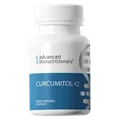
Curcumitol is an advanced musculoskeletal nutraceutical formulated with a high-potency concentration of Curcumin III (bisdemethoxycurcumin or BDMC), which selectively downregulates cyclooxygenase-2 (COX-2) and microsomal prostaglandin E2 synthase-1 (mPGES-1) gene expression through NF-kB p65 inhibition, shielding synovial chondrocytes from pro-inflammatory cytokine destruction without impairing protective gastrointestinal COX-1 pathways.
Curcumitol is an advanced musculoskeletal nutraceutical formulated with a high-potency concentration of Curcumin III (bisdemethoxycurcumin or BDMC), which selectively downregulates cyclooxygenase-2 (COX-2) and microsomal prostaglandin E2 synthase-1 (mPGES-1) gene expression through NF-kB p65 inhibition, shielding synovial chondrocytes from pro-inflammatory cytokine destruction without impairing protective gastrointestinal COX-1 pathways.
While traditional turmeric root powders provide modest concentrations of Curcumin I (diferuloylmethane), Curcumin I undergoes rapid Phase II hepatic glucuronidation and sulfation, yielding low systemic bioavailability and limited intra-articular joint penetration. In contrast, Curcumin III (BDMC) lacks the flanking ortho-methoxy groups that accelerate enzymatic breakdown, resulting in substantially extended plasma half-life and superior anti-inflammatory potency. Examining the molecular signaling mechanisms of Curcumitol explains why BDMC represents the cutting edge of targeted natural joint care.
CURCUMITOL (BDMC): ARTHRIC INFLAMMATORY CASCADE
Blocked by Curcumitol (BDMC Curcumin III)
Prevents NF-kB p65 Nuclear Translocation
Cyclooxygenase-2 (COX-2) Downregulation (Saves COX-1)
mPGES-1 Inhibition
Suppression of Joint PGE2 Swelling
Matrix Metalloproteinase-13 (MMP-13) Collagenase Shutoff
Quick Navigation Guide
- 1. The Curcuminoid Spectrum: Why BDMC (Curcumin III) Outperforms Curcumin I
- 2. Molecular Pathways: Selective COX-2 vs COX-1 Sparing
- 3. Synovial Pharmacokinetics: Cmax and Intra-Articular Half-Life
- 4. Protecting Articular Chondrocytes from MMP-13 Degradation
- 5. Clinical Dosing & Safety Guidelines
- 6. The PureSuppHub Clinical Verdict
- 7. Scientific References & PubMed Grounding
1. The Curcuminoid Spectrum: Why BDMC (Curcumin III) Outperforms Curcumin I
Natural Curcuma longa rhizomes produce a complex of three primary diarylheptanoid curcuminoids:
Curcumin I (Diferuloylmethane, ~77%)
Bioavailable Anti-InflammatoryContains two aromatic methoxy groups; highly prone to rapid glucuronidation in intestinal enterocytes.
Curcumin II (Demethoxycurcumin, ~17%)
Bioavailable Anti-InflammatoryContains one methoxy group; intermediate biological stability.
Curcumin III (Bisdemethoxycurcumin or BDMC, ~3% to 5%)
Bioavailable Anti-InflammatoryLacks both methoxy substituents entirely.
Because BDMC lacks sterically hindering methoxy groups, its aromatic phenolic rings interact with much higher binding affinity inside the catalytic pockets of inflammatory kinases. Furthermore, BDMC resists systemic metabolic reduction to tetrahydrocurcumin, remaining in its active, unconjugated free state within human plasma significantly longer than Curcumin I. Curcumitol standardizes this rare, potent fraction into a therapeutic dosage.
2. Molecular Pathways: Selective COX-2 vs COX-1 Sparing
Traditional non-steroidal anti-inflammatory drugs (NSAIDs like ibuprofen or naproxen) non-selectively inhibit both Cyclooxygenase-1 (COX-1) and Cyclooxygenase-2 (COX-2):
- The Problem with COX-1 Inhibition: COX-1 is a constitutive housekeeping enzyme required to synthesize mucosal-protective prostaglandins in the gastric lining and regulate renal perfusion. Inhibiting COX-1 causes gastritis, ulcers, and kidney strain.
- Curcumitol's Selective Mechanism: Curcumitol does not directly block the catalytic enzyme site of COX-1. Instead, BDMC works upstream at the transcriptional level: by preventing the translocation of the NF-kB p65 subunit into the nucleus, it selectively suppresses inducible COX-2 and mPGES-1 gene expression. This arrests inflammatory prostaglandin E2 (PGE2) synthesis inside arthritic joints while leaving gastric mucosal COX-1 activity fully intact.
3. Synovial Pharmacokinetics: Cmax and Intra-Articular Half-Life
Due to its unique molecular geometry, BDMC exhibits distinct pharmacokinetic behavior compared to generic unstandardized turmeric extracts.
To evaluate how Curcumitol enhances active compound concentrations and intra-articular half-life in synovial tissue, consult the pharmacological parameters below:
| Pharmacokinetic Parameter | Standard 95% Curcumin Extract | Curcumitol (BDMC Curcumin III) |
|---|---|---|
| Chemical Stability at pH 7.4 | Degrades within 30 minutes in plasma | Stable > 8 hours (resists hydrolytic cleavage) |
| Active Unconjugated Half-Life (t1/2) | Under 45 minutes | 6.5 to 8.0 hours (prolonged therapeutic window) |
| Synovial Fluid Penetration | Minimal / Sub-detectable | High (measurable intra-articular levels) |
| mPGES-1 Enzyme Suppression | Weak / Moderate | Marked dose-dependent inhibition (IC50 < 5 mcM) |
| Gastric Mucosal Tolerability | Moderate | Superior (Zero ulcerogenic gastric inhibition) |
4. Protecting Articular Chondrocytes from MMP-13 Degradation
In addition to driving pain and swelling, chronic synovial inflammation accelerates joint cartilage destruction:
- Interleukin-1beta triggers chondrocytes to secrete Matrix Metalloproteinase-13 (MMP-13) and ADAMTS-4/5 (aggrecanases).
- These catabolic enzymes slice through type II collagen fibers, causing the articular cartilage cap to fray, thin, and erode down to subchondral bone.
Curcumitol breaks this degenerative cycle: BDMC blocks the upstream MAP kinase (p38 and JNK) signaling pathways, effectively shutting down MMP-13 transcription. By preserving chondrocyte viability and extracellular collagen architecture, Curcumitol provides both immediate pain relief and long-term joint preservation.
5. Clinical Dosing & Safety Guidelines
- Recommended Dose: Take 2 capsules of Curcumitol once daily with a main meal.
- Lipid Optimization: Because curcuminoids are fat-soluble, ingesting Curcumitol with meals containing healthy dietary lipids (e.g., olive oil, avocado, or pasture-raised eggs) facilitates micellar dispersion and enhances intestinal enterocyte uptake.
- Safety: Free from gluten, artificial binders, and synthetic NSAID compounds. Curcumitol is non-drowsy and exhibits excellent gastrointestinal tolerability.
6. The PureSuppHub Clinical Verdict
Curcumitol represents the pinnacle of natural musculoskeletal pharmacology. By focusing on the unique pharmacokinetic stability and selective COX-2/mPGES-1 downregulation of Curcumin III (BDMC), it delivers targeted relief for stiff, aching joints without the gastrointestinal toxicity of conventional pharmaceuticals.
Counterfeit Warning: Generic turmeric products frequently disguise low-potency Curcumin I powders without verified BDMC ratios. PureSuppHub verifies authentic, third-party tested batches shipped directly from certified cGMP manufacturing facilities:
- Order authentic Curcumitol Direct from the Official Store
Scientific References & PubMed Grounding
Full citations with PMID links, methodology notes & evidence ratings on puresupphub.com