The human retina is, by any measure of cellular biology, an extraordinary structure. Packed into a tissue barely half a millimeter thick at the back of the eye are approximately 130 million photoreceptor cells—the rods and cones that capture light and convert it into the electrical signals your brain interprets as vision. Millimeter for millimeter, the retina consumes more oxygen than any other tissue in the body, including the brain and heart.
The human retina is, by any measure of cellular biology, an extraordinary structure. Packed into a tissue barely half a millimeter thick at the back of the eye are approximately 130 million photoreceptor cells - the rods and cones that capture light and convert it into the electrical signals your brain interprets as vision. Millimeter for millimeter, the retina consumes more oxygen than any other tissue in the body, including the brain and heart.
This extraordinary metabolic intensity has a profound consequence: the retina generates reactive oxygen species (ROS) at a rate far exceeding most tissues' capacity to neutralize them. When the retina's antioxidant defense system - a carefully evolved network of enzymatic and dietary antioxidants - is overwhelmed by cumulative oxidative damage, the result is gradual, irreversible photoreceptor degeneration. By the time this degeneration produces a clinically detectable change in visual acuity, it has typically been progressing silently for a decade or more.
The Retinal Oxidative Environment: Why the Eye Is Uniquely Vulnerable
The Phototoxicity Problem
The retina is simultaneously the most metabolically active and the most light-exposed tissue in the body. This combination creates a uniquely hostile oxidative environment:
Photosensitized Oxidation: When photons of visible and ultraviolet light strike retinal chromophores (including the visual pigments of rods and cones), they can generate singlet oxygen - a highly reactive and tissue-destructive ROS species. This photosensitized oxidation is compounded by the accumulation of lipofuscin in retinal pigment epithelium (RPE) cells with age - a fluorescent byproduct of incomplete photoreceptor outer segment digestion that acts as a potent photosensitizer. Polyunsaturated Fatty Acid (PUFA) Vulnerability: The photoreceptor outer segments have the highest concentration of docosahexaenoic acid (DHA) - a long-chain omega-3 PUFA - of any cell membrane in the body. DHA is essential for the conformational flexibility of rhodopsin (the rod photopigment) and for phototransduction efficiency. However, DHA's multiple double bonds also make it exquisitely susceptible to lipid peroxidation by ROS - a chain reaction that destroys outer segment membranes and triggers photoreceptor apoptosis. RPE Oxygen Demand: The retinal pigment epithelium - the single-cell layer between the photoreceptors and the choroidal blood supply - is responsible for phagocytosing shed photoreceptor outer segments (a process requiring extraordinary metabolic energy), regenerating visual pigments, and maintaining the photoreceptors' ionic and nutritional microenvironment. The RPE's oxygen consumption rivals that of the photoreceptors themselves, and its mitochondria are the primary source of the oxidative stress that accumulates in the subretinal space with age.The Macular Carotenoid Deficit
The macula - the central retinal region responsible for high-acuity, color, and daylight vision - is normally protected from phototoxic oxidative damage by a dense concentration of two dietary carotenoids: lutein and zeaxanthin. These yellow pigments (responsible for the macula's yellow appearance on fundoscopic examination) absorb high-energy blue light before it reaches the photoreceptors and quench singlet oxygen generated by photosensitized reactions.
Macular pigment optical density (MPOD) is directly measurable and is correlated with both dietary intake of lutein and zeaxanthin and with retinal protection from oxidative damage. Critically, MPOD declines with age - particularly in individuals consuming diets low in leafy green vegetables (the primary dietary source of lutein) and fatty fish (the primary dietary source of DHA). Low MPOD is now recognized as an independent risk factor for age-related macular degeneration (AMD) onset and progression.
The Choroidal Blood Flow Decline
The photoreceptors - which cannot perform their own anaerobic metabolism - are entirely dependent on the choroid: a dense vascular layer behind the retina that provides the highest blood flow rate (per unit tissue mass) in the body. As atherosclerosis, hypertension, and age-related vascular changes reduce choroidal perfusion, the photoreceptors and RPE are subjected to progressive ischemia that compounds the oxidative damage from photosensitized reactions - creating a dual cellular insult of oxidative stress and nutrient deprivation.
Dietary Patterns That Protect the Retina
The AREDS2-Informed Nutritional Approach
The Age-Related Eye Disease Study 2 (AREDS2) - a landmark randomized controlled trial by the National Eye Institute - identified the nutritional formulation most strongly associated with reduction in AMD progression: lutein (10mg/day), zeaxanthin (2mg/day), vitamin C, vitamin E, zinc, and copper. These nutrients are the evidence-validated foundation of retinal antioxidant protection.
DHA for Outer Segment Membrane Integrity
Adequate DHA intake from fatty fish (salmon, mackerel, sardines) or algae-derived supplements (the original marine source of DHA) maintains the structural integrity and conformational flexibility of photoreceptor outer segment membranes - preserving phototransduction efficiency and reducing the oxidative fragility of PUFA-rich membranes.
Astaxanthin: The Most Powerful Retinal Antioxidant
Astaxanthin - a ketocarotenoid produced by the microalgae Haematococcus pluvialis - has demonstrated in vitro and animal model antioxidant potency approximately 6,000 times greater than vitamin C and 550 times greater than vitamin E. Critically, astaxanthin is one of very few antioxidants capable of crossing the blood-retinal barrier, allowing it to exert protective activity directly in the retinal and RPE cellular environments where oxidative damage accumulates.
What is iGenics and What is It For?
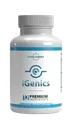
iGenics is a comprehensive retinal antioxidant and vascular support formula designed to deliver the full AREDS2-validated nutritional foundation alongside additional clinically researched compounds that address the vascular and neurotrophin dimensions of retinal health that dietary antioxidants alone cannot cover. Lutein (20mg, FloraGLO Branded) and Zeaxanthin (4mg) for Macular Pigment DensityThe formula provides clinically significant doses of both lutein and zeaxanthin in the FloraGLO branded form - the most extensively studied commercial lutein source, used in the majority of clinical trials demonstrating macular pigment optical density improvement. The 20mg lutein dose exceeds the AREDS2 standard (10mg), reflecting emerging research suggesting higher doses produce greater MPOD improvements in individuals with low baseline macular pigment.
Astaxanthin (6mg, AstaZine Branded) for RPE Mitochondrial ProtectionAstaZine astaxanthin from Haematococcus pluvialis is the standard form used in human clinical trials. At 6mg, the formula provides a dose shown in clinical research to improve visual acuity, contrast sensitivity, and accommodation speed - likely through reduction in RPE mitochondrial oxidative stress and improvement in choroidal microvascular perfusion.
Bilberry Extract (Vaccinium myrtillus) for Rhodopsin Regeneration SupportBilberry anthocyanins have demonstrated the ability to accelerate rhodopsin (rod visual pigment) regeneration after light bleaching - the process that determines how quickly visual adaptation to darkness occurs. This effect supports retinal function in low-light conditions and reduces photoreceptor fatigue from screen exposure. Bilberry's vasodilatory properties also support choroidal microvascular perfusion.
Saffron (Crocus sativus) for Photoreceptor NeuroprotectionSaffron's active carotenoid compounds - crocin and crocetin - have demonstrated remarkable neuroprotective activity against photoreceptor apoptosis in both animal models and human clinical trials. A randomized trial published in Investigative Ophthalmology & Visual Science documented measurable improvements in flicker sensitivity in AMD patients treated with saffron extract, suggesting functional photoreceptor rescue rather than merely symptomatic management.
Zinc (as Zinc Picolinate) for RPE Visual Cycle Enzyme FunctionZinc is the essential cofactor for retinol dehydrogenase - the enzyme that converts retinol (vitamin A alcohol) to retinal (vitamin A aldehyde) within the visual cycle. Zinc deficiency is directly associated with impaired dark adaptation and night blindness. The picolinate form provides superior bioavailability compared to zinc oxide or zinc sulfate.
How to Take iGenics: The Official Protocol
Recommended Daily Dosage and Frequency
The standard protocol is two capsules per day, taken consistently. The carotenoid and astaxanthin components are lipophilic - their intestinal absorption is dramatically improved in the presence of dietary fats. Consistent daily dosing is essential for MPOD improvement, which is a cumulative process requiring months of sustained carotenoid delivery.
Should iGenics Be Taken With or Without Food?
The formula should always be taken with a meal containing dietary fat - ideally breakfast or lunch (when natural light exposure during the day creates the highest retinal oxidative burden). Even a small amount of fat (olive oil, nuts, eggs) is sufficient to facilitate carotenoid micellarization and intestinal absorption. Taking iGenics on an empty stomach reduces lutein and astaxanthin bioavailability by up to 70%.
How Long Before Vision Benefits Are Noticeable?
MPOD improvement requires 3-6 months of consistent supplementation, as lutein and zeaxanthin must accumulate in the macular tissue to reach optically detectable density. Early-reported benefits typically include:
- Weeks 4-8: Improved contrast sensitivity and reduced glare sensitivity from astaxanthin and bilberry
- Months 2-4: Improved adaptation to changing light levels and reduced visual fatigue from screen use
- Months 4-6+: Measurable MPOD improvement (if tested) and sustained protection from ongoing phototoxic oxidative accumulation
Who Should Consult a Physician Before Use?
- Individuals with known allergy to saffron or any Iridaceae family plants should consult a physician
- Those taking immunosuppressants or chemotherapy agents should discuss antioxidant supplementation with their oncologist or specialist
- Individuals with hemochromatosis or other iron storage disorders should be cautious with zinc supplementation
- Pregnant or breastfeeding individuals should consult their physician before use
Scientific References & Validation
Full citations with PMID links, methodology notes & evidence ratings on puresupphub.com