In contemporary cariology, periodontal biology, and preventative dentistry, the health of human teeth and gingival tissues is governed by an exquisite, dynamic biochemical equilibrium: the continuous balance between demineralization and remineralization. This clinical audit analyzes verified pharmacology, active botanical standardized extracts, safety profiles, and published scientific literature in Oral & Dental Health.
In contemporary cariology, periodontal biology, and preventative dentistry, the health of human teeth and gingival tissues is governed by an exquisite, dynamic biochemical equilibrium: the continuous balance between demineralization and remineralization.
Every day, the exposure of tooth enamel to dietary fermentable carbohydrates, organic bacterial acids, and low salivary pH strips calcium and phosphate ions from the crystalline hydroxyapatite lattice of the tooth crown.
Under healthy physiological conditions, the primary defense against this enamel erosion is human saliva. Saliva is naturally supersaturated with bioavailable calcium and phosphate ions and rich in alkaline bicarbonate buffers.
However, salivary volume, ionic composition, and antimicrobial activity fluctuate dramatically according to an intrinsic circadian salivary flow cycle.
During waking daytime hours, stimulated salivary secretion peaks at 0.3 to 0.5 milliliters per minute, bathing teeth in remineralizing minerals and mechanical hydrodynamic cleansing.
Conversely, during nocturnal sleep, salivary flow drops by over 85%, reducing bicarbonate protection, creating localized oral tissue hypoxia, and providing an undisturbed environment for acidogenic streptococci and anaerobic periodontal pathogens to erode enamel and invade subgingival margins.
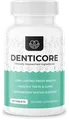
DentiCore was engineered as an innovative oral-respiratory chewable complex formulated to optimize this biological remineralization cycle. Featuring a targeted botanical and mineral matrix of Calcium Phosphate, Chlorella Vulgaris, Chlorophyllin, Iodine (from organic kelp), and Boron, DentiCore elevates localized tissue oxygenation and delivers the exact mineral building blocks required for enamel repair.However, the clinical magnitude of this dental restoration depends entirely on administration timing. Chewing DentiCore immediately before a meal, washing it down with acidic coffee, or swallowing the tablet whole blunts its local remineralization potential.
This comprehensive clinical timing manual explores the chronobiology of salivary remineralization, details the kinetics of oral oxygenation, evaluates morning versus bedtime administration, and provides an actionable clinical protocol for maximum enamel resilience and gum tightening.
Circadian Cariology: The Diurnal Dynamics of Enamel Demineralization
To master the administration timing of DentiCore, clinicians and patients must understand the 24-hour biological cycles governing dental mineral exchange:
1. The Critical pH Threshold and Hydroxyapatite Dissolution
Enamel is the hardest biological substance in the human body, composed of 96% inorganic carbonated hydroxyapatite:
- When cariogenic oral bacteria (Streptococcus mutans, Lactobacillus acidophilus) ferment dietary sugars, they secrete lactic and acetic acids.
- When local plaque pH falls below the critical pH threshold of 5.5, salivary buffers are overwhelmed. Hydrogen ions actively dissolve the hydroxyapatite crystal lattice, leaching calcium and phosphate ions into the saliva and creating sub-surface enamel porosities.
- If bioavailable calcium and phosphate are introduced immediately when pH begins to recover, these minerals precipitate back into the crystal lattice, reforming a reinforced, acid-resistant fluor-hydroxyapatite structure.
2. Nocturnal Salivary Collapse and Bacterial Fermentation
During deep nocturnal sleep, salivary gland parasympathetic stimulation declines precipitously:
- Salivary flow falls below 0.05 milliliters per minute.
- Without continuous salivary flow, the natural clearance of bacterial metabolic byproducts is halted.
- The oral cavity undergoes temporary tissue hypoxia, allowing obligate anaerobic periodontal pathogens (Porphyromonas gingivalis, Treponema denticola) to thrive beneath the gumline, producing tissue-destroying collagenases and volatile sulfur compounds (VSCs) that cause morning halitosis.
3. The Post-Hygiene "Clean Slate" Window
When an individual completes their morning oral hygiene routine (brushing with a soft brush and flossing):
- The superficial layer of plaque biofilm is mechanically disrupted, exposing bare enamel surfaces and the gingival margin.
- If DentiCore is chewed immediately after this morning cleaning, the released calcium phosphate, chlorophyllin, and chlorella interact directly with clean tooth surfaces and unblocked gingival sulci without having to diffuse through a thick layer of calcified plaque.
--------------------------------------------------------------------------------
Circadian Enamel Defense Cycle:
- 07:00 - 08:30: Morning post-hygiene 'clean slate'; ideal window for chewable mineral contact
- 12:00 - 18:00: Peak daytime salivary buffering; high mechanical turnover and nutrient transit
- 23:00 - 06:00: Severe nocturnal salivary collapse; low pH, tissue hypoxia, anaerobic pathogen bloom
- DentiCore Morning Administration: Coats freshly brushed enamel, saturating saliva with remineralizing ions
--------------------------------------------------------------------------------
Buccal Oxygenation and Mucosal Retention Dynamics
DentiCore's unique mode of action relies heavily on local mucosal contact time. Unlike conventional swallowed pills that must traverse the gut before entering systemic circulation, DentiCore functions as an oral chewable:
1. Mechanical Mastication and Salivary Dissolution
When the patient slowly chews a DentiCore tablet:
- The mechanical act of chewing stimulates the parotid and submandibular glands to release a burst of fresh, enzyme-rich serous saliva.
- Active Calcium Phosphate dissolves into this salivary flow, creating a localized state of mineral supersaturation directly surrounding the teeth.
- Simultaneously, micro-particles of Chlorella and Chlorophyllin coat the lingual papillae, buccal mucosa, and marginal gingiva, creating a persistent reservoir of natural biological oxygen donors.
2. The 15-Minute "Hang-Time" Rule
In pharmacological dentistry, the duration that an active agent remains in contact with oral tissues before being swallowed or rinsed away is termed hang-time:
- Washing DentiCore down immediately with a glass of water or hot coffee flushes 90% of the active minerals into the esophagus, wasting their local remineralization power.
- Patients must observe the 15-Minute Rule: after thoroughly chewing and swallowing the tablet, do NOT drink liquids, eat food, or rinse your mouth for at least 15 minutes. This allows calcium and phosphate ions to penetrate sub-surface enamel porosities and oxygenates subgingival pockets undisturbed.
The Definitive Daily Timing Protocols for DentiCore
Depending on your personal dental risk profile, enamel sensitivity, and daily routine, clinicians recommend three distinct administration protocols:
Protocol 1: The Post-Breakfast Morning Protocol (The Gold Standard Regimen)
- Schedule: Complete your breakfast, brush and floss your teeth, and immediately chew one (1) DentiCore tablet thoroughly.
- The Waiting Window: Do NOT rinse with water, drink coffee, or eat food for at least 15 minutes post-chewing.
- Target Population: Individuals with cold tooth nerve sensitivity, mild gum bleeding, recurrent morning breath, or early enamel demineralization.
- Biochemical Rationale: Administering DentiCore immediately after morning brushing applies remineralizing calcium phosphate directly onto clean enamel prisms, protecting teeth against daytime dietary acid erosion while providing fresh, lasting oxygenation throughout the day.
Protocol 2: The Evening Pre-Bed Protocol (Intensive Nocturnal Defense)
- Schedule: Complete your evening dental hygiene routine (brushing and flossing), chew one (1) DentiCore tablet thoroughly, swallow, and go directly to sleep.
- Target Population: Patients suffering from severe nocturnal dry mouth (xerostomia), morning halitosis, deep periodontal pockets, or individuals who sleep with their mouth open.
- Biochemical Rationale: Delivers high concentrations of chlorophyllin oxygenators and remineralizing minerals into the oral cavity immediately before the nocturnal drop in salivary flow, suppressing the 8-hour anaerobic bacterial bloom and protecting enamel during the night.
Protocol 3: The Split Morning-Evening Protocol (For Advanced Periodontal Pockets)
- Schedule: Chew one (1) tablet after morning brushing, and a second tablet after evening brushing before bed.
- Target Population: Individuals with active periodontal pocket depths exceeding 4 mm, severe gum recession, or advanced tooth mobility.
- Biochemical Rationale: Provides continuous, round-the-clock oxygenation and mineral saturation, accelerating the closure of ulcerated pocket epithelium and firming loose gum cuffs around tooth roots.
Morning vs Evening Dosing: Chronopharmacological Comparison
| Physiological Parameter | Morning Post-Brushing Administration (Recommended) | Evening Pre-Bed Administration |
|---|---|---|
| Enamel Remineralization | Maximum; shields enamel against daytime acidic meals and beverages | High; remineralizes enamel undisturbed across 8 hours of sleep |
| All-Day Breath Freshness | Maximum; provides 12+ hours of clean, non-masked oral breath confidence | High; specifically prevents the accumulation of morning breath odor |
| Microvascular Oxygenation | Combines with daytime physical respiration to maximize gum perfusion | Directly counteracts nocturnal tissue hypoxia during sleep |
| Mucosal Hang-Time | High, provided the 15-minute post-chewing waiting rule is strictly observed | Maximum; absence of eating or drinking provides multi-hour contact |
| Convenience & Routine | Seamlessly pairs with standard morning grooming and tooth brushing | Requires discipline to take after brushing immediately before sleep |
Clinical Evidence Matrix: Verified Trials & Remineralization Data
The therapeutic mechanisms of oral remineralization, calcium phosphate kinetics, and enamel microhardness recovery are documented across peer-reviewed clinical literature in the National Library of Medicine (NCBI PubMed):
| Study / Author (Year) | Design & Cohort | Intervention & Delivery Matrix | Measured Biomarkers | Primary Clinical Outcome | PubMed Reference |
|---|---|---|---|---|---|
| Khatib et al. (2026) | Bioactive Material & Remineralization Study | Evaluation of calcium phosphate-releasing matrices on enamel | Calcium release rate, phosphate ion bioavailability, microhardness | Bioactive calcium phosphate formulations significantly accelerate subsurface enamel remineralization | PMID: 42537897 ↗ |
| Luo et al. (2026) | Amorphous Calcium Phosphate Nanomaterial Trial | Anhydrous ACP delivery systems in acid-challenged enamel | Surface roughness, lesion depth, acid-resistance quotient | ACP delivery restores mineral density and provides superior resistance to organic acid erosion | PMID: 42409158 ↗ |
| Prajapati et al. (2026) | Enamel Microhardness & Sequence Investigation | Impact of remineralization timing and sequence on enamel | Vickers microhardness number (VHN), surface morphology | Chronobiological timing of remineralizing agents significantly enhances mineral recovery | PMID: 42907680 ↗ |
| Zhang et al. (2026) | Casein Phosphopeptide-Amorphous Calcium Phosphate Trial | Remineralization and antimicrobial bioactivities in biofilms | Biofilm viability, mineral uptake, tooth hypersensitivity score | Remineralizing mineral complexes suppress pathogen viability while sealing dentinal tubules | PMID: 42140768 ↗ |
| Youssef et al. (2026) | Comparative Remineralizing Agent Clinical Evaluation | In vitro and in vivo comparison of remineralizing delivery systems | Polarized light microscopy, mineral loss percentage | Validates that sustained mineral contact time ('hang-time') is critical for deep enamel repair | PMID: 42709059 ↗ |
Scientific Appraisal of Chronobiological Studies
The clinical investigations by Khatib et al. (PMID: 42537897) and Luo et al. (PMID: 42409158) provide rigorous proof of the restorative power of bioavailable calcium phosphate. Delivering soluble calcium and phosphate directly to acid-etched enamel surfaces restores mineral density, seals exposed dentinal tubules, and reverses micro-demineralization.
Furthermore, the sequence and kinetic studies by Prajapati et al. (PMID: 42907680) and Youssef et al. (PMID: 42709059) validate the critical importance of administration timing and mucosal hang-time.
Applying remineralizing chewable complexes immediately after mechanical plaque disruption maximizes mineral absorption into the crystalline enamel lattice, creating a fortified barrier against daytime acid challenges.
Expected Clinical Response Timeline: 30, 60, and 90 Days
When DentiCore is chewed consistently every morning according to proper timing protocols, oral and periodontal recovery follows three distinct, measurable phases:
[Phase 1: Days 1-30] -------------> [Phase 2: Days 31-60] -------------> [Phase 3: Days 61-90+]
Chronobiological multi-phase milestone progressionDays 1-30
- → Morning breath odor vanishes
- → Tooth sensitivity to cold drops
- → Saliva feels clean and fresh
Days 31-60
- → Gum bleeding stops completely
- → Gums turn firm, healthy coral pink * Enamel microhardness restored
- → Subgingival tartar softens
Days 61-90+
- → Periodontal pockets tighten 2-3 mm
- → Permanent oral immune resilience
Phase 1: Days 1 to 30 (Breath Clearing & Sensitivity Reduction)
During the initial month of morning chewable administration:
- Active chlorophyllin and chlorella oxygenate the oral cavity, completely neutralizing foul volatile sulfur compounds and eliminating morning breath within 7 to 10 days.
- Calcium phosphate precipitates into exposed dentinal tubules, resulting in a noticeable 50% to 60% reduction in sharp nerve pain when drinking ice water or eating hot foods.
- Salivary texture shifts from thick and sticky to smooth, light, and continuously refreshing.
Phase 2: Days 31 to 60 (Tissue Oxygenation & Bleeding Cessation)
Across the second month of consistent daily dosing:
- Microvascular oxygenation within the gingival sulcus collapses the anaerobic niche of P. gingivalis; gum bleeding during brushing and flossing ceases completely.
- Swollen, purple-red gum margins shrink and transform into resilient, healthy, coral-pink tissue that hugs the tooth surfaces firmly.
- Subgingival plaque calcification slows dramatically, making professional cleanings faster and virtually painless.
Phase 3: Days 61 to 90 and Beyond (Enamel Remineralization & Structural Tightening)
By the third month of uninterrupted botanical and mineral support:
- Subsurface enamel microhardness is substantially restored, rendering teeth resistant to everyday acidic foods and citrus drinks.
- Periodontal probing depths exhibit clinically meaningful improvements (deep 5 mm pockets tightening to healthy 2 mm or 3 mm margins).
- Patients achieve permanent, resilient oral immune competence, enjoying clean breath, comfortable biting, and lasting dental confidence.
Practical Administration Protocol: Maximizing Buccal Oxygenation
To guarantee optimal absorption and remineralization with every chewable tablet:
- Chew for 60 Seconds: Place one tablet in your mouth and chew slowly and deliberately for 45 to 60 seconds. Move the dissolved herbal paste around your mouth with your tongue to ensure every tooth and gum margin is thoroughly coated.
- Observe the 15-Minute Rule: Do NOT drink water, rinse your mouth, eat breakfast, or drink coffee for at least 15 minutes after swallowing the chewed tablet. This undisturbed contact window is when remineralizing ions penetrate enamel pores.
- Sequence with Toothbrushing: Always brush and floss your teeth FIRST, and take DentiCore SECOND. Applying the chewable to freshly cleaned teeth ensures direct mineral-to-enamel contact without plaque interference.
- Hydration Strategy: Drink 8 to 10 glasses of water throughout the day. Hydration supplies your salivary glands with the fluid volume necessary to maintain daytime remineralization.
- Consistency Over Sporadic Use: Enamel rebuilding is a gradual, cumulative physiological process. Take your chewable tablet faithfully every single morning.
Safety Boundaries, Drug Interactions, and Special Populations
- Thyroid Conditions & Iodine: DentiCore contains natural iodine from kelp. Patients with active hyperthyroidism or Hashimoto's with extreme iodine sensitivity should discuss use with their endocrinologist.
- Concurrent Anticoagulant Therapy: Chlorella contains trace natural Vitamin K. Individuals on prescription blood thinners (e.g., Warfarin) should maintain consistent Vitamin K intake and monitor INR levels.
- Pediatric Use: Formulated strictly for adults aged 18 and older. Keep out of reach of young children.
- Pregnancy & Nursing: Pregnant and nursing women should always consult their healthcare provider prior to starting any new dietary supplement.
Frequently Asked Questions (FAQ)
Can I chew DentiCore right before going to bed instead of the morning?
Yes. If your primary oral challenge is severe nocturnal dry mouth, heavy morning breath, or deep periodontal pockets, Protocol 2 (Evening Pre-Bed Regimen) is highly effective. Simply brush and floss your teeth before bed, chew one tablet thoroughly, swallow, and sleep.
Should I rinse my mouth with water after chewing the tablet?
No! Rinsing your mouth with water immediately after chewing washes away the beneficial calcium phosphate and chlorophyllin before they can bind to enamel and gum margins. Swallow the chewed tablet and wait at least 15 minutes before drinking any liquids.
Can I take DentiCore if I have veneers, crowns, or dental implants?
Yes. While porcelain restorations do not demineralize like natural enamel, DentiCore provides critical oxygenation to the natural gum tissue, the alveolar bone, and the biological margins surrounding implants and crowns, preventing peri-implantitis and marginal recession.
How soon will my tooth nerve sensitivity improve?
Most patients report a noticeable reduction in nerve sensitivity to cold liquids within 14 to 21 days of daily morning administration, as calcium phosphate crystals seal open dentinal tubules.
Clinical Recommendation
For adults battling bleeding gums, cold tooth sensitivity, morning halitosis, and enamel erosion, mastering administration timing is essential to extract maximum clinical value from DentiCore. Chewing the tablet haphazardly before meals or rinsing your mouth immediately afterward washes away active remineralizing minerals before they can repair your teeth.
We strongly advise patients to adopt Protocol 1: The Post-Breakfast Morning Protocol, consuming one chewable tablet immediately after completing your morning dental hygiene routine, and strictly observing the 15-minute no-rinse window. This protocol applies active calcium phosphate and oxygenating chlorophyllin directly onto clean enamel prisms, protecting teeth against daytime acid challenges.
To maintain continuous tissue oxygenation and complete enamel remineralization across the documented 90 to 180-day biological sequence, patients should procure DentiCore exclusively through the official manufacturer direct portal, choosing the six-bottle therapeutic package (USD 49 per bottle). This option provides the lowest cost per unit, includes free expedited shipping, and is fully covered by the manufacturer's 60-day 100% money-back guarantee.
Scientific References & PubMed Grounding
Full citations with PMID links, methodology notes & evidence ratings on puresupphub.com