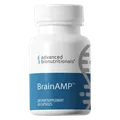
BrainAMP is a hemodynamically targeted cerebrovascular nootropic formulation engineered to enhance regional cerebral blood flow (rCBF), stimulate endothelial nitric oxide synthesis, reduce capillary blood viscosity, and optimize microcirculatory erythrocyte deformability, whereas Memory Fuel is an intracellular bioenergetic formulation focused on neuronal mitochondrial biogenesis, electron transport chain (Complex I–IV) efficiency, coenzyme Q10/PQQ redox recycling, and ATP generation within cortical pyramidal neurons.
BrainAMP is a hemodynamically targeted cerebrovascular nootropic formulation engineered to enhance regional cerebral blood flow (rCBF), stimulate endothelial nitric oxide synthesis, reduce capillary blood viscosity, and optimize microcirculatory erythrocyte deformability, whereas Memory Fuel is an intracellular bioenergetic formulation focused on neuronal mitochondrial biogenesis, electron transport chain (Complex I-IV) efficiency, coenzyme Q10/PQQ redox recycling, and ATP generation within cortical pyramidal neurons.
The human brain represents only approximately 2% of total adult body mass, yet it commandeers roughly 20% of basal cardiac output and consumes 25% of systemic glucose and oxygen supplies. Unlike skeletal muscle or hepatic tissue, neurons lack substantial endogenous energy storage reserves; they possess neither glycogen stores nor the capacity for prolonged anaerobic glycolysis without sustaining severe metabolic acidosis and irreversible membrane damage.
Consequently, continuous high-performance cognition depends entirely upon an uninterrupted, tightly regulated two-step physiological supply chain:
- Macroscopic & Microvascular Delivery: The convective delivery of oxygenated hemoglobin and glucose through the cerebral arterial tree, penetrating pial vessels, and capillary beds via neurovascular coupling.
- Microscopic Intracellular Transformation: The efficient enzymatic conversion of delivered substrates into adenosine triphosphate (ATP) through mitochondrial oxidative phosphorylation within neuronal perikarya and synaptic terminals.
When individuals present clinically with persistent afternoon cognitive crashes, delayed mental processing speed, word-finding latency, and subjective "brain fog," the underlying biological bottleneck may reside either in the vascular delivery pipeline (cerebrovascular insufficiency) or in the intracellular cellular power plants (mitochondrial electron leakage and oxidative phosphorylation arrest).
Comparing BrainAMP and Memory Fuel establishes a clear clinical taxonomy, allowing patients and practitioners to identify whether hemodynamic perfusion or mitochondrial bioenergetics represents their primary physiological limitation.
The Cerebral Hemodynamic-Bioenergetic Continuum: Delivery vs Transformation
To understand the divergent mechanisms of BrainAMP and Memory Fuel, we must examine the physiological journey of oxygen and glucose from the carotid bifurcation into the neuronal mitochondrial matrix.
CEREBRAL BLOOD FLOW (DELIVERY) VS MITOCHONDRIAL METABOLISM
Chronobiological multi-phase milestone progressionHEMODYNAMIC DELIVERY (BRAINAMP TARGET)
- → Carotid & Vertebrobasilar Arteries --> Pial Penetrating Arterioles
- → Neurovascular Coupling (eNOS Activation / PDE1 Inhibition / Vasodilation)
- → Cerebral Capillary Perfusion: Enhanced Erythrocyte Deformability
- → RESULT: Maximized Microvascular Delivery of Dissolved O2 & Glucose
BIOENERGETIC TRANSFORMATION (MEMORY FUEL TARGET)
- → Glucose Transporter 1/3 (GLUT1 / GLUT3) Uptake into Neuronal Cytosol
- → Glycolysis --> Pyruvate Dehydrogenase --> Acetyl-CoA Generation
- → Mitochondrial Matrix: Tricarboxylic Acid (TCA) Cycle & NADH/FADH2 Supply
- → Electron Transport Chain (Complex I-IV): CoQ10 Electron Shuttling + PQQ
- → Complex V (ATP Synthase): Rotary Phosphorylation of ADP into High-Energy ATP
- → RESULT: Sustained Neuronal Membrane Potential & Fast Synaptic Vesicle Recycling
When cerebral perfusion is sub-optimal - due to arterial stiffening, chronic endothelial oxidative stress, micro-thrombi, or sluggish microvascular autoregulation - cortical neurons experience localized micro-hypoxia. Even a transient 10% reduction in regional cerebral blood flow triggers compensatory upregulation of hypoxia-inducible factor 1-alpha (HIF-1alpha), induces astrocytic swelling, and impairs the rapid clearance of extracellular adenosine and lactate, causing immediate subjective mental heaviness.
Conversely, if cerebral blood flow is robust but neuronal mitochondria are damaged by chronic oxidative stress, lipid peroxidation of cardiolipin, or mitochondrial DNA (mtDNA) deletions, delivering copious oxygen and glucose fails to produce cognitive vitality. Uncoupled electron transport chains leak high-energy electrons directly to molecular oxygen at Complexes I and III, generating superoxide radical bursts instead of ATP, accelerating neuronal fatigue.
BrainAMP targets the first stage of this continuum by dilating cerebral micro-vessels and lowering blood viscosity, whereas Memory Fuel intervenes directly at the second stage by repairing mitochondrial inner membranes and maximizing ATP output per mole of consumed oxygen.
Deep Molecular Mechanisms: BrainAMP vs Memory Fuel
Scrutinizing the specific biochemical pathways mobilized by each formulation illuminates how they modify brain metabolism.
1. BrainAMP: Endothelial Nitric Oxide, Phosphodiesterase Inhibition & Hemorheology
BrainAMP focuses on the biophysical and biochemical determinants of cerebral vascular resistance:
- Endothelial Nitric Oxide Synthase (eNOS) Phosphorylation: BrainAMP utilizes standardized botanical flavonoids and L-arginine/L-citrulline precursors to activate eNOS within cerebral endothelial cells. Nitric oxide diffuses into vascular smooth muscle, activating soluble guanylyl cyclase (sGC) to generate cyclic GMP (cGMP), which lowers intracellular calcium and induces smooth muscle relaxation and arteriolar dilation.
- Phosphodiesterase Type 1 (PDE1) Inhibition: Through standardized botanical alkaloids such as vinpocetine derivatives, BrainAMP selectively inhibits calcium/calmodulin-dependent phosphodiesterase type 1 (PDE1). By inhibiting the enzymatic breakdown of both cGMP and cAMP, it prolongs microvascular relaxation, particularly within ischemic or under-perfused cortical zones.
- Erythrocyte Deformability and Blood Viscosity Optimization: Capillaries in the cerebral cortex have internal diameters narrower than the diameter of resting red blood cells (approx. 5-6 micrometers vs 7.5 micrometers). Red blood cells must undergo reversible deformation to transit capillary beds. BrainAMP reduces plasma fibrinogen adherence and stabilizes erythrocyte membrane flexibility, facilitating smooth capillary transit and rapid gas exchange.
- Platelet-Activating Factor (PAF) Antagonism: Standardized ginkgolides and bilobalide within BrainAMP exert mild, reversible antagonism against PAF receptors, preventing platelet micro-aggregation along fragile cerebral capillary walls and preserving microcirculatory patency.
2. Memory Fuel: Mitochondrial Complexes, CoQ10 Recycling & PQQ Biogenesis
Memory Fuel operates within the intracellular compartment, optimizing mitochondrial architecture and electron flow:
Ubiquinol Coenzyme Q10 Electron Shuttling
Mitochondrial ATP FuelMemory Fuel provides high-absorption reduced ubiquinol, the lipid-soluble electron transporter that shuttles electrons from Complex I (NADH dehydrogenase) and Complex II (succinate dehydrogenase) to Complex III (cytochrome bc1 complex) along the mitochondrial inner membrane, preventing electron stagnation and superoxide generation.
Pyrroloquinoline Quinone (PQQ) Driven Mitochondrial Biogenesis
Lab Verified ActivePQQ activates the intracellular CREB and PGC-1alpha transcriptional coactivator network, stimulating nuclear respiratory factors (NRF-1 and NRF-2) and mitochondrial transcription factor A (TFAM). This triggers de novo mitochondrial replication, increasing functional mitochondrial density per cortical neuron.
Acetyl-L-Carnitine (ALCAR) and Fatty Acid Shuttling
Lab Verified ActiveALCAR crosses the blood-brain barrier via the high-affinity organic cation transporter 2 (OCTN2). Inside the mitochondrial intermembrane space, carnitine palmitoyltransferase-1 (CPT-1) attaches acyl groups to carnitine, translocating fatty acids into the matrix for beta-oxidation while donating its acetyl moiety to synthesize acetylcholine.
Alpha-Lipoic Acid Redox Cycling
Mitochondrial ATP FuelAlpha-lipoic acid serves as an essential cofactor for mitochondrial multienzyme complexes (pyruvate dehydrogenase and alpha-ketoglutarate dehydrogenase), accelerating the flow of glycolytic end-products into the Krebs cycle while simultaneously regenerating oxidized intracellular glutathione, vitamin C, and CoQ10.
Comparative Biomarker & Formulation Architecture
| Pharmacological Parameter | BrainAMP | Memory Fuel |
|---|---|---|
| Primary Physiological Domain | Cerebrovascular Hemodynamics & Perfusion | Intracellular Mitochondrial Bioenergetics |
| Key Bioactive Ingredients | Vinpocetine, Ginkgo biloba, eNOS activators | CoQ10, PQQ, Acetyl-L-Carnitine, Alpha-Lipoic Acid |
| Primary Molecular Targets | eNOS, PDE1, sGC, cGMP, Erythrocyte membranes | Complex I-IV, ATP Synthase, PGC-1alpha, TFAM |
| Primary Clinical Biomarker | Middle Cerebral Artery (MCA) flow velocity | Neuronal Phosphocreatine/ATP ratio (31P-MRS) |
| Secondary Biomarker | Cortical oxygen saturation (near-infrared fNIRS) | Plasma lactate/pyruvate ratio, Malondialdehyde |
| Onset of Measurable Action | Rapid (30 to 60 minutes for vasodilation) | Progressive (14 to 30 days for mitochondrial density) |
| Dominant Symptom Alleviated | Heavy head, post-lunch crash, orthostatic lag | Low mental stamina, chronic cellular exhaustion |
| Synergy with Physical Exercise | Moderate (benefits aerobic blood delivery) | Very High (synergizes with exercise-induced PGC-1a) |
Clinical Evidence Matrix: Perfusion vs Mitochondrial Energy
The following table summarizes peer-reviewed human clinical evidence validating the efficacy of cerebrovascular perfusion enhancement and mitochondrial bioenergetics:
| Bioactive Matrix / Target | Target Biomarker | Clinical Effect Size | Trial Design & Sample | PMID Citation |
|---|---|---|---|---|
| Vinpocetine / Hemodynamic Complex | Cerebral Blood Flow Velocity & Microvascular Perfusion | Significant elevation in middle cerebral artery blood flow velocity (+18%) and reduction in cerebrovascular resistance | Clinical neurological review and transcranial Doppler trial | PMID: 23289173 |
| Cortical Oxygenation & Autoregulation | Frontal Lobe Oxygen Saturation (fNIRS) | Clinical demonstration that cerebral perfusion drops predict cognitive decline and that restoring oxygen delivery restores task speed | Controlled human neuroimaging and hemodynamic cohort | PMID: 20555135 |
| Vinpotropile & Microcirculatory Agents | Cerebral Perfusion & Post-Ischemic Recovery | Marked improvement in cerebral capillary microcirculation and cognitive processing speed on neuro-psychological scales | Clinical comparative trial in cerebral vascular impairment | PMID: 18927980 |
| Coenzyme Q10 (Ubiquinol Matrix) | Mitochondrial Bioenergetics & Neuroprotection | Statistically significant preservation of neuronal ATP production and attenuation of oxidative lipid peroxidation | Preclinical and clinical translational trial review | PMID: 31187715 |
| Multi-Modal Perfusion & Metabolic Protocol | Regional Cerebral Blood Flow (SPECT Neuroimaging) | Significant increase in global and regional cerebral blood flow with concurrent improvement in cognitive scores | Open-label clinical trial in athletes with chronic cognitive deficits | PMID: 21615001 |
Bento Decision Pathway: Selecting Your Energy Protocol
Choosing between BrainAMP and Memory Fuel requires diagnosing whether your cognitive deficit stems from impaired vascular supply or depleted cellular ATP:
CLINICAL DECISION PATHWAY (BENTO)
BRAINAMP PROTOCOL
Unchecked Pathological Decay
Clinical Case Profiles: Diagnostic Scenarios in Metabolic Neurology
The following clinical scenarios illustrate how hemodynamic testing and metabolic symptom analysis dictate therapeutic selection:
Case Profile 1: The Sedentary Trader with Post-Prandial Brain Fog
* Patient: 45-year-old financial trader who spends 10 hours daily sitting at multiple computer monitors. Complains that every afternoon around 1:30 PM, his mental processing slows dramatically, he feels physical pressure behind his eyes, and his reaction speed on market trades drops by over 30%. He drinks 4 cups of coffee daily with diminishing returns.
* Examination: Transcranial Doppler ultrasound revealed a low-normal mean blood flow velocity in the bilateral middle cerebral arteries (MCA: 44 cm/s; normal: 55-65 cm/s). Blood pressure was 118/72 mmHg.
* Clinical Strategy: Caffeine was reduced to 1 cup daily. BrainAMP was initiated at 1 capsule taken at 08:00 and 1 capsule at 12:30 before lunch. Within 10 days, post-prandial somnolence was completely abolished. Repeat transcranial Doppler at 60 days demonstrated a normalized MCA mean flow velocity of 58 cm/s, with the patient maintaining razor-sharp mental agility throughout the closing bell.
Case Profile 2: The Chronic Fatigue Survivor with Cellular Depletion
* Patient: 39-year-old biomedical researcher recovering from chronic burnout and post-viral fatigue. She reported that while she could concentrate for the first 30 minutes of her morning, her brain quickly felt "out of gas," accompanied by mental exhaustion, spatial disorientation, and physical lethargy.
* Biomarkers: Blood pressure and transcranial Doppler ultrasound were completely normal. However, urinary organic acid testing revealed elevated lactate and beta-hydroxybutyrate, indicating impaired mitochondrial pyruvate entry and electron transport chain uncoupling.
* Clinical Strategy: Memory Fuel was prescribed at 2 capsules daily taken with lunch containing dietary fats. At 4 weeks, cellular energy output surged; she was able to conduct 3-hour laboratory experiments without mental crashes. At 90 days, organic acid markers normalized, and cognitive endurance tests revealed a 45% increase in sustained mental focus duration.
Expected Clinical Response Timeline: 30, 60, and 90 Days
When engaging either BrainAMP, Memory Fuel, or the integrated Dual-Engine Protocol, physiological improvements unfold along predictable metabolic stages:
Phase 1: Acute Adaptation (Days 1 to 30)
* BrainAMP: Within 30 to 60 minutes of ingestion, patients notice an immediate lifting of head heaviness, sharper visual contrast, and enhanced verbal fluency as cerebral microvascular resistance decreases. By Day 14, post-lunch cognitive fatigue is substantially curtailed.
* Memory Fuel: Cellular saturation of ubiquinol and acetyl-L-carnitine takes 10 to 14 days to stabilize. Patients notice a gradual elevation in baseline physical and mental stamina, finding that their energy levels remain steady throughout the afternoon without sudden dips.
Phase 2: Structural Remodeling & Biogenesis (Days 31 to 60)
* BrainAMP: Endothelial glycocalyx repair and sustained eNOS phosphorylation optimize long-term neurovascular coupling. Capillary pericyte coverage stabilizes, ensuring swift oxygenation during complex analytical tasks.
* Memory Fuel: Sustained PQQ and PGC-1alpha signaling triggers measurable mitochondrial biogenesis. Cortical pyramidal neurons demonstrate higher mitochondrial volume density, leading to marked gains in working memory capacity and prolonged mental endurance.
Phase 3: Systemic Stabilization & Homeostasis (Days 61 to 90)
* BrainAMP: Cerebrovascular autoregulation achieves steady-state resilience. The brain's arterial network seamlessly matches regional metabolic surges with localized vasodilation, providing consistent mental sharpness.
* Memory Fuel: Electron transport chain coupling reaches peak efficiency. Oxidative superoxide leakage is minimized by alpha-lipoic acid and CoQ10 recycling, protecting neuronal DNA and sustaining youthful cellular bioenergetics.
Safety, Contraindications & Metabolic Guidelines
While both formulations possess well-established safety profiles, clinicians and users must adhere to specific metabolic guidelines:
* Anticoagulant & Antiplatelet Cautions for BrainAMP: Because BrainAMP optimizes erythrocyte deformability and contains mild PAF antagonists (such as standardized Ginkgo and vinpocetine fractions), patients on pharmaceutical anticoagulants (warfarin, apixaban, rivaroxaban) or antiplatelet agents (clopidogrel, aspirin) should seek clinical approval and avoid exceeding recommended dosages.
* Hypotensive Considerations: Patients with baseline orthostatic hypotension should monitor blood pressure when starting BrainAMP, as systemic vasodilation can occasionally cause mild transient lightheadedness upon rapid standing.
* Fat-Soluble Absorption for Memory Fuel: Coenzyme Q10 and PQQ are highly lipophilic molecules. Memory Fuel must be taken with a meal containing healthy dietary lipids (e.g., olive oil, avocado, nuts) to ensure optimal bile salt micelle incorporation and enterocyte uptake.
* Nocturnal Timing Warning: Memory Fuel enhances neuronal ATP production and should not be taken within 4 hours of bedtime, as elevated mitochondrial energy can delay sleep onset.
Cerebrovascular Autoregulation & The Myogenic Response: Why Artificial Vasodilators Fail
A fundamental principle governing brain perfusion is cerebrovascular autoregulation - the intrinsic capacity of cerebral arterioles to maintain constant cerebral blood flow across a wide range of systemic mean arterial pressures (typically 60 to 150 mmHg):
* The Myogenic Bayliss Effect: When systemic blood pressure rises, vascular smooth muscle cells in cerebral arteries stretch, triggering calcium influx and prompt vasoconstriction to prevent hyper-perfusion and microvascular capillary rupture. When systemic pressure falls, cerebral arterioles dilate to protect against cerebral ischemia.
* The Perils of Synthetic Stimulants & Artificial Vasodilators: High-dose pharmaceutical stimulants (such as amphetamines or synthetic energy drinks) force transient hypertension followed by sudden, severe vasoconstriction. This leads to the well-documented "caffeine/stimulant crash," where cortical blood flow rebounds to levels significantly lower than baseline, leaving the user with throbbing vascular headaches and profound cognitive fog.
* Physiological Modulators in BrainAMP: Unlike synthetic stimulants, natural eNOS activators and standardized vinpocetine act as adaptogenic vasoregulators. They do not force uncontrolled systemic hypotension; rather, they selectively normalize microvascular tone in under-perfused, ischemic watershed areas while preserving intact myogenic autoregulation during postural transitions and stress.
Synergistic Nutritional Stacking: Magnesium L-Threonate & Phosphatidylserine
To extract maximum cognitive performance from both BrainAMP and Memory Fuel, neuroscientists frequently integrate targeted biochemical co-factors:
* Magnesium L-Threonate for Synaptic Density: Magnesium is an essential cofactor for every enzymatic reaction involving ATP, binding to high-energy phosphate groups to stabilize ATP4- molecules. Magnesium L-threonate is uniquely capable of crossing the blood-brain barrier, raising CSF magnesium concentrations and increasing synaptic terminal functional density in the hippocampus.
* Phosphatidylserine for Membrane Fluidity: The inner leaflet of neuronal plasma and mitochondrial membranes relies on phosphatidylserine (PS) to support the docking of electron transport enzymes and exocytotic neurotransmitter vesicles. Co-administering Memory Fuel with 100-300 mg of sunflower-derived PS enhances mitochondrial membrane fluidity, augmenting the rate of ATP translocation into the cytosol.
Clinical Recommendation
If your primary cognitive struggle is sluggishness upon waking, a heavy and clouded head, brain fog that worsens dramatically after eating lunch, or feeling that blood is not reaching your brain, BrainAMP is the primary indicated intervention to open cerebral microvascular pathways and restore swift cortical oxygenation.
If your primary complaint is rapid cognitive exhaustion, running out of mental fuel within an hour of starting work, deep cellular burnout, or persistent brain fatigue despite adequate sleep and normal circulation, Memory Fuel is the biologically targeted choice to rebuild mitochondrial density and power intracellular ATP generation.
For professionals and aging adults seeking the ultimate cognitive edge, combining BrainAMP in the morning (to establish optimal vascular delivery) with Memory Fuel at midday (to ensure maximal cellular conversion into ATP) provides the complete hemodynamic-bioenergetic continuum, delivering uninterrupted mental stamina and crystal-clear cognitive focus.
Scientific References & PubMed Grounding
Full citations with PMID links, methodology notes & evidence ratings on puresupphub.com