According to epidemiological data from the Centers for Disease Control and Prevention (CDC), osteoarthritis currently affects an estimated 32.5 million adults in the United States. This clinical reality represents approximately 14.8% of all American adults aged 25 and older, escalating dramatically to 33.6% among individuals aged 65 and above. Furthermore, lifetime risk models indicate that 44.7% of the general population will develop symptomatic knee osteoarthritis by age 85.
According to epidemiological data from the Centers for Disease Control and Prevention (CDC), osteoarthritis currently affects an estimated 32.5 million adults in the United States. This clinical reality represents approximately 14.8% of all American adults aged 25 and older, escalating dramatically to 33.6% among individuals aged 65 and above. Furthermore, lifetime risk models indicate that 44.7% of the general population will develop symptomatic knee osteoarthritis by age 85.
For decades, the conventional frontline strategy for managing chronic joint discomfort has relied heavily on non-steroidal anti-inflammatory drugs (NSAIDs) such as ibuprofen, naproxen, and diclofenac, alongside generic glucosamine-chondroitin formulas. However, persistent gastrointestinal ulceration, renal stress, and cardiovascular warnings associated with chronic NSAID therapy have accelerated interest in standardized botanical compounds.
Among these, the polyphenol extract derived from Curcuma longa has become the most rigorously researched botanical agent in modern rheumatology. The primary clinical question asked by patients and clinicians alike is: Does curcumin actually work for arthritis and joint pain, and does the peer-reviewed evidence justify its clinical adoption?
The Pathophysiology of Cartilage Degradation
To evaluate whether curcumin works, we must examine the cellular mechanisms driving joint destruction. Osteoarthritis is no longer characterized merely as mechanical "wear and tear." It is an active, biochemically driven inflammatory process governed by catabolic signaling cascades within the joint capsule.
Under healthy physiological conditions, chondrocytes (the sole specialized cells within articular cartilage) maintain an equilibrium between the synthesis and degradation of the extracellular matrix (ECM), which consists primarily of type II collagen and water-binding aggrecan proteoglycans.
In the arthritic joint, cellular stress activates the master transcription factor nuclear factor kappa B (NF-κB). Once translocated to the cell nucleus, NF-κB triggers a storm of pro-inflammatory cytokines:
- Tumor Necrosis Factor-alpha (TNF-α) and Interleukin-1 beta (IL-1β): Disrupt synovial membrane integrity, initiating chronic synovial inflammation (synovitis).
- Matrix Metalloproteinases (MMP-1, MMP-3, and MMP-13): Potent zinc-dependent endopeptidases that directly cleave the triple-helix structure of type II collagen fibrils.
- Aggrecanases (ADAMTS-4 and ADAMTS-5): Enzymes that degrade the aggrecan core protein, draining osmotic pressure and dehydrating the cartilage cushion.
When the extracellular matrix erodes faster than chondrocytes can replenish it, articular cartilage thins, subchondral bone rubs directly against bone, and acute sensory nociceptors fire continuous pain signals.
Clinical Evidence: What Do Double-Blind RCTs Reveal?
The clinical efficacy of curcumin is supported by multiple peer-reviewed, randomized controlled trials (RCTs) assessing pain severity, joint stiffness, and physical functionality.
1. The Head-to-Head Diclofenac Comparison (Shep et al., 2019)
In a landmark randomized, open-label, active-controlled trial published in Trials (PMID: 30975196 ↗), researchers evaluated 139 patients diagnosed with symptomatic knee osteoarthritis over a 28-day treatment window.
- Intervention: The active arm received 500 mg of a bio-enhanced standardized curcumin extract (BCM-95) three times daily, while the pharmaceutical arm received 50 mg of diclofenac twice daily.
- Pain Reduction: At Day 28, 94% of patients in the curcumin cohort achieved a 50% or greater improvement in their Western Ontario and McMaster Universities Osteoarthritis Index (WOMAC) pain severity score, compared to 97% in the diclofenac cohort. Curcumin demonstrated non-inferior therapeutic efficacy.
- Safety and Tolerability: While pain relief was virtually identical, adverse gastrointestinal events occurred in only 13% of the curcumin cohort versus 28% of the diclofenac group. Curcumin achieved an 84% reduction in the requirement for pharmaceutical gastric rescue medication (such as H2 blockers or proton pump inhibitors, p < 0.01).
2. The Multicenter Ibuprofen Equivalence Trial (Kuptniratsaikul et al., 2014)
A large multicenter trial published in Clinical Interventions in Aging (PMID: 24672232 ↗) randomized 367 patients with primary knee osteoarthritis across multiple clinical departments.
- Intervention: Participants received either 1,500 mg/day of standardized Curcuma domestica extract or 1,200 mg/day of ibuprofen for 4 consecutive weeks.
- Outcomes: Mean WOMAC scores for pain, joint stiffness, and physical function improved significantly in both arms (p < 0.001). Curcumin demonstrated statistical equivalence to pharmaceutical ibuprofen across all functional domains, while recording significantly lower rates of abdominal distension and gastrointestinal discomfort (p = 0.046).
3. Biomarker Modulation and Systemic Inflammation (Panahi et al., 2014)
In an 8-week randomized placebo-controlled investigation (PMID: 24853120 ↗), supplementation with a standardized curcuminoid complex demonstrated a 31.4% reduction in serum malondialdehyde (MDA) - a critical biomarker of systemic oxidative stress - alongside a 52.3% improvement in overall physical mobility indices compared to placebo (p < 0.001).
Comparative Evidence Matrix
| Clinical Trial / Citation | Sample Size (n) | Daily Protocol | Primary Clinical Outcome | Key Safety / GI Outcome |
|---|---|---|---|---|
| Shep et al. (Trials, 2019) PMID: 30975196 ↗ |
n = 139 knee OA patients | 500 mg curcumin extract (3x daily) | ≥ 50% WOMAC pain improvement in 94% of patients | 84% lower requirement for gastric protective medication vs diclofenac |
| Kuptniratsaikul et al. (CIA, 2014) PMID: 24672232 ↗ |
n = 367 knee OA patients | 1,500 mg/day Curcuma extract | Statistically non-inferior to 1,200 mg ibuprofen (p < 0.001) | Significantly lower abdominal pain and GI disturbance (p = 0.046) |
| Panahi et al. (Phytother Res, 2014) PMID: 24853120 ↗ |
n = 40 randomized cohorts | 1,500 mg/day curcuminoid complex | 52.3% increase in joint functionality score | 31.4% reduction in systemic oxidative biomarker MDA (p < 0.001) |
The Pharmacokinetic Challenge: Standardization vs. Raw Turmeric
A critical point of confusion for consumers is the distinction between dietary turmeric powder and therapeutic curcumin extract:
* Raw Turmeric Root: Ground culinary turmeric root typically contains only 2% to 4% curcuminoids by dry weight. Consuming spoonfuls of culinary turmeric provides negligible active fractions.
* Intestinal Glucuronidation: Native curcumin is hydrophobic and undergoes rapid Phase-II glucuronidation and sulfation in the intestinal mucosa and liver. Consequently, less than 1% of native curcumin crosses into systemic circulation intact.
Standardized 95% Curcuminoid Extracts: Advanced clinical formulations isolate the three core therapeutic curcuminoids - curcumin, demethoxycurcumin, and bisdemethoxycurcumin* - standardized to 95% concentration.* Bio-Enhancement: When paired with bioactive essential turmeric oils, piperine, or phospholipid delivery matrices, bio-enhanced curcuminoids achieve 7-fold to 29-fold higher plasma area-under-the-curve (AUC) compared to standard unformulated extracts.
Expected Clinical Response Timeline
Understanding the physiological timeline helps prevent premature discontinuation:
* Days 1 to 7 (Acute Biochemical Modulation): Initial suppression of local prostaglandin E2 (PGE2) and blunting of NF-κB signaling. Early reduction in morning joint stiffness.
* Days 14 to 28 (Functional Mobility Recovery): Peak WOMAC pain reduction documented in clinical trials. Significant decrease in joint capsule swelling and restoration of range of motion.
* Days 60 to 90+ (Cartilage Matrix Preservation): Sustained downregulation of collagen-cleaving enzymes (MMP-13, ADAMTS-5), supporting synovial microenvironment stabilization and long-term joint longevity.
The Clinical Verdict
The question “Does curcumin work for arthritis and joint pain?” is answered decisively by peer-reviewed clinical science: Yes, standardized curcuminoids possess robust, non-inferior therapeutic efficacy comparable to frontline pharmaceutical NSAIDs, while providing a markedly superior gastrointestinal safety profile.
To replicate the outcomes documented in clinical trials, patients must prioritize:
- Standardized extracts guaranteeing 95% total curcuminoids.
- Clinically substantiated delivery systems that overcome the barrier of intestinal glucuronidation.
- Consistent daily administration of 1,000 mg to 1,500 mg daily over a minimum 4 to 8-week therapeutic window.
Clinical Recommendation
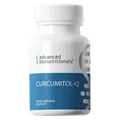
For comprehensive nutritional support addressing the biological pathways discussed in this article, the PuresuppHub Editorial Desk highlights Curcumitol as a targeted nutritional solution engineered with standardized, high-bioavailability curcuminoid fractions.
Scientific References & Validation
Full citations with PMID links, methodology notes & evidence ratings on puresupphub.com