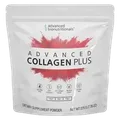
Every anti-aging cream on the market promises to restore collagen. The problem? Collagen molecules are too large to penetrate through the outer skin barrier. No matter how expensive the serum or how sophisticated the formula, topical collagen sits on top of your skin and washes away.
Every anti-aging cream on the market promises to restore collagen. The problem? Collagen molecules are too large to penetrate through the outer skin barrier. No matter how expensive the serum or how sophisticated the formula, topical collagen sits on top of your skin and washes away.
Real skin restoration happens at the dermal level - and that requires a fundamentally different approach.
The Skin Is a Multi-Layer Structure
Your skin is not a single surface. It is composed of three distinct layers:
- Epidermis - the visible outer layer, 0.05 to 1.5mm thick
- Dermis - the structural middle layer where collagen and elastin fibers live
- Hypodermis - the fat and connective tissue layer providing cushioning
When dermatologists talk about skin aging - wrinkles, sagging, loss of firmness - they are describing changes happening in the dermis, not the epidermis. This is why surface-level applications fail: they simply cannot reach where the damage occurs.
Collagen Is the Scaffolding of Youthful Skin
Collagen is the most abundant protein in the human body, comprising approximately 75% of the dry weight of skin. Its primary function is structural: collagen fibers form a dense mesh in the dermis that holds your skin in place, maintains elasticity, and provides the resistance that prevents wrinkles from forming.
There are over 28 types of collagen, but two matter most for skin:
- Type I: Provides tensile strength and thickness to the skin
- Type III: Maintains firmness and flexibility; often called the "youth collagen"
As these two collagen types decline, skin loses its structural integrity - becoming thinner, more fragile, and unable to spring back after facial expressions. This is the biology behind why skin ages.
Why Your Body Stops Making Enough Collagen After 25
Collagen production peaks in your early twenties and then begins a slow, relentless decline. By the time most people notice visible aging, their collagen levels have already been dropping for a decade.
The decline is driven by several converging factors:
1. Fibroblast SlowdownFibroblasts are the skin cells responsible for synthesizing collagen. As you age, fibroblast activity decreases significantly - producing less collagen with lower structural quality.
2. Collagenase Enzyme ActivityMatrix metalloproteinases (MMPs), also called collagenases, are enzymes that break down existing collagen. UV radiation, pollution, and chronic inflammation dramatically increase MMP activity - accelerating collagen destruction far faster than the body can rebuild it.
3. Decreased Vitamin C AvailabilityCollagen synthesis requires vitamin C as an essential cofactor. Modern diets, stress, and poor absorption commonly lead to subclinical vitamin C insufficiency - further limiting the body's ability to produce adequate collagen.
4. Oxidative Stress AccumulationFree radicals generated by UV exposure, processed foods, and environmental toxins directly damage collagen fibers and cross-link them in ways that cause stiffness and breakdown.
The Peptide Solution: Why Small Molecules Change Everything
Unlike intact collagen molecules (which are too large to absorb), hydrolyzed collagen peptides are broken down into short amino acid chains - primarily glycine, proline, and hydroxyproline - that are small enough to pass through the intestinal wall and enter systemic circulation.
Once absorbed, these peptides do something remarkable: they signal fibroblasts to upregulate collagen synthesis. The body interprets the presence of collagen fragments as a sign of tissue damage and responds by accelerating its own repair mechanisms.
A landmark clinical study published in the Journal of Cosmetic Dermatology found that participants supplementing with 2.5 to 5g of hydrolyzed collagen peptides daily showed:
- 25% improvement in skin elasticity after 4 weeks
- 20% reduction in periorbital wrinkle depth after 8 weeks
- Sustained improvement in skin moisture content vs. placebo
These results weren't produced by applying anything to the skin's surface. They came from the inside.
Type I and Type III: The Synergistic Pair
The most advanced collagen formulas don't rely on a single collagen type. Type I and Type III peptides work synergistically - each reinforcing the other's structural contributions to the dermal matrix.
Type I provides the dense, load-bearing fibers that give skin its thickness and resistance. Type III provides flexibility and the interconnected network that keeps skin supple. When both types decline simultaneously - which is what happens with age - skin loses both strength and resilience at the same time.
Replenishing both through bioavailable peptide supplementation rebuilds the complete structural foundation that youthful skin depends on.
The Role of Hyaluronic Acid and Vitamin C
Collagen peptides don't work optimally in isolation. Two cofactors dramatically amplify their effectiveness:
Hyaluronic AcidHA is the primary water-binding molecule in skin - capable of holding up to 1,000 times its weight in water. As HA declines with age, skin becomes drier and loses the cushion effect that maintains a plump, smooth appearance. Supplemental HA has been shown to restore dermal hydration and improve the viscoelastic properties of skin within 6-8 weeks.
Vitamin CAs a required cofactor for the hydroxylation of proline and lysine during collagen synthesis, vitamin C is not optional - it's structural. Without adequate vitamin C, the collagen produced is weaker and less stable. Studies show that combining vitamin C with collagen peptides increases the efficiency of fibroblast collagen production by up to 40%.
Visible Results: What to Expect on a Timeline
When you provide your body with the raw materials it needs, the results follow a predictable biological timeline:
| Timeframe | What Changes |
|---|---|
| Weeks 1-4 | Improved skin hydration; initial increase in skin moisture content |
| Weeks 4-8 | Visible reduction in fine lines; improved skin texture and tone |
| Weeks 8-12 | Measurable increase in skin elasticity; firmer, more structured appearance |
| Months 4-6 | Full dermal remodeling; significant improvement in deeper wrinkle appearance |
These changes are not cosmetic masking - they represent genuine dermal structural changes confirmed by ultrasound imaging in clinical studies.
Beyond Skin: The Systemic Collagen Dividend
Collagen rebuilding has benefits that extend well beyond the face. Because collagen is the primary structural protein in connective tissues throughout the body, comprehensive collagen supplementation supports:
- Joint cartilage integrity - reducing stiffness and inflammation in weight-bearing joints
- Hair shaft thickness - improving hair density and reducing breakage
- Nail strength - reducing brittleness and improving growth rate
- Gut lining integrity - supporting the intestinal connective tissue barrier
This systemic dividend is why collagen supplementation produces noticeable effects beyond skin alone - validating its status as one of the most clinically supported anti-aging interventions available.
The Bioavailability Standard
Not all collagen supplements deliver equivalent results. The key variable is molecular weight: peptides under 5,000 Daltons absorb reliably; peptides above 10,000 Daltons have significantly compromised bioavailability.
Look for formulas specifying "low-molecular-weight hydrolyzed collagen peptides" and including clinical data on absorption rates. The difference between a premium formula and a substandard one is not marketing - it is the molecular weight of the active ingredient and whether it actually reaches your fibroblasts.
Conclusion
Topical collagen is a category myth. It cannot penetrate to where aging happens. Hydrolyzed collagen peptides - taken orally, in combination with vitamin C and hyaluronic acid - represent the only scientifically validated pathway to rebuilding dermal collagen from the inside out.
The skin you see on the surface is built in the dermis. That is where intervention must begin.
Scientific References & Validation
Full citations with PMID links, methodology notes & evidence ratings on puresupphub.com