There is a small, butterfly-shaped gland at the base of your throat that weighs less than 30 grams—and yet it controls the metabolic rate of every single cell in your body. The thyroid gland is the master regulator of how fast or slowly your biological machinery operates. It determines how efficiently you burn calories at rest, how quickly you recover from physical exertion, how sharp your thinking is, how stable your mood remains, and whether your hair grows or thins.
There is a small, butterfly-shaped gland at the base of your throat that weighs less than 30 grams - and yet it controls the metabolic rate of every single cell in your body. The thyroid gland is the master regulator of how fast or slowly your biological machinery operates. It determines how efficiently you burn calories at rest, how quickly you recover from physical exertion, how sharp your thinking is, how stable your mood remains, and whether your hair grows or thins.
When thyroid function begins to decline - a process that frequently accelerates after 40 and is more prevalent in women than men - the consequences are systemic and often misattributed to "normal aging." Understanding what is actually happening, and what you can do about it, requires looking at the thyroid not as an isolated gland but as a master switch for whole-body metabolic health.
The Thyroid Hormone Cascade: How It Works and Why It Fails
The thyroid operates within a precise feedback loop controlled by the hypothalamus and pituitary gland:
- The hypothalamus releases Thyrotropin-Releasing Hormone (TRH), signaling the pituitary.
- The pituitary releases Thyroid-Stimulating Hormone (TSH), instructing the thyroid to produce hormones.
- The thyroid synthesizes T4 (thyroxine) - the storage form of thyroid hormone - using iodine and tyrosine.
- T4 is converted in peripheral tissues (liver, kidneys, muscle) into T3 (triiodothyronine) - the biologically active form that enters cells and regulates metabolic rate.
This cascade has multiple potential failure points, each with distinct clinical consequences:
Insufficient iodine or selenium: Both are essential raw materials for thyroid hormone synthesis and T4→T3 conversion, respectively. Iodine deficiency remains globally prevalent, and selenium inadequacy is widespread even in developed countries due to soil depletion. Impaired T4→T3 conversion: Even if the thyroid produces adequate T4, insufficient selenium-dependent deiodinase enzyme activity means less is converted to active T3. This results in normal-range TSH and T4 blood tests with genuinely low intracellular T3 activity - a condition that standard thyroid panels frequently miss. Elevated Reverse T3 (rT3): Under conditions of chronic physiological stress (physical, psychological, or inflammatory), the body preferentially converts T4 into reverse T3 - a biologically inert mirror-image molecule that occupies T3 receptors without activating them. Elevated rT3 creates functional thyroid hormone resistance at the cellular level, producing all the symptoms of hypothyroidism despite normal conventional bloodwork. Autoimmune thyroid disease (Hashimoto's Thyroiditis): The most common cause of hypothyroidism, particularly in women. The immune system misdirects antibodies against thyroid peroxidase (TPO) and thyroglobulin, progressively destroying thyroid tissue. Hashimoto's frequently begins in the perimenopause transition (late 30s to 40s) and may remain undiagnosed for years.The Symptoms That Should Make You Think About Your Thyroid
Subclinical hypothyroidism is among the most underdiagnosed conditions in midlife adults. The following constellation of symptoms, particularly when occurring together, warrants consideration of thyroid function assessment:
- Unexplained weight gain or extreme difficulty losing weight despite reasonable caloric restriction and exercise
- Persistent fatigue that is not resolved by adequate sleep and feels qualitatively different from tiredness
- Cognitive slowing: reduced processing speed, word-retrieval difficulties, poor working memory - often described as "brain fog"
- Temperature intolerance: feeling cold when others are comfortable, cold hands and feet even in warm environments
- Hair thinning or increased shedding, including loss of the outer third of the eyebrows (a hallmark sign)
- Dry skin, brittle nails, and reduced wound healing rate
- Low-grade depression or anxiety, mood instability, and reduced emotional resilience
- Constipation and slowed gastrointestinal motility
- Elevated LDL cholesterol without dietary changes - hypothyroidism impairs hepatic LDL receptor activity
These symptoms arise because T3 receptors are present in virtually every cell type in the body. When T3 signaling is insufficient, the metabolic rate of cardiac muscle, neurons, hepatocytes, adipocytes, and dermal cells all decline simultaneously.
Natural Habits That Protect Thyroid Function After 40
Before supplementation, several evidence-based lifestyle practices can meaningfully support thyroid hormone production and conversion:
Optimizing Selenium Intake
Selenium is the most critical mineral for thyroid health after iodine. It is an essential cofactor for the three families of deiodinase enzymes responsible for T4→T3 conversion and for the glutathione peroxidase enzymes that protect the thyroid gland from oxidative damage generated during hormone synthesis. Brazil nuts (1-2 per day), seafood, and organ meats are the richest dietary sources.
Supporting Iodine Without Excess
Adequate iodine is non-negotiable for thyroid hormone synthesis - each molecule of T3 contains three iodine atoms, and T4 contains four. However, both deficiency and chronic excess can impair thyroid function. The optimal strategy is through dietary iodine from seaweed (moderate consumption of nori, wakame), iodized salt, dairy, and seafood, rather than high-dose supplementation.
Reducing Thyroid Autoimmune Triggers
Gluten sensitivity - even in the absence of celiac disease - has been associated with thyroid autoimmunity through molecular mimicry mechanisms. Chronic systemic inflammation from ultra-processed foods, environmental toxins, and gut dysbiosis all act as drivers of thyroid autoimmune activity.
Managing Cortisol and Physiological Stress
Chronic cortisol elevation directly suppresses the TRH→TSH→thyroid axis at multiple levels and promotes preferential T4 conversion to rT3 rather than active T3. Stress management is therefore not merely a wellness recommendation but a clinically relevant thyroid support intervention.
What is Thyrovanz and What is It For?
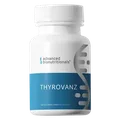
Thyrovanz is a natural desiccated thyroid support supplement formulated from bovine thyroid glandular material combined with targeted nutritional cofactors to support the full thyroid hormone production and conversion cascade.Unlike synthetic thyroid support products that provide only isolated nutritional cofactors, Thyrovanz's glandular base provides a naturally occurring matrix of thyroid-specific proteins, peptides, and precursors that support the thyroid gland's own function through glandular therapy principles - providing the tissue, enzymes, and organic cofactors in the biological ratios naturally present in functional thyroid tissue.
Thyroid Glandular (Bovine, New Zealand Source): Sourced from grass-fed New Zealand bovine thyroid glands under strict regulatory oversight, the desiccated glandular material contains naturally occurring T3, T4 precursors, and the full matrix of thyroid-specific proteins. The glandular approach has been used therapeutically since the 1890s and remains clinically validated for supporting thyroid tissue health. Selenium (as Selenomethionine): The most bioavailable form of selenium, selenomethionine is preferentially incorporated into thyroid tissue and directly supports deiodinase enzyme activity for T4→T3 conversion. The formula provides a clinically relevant dose without approaching the upper tolerable intake level. Iodine (as Potassium Iodide): Provides the essential raw material for thyroid hormone synthesis without the risk of excessive supplementation associated with seaweed-derived iodine, which can vary enormously in concentration. L-Tyrosine: The amino acid precursor from which thyroid hormones are synthesized. Combined with iodine, tyrosine forms the backbone of the thyroxine molecule. Adequate tyrosine availability is necessary for optimal thyroid hormone output. Ashwagandha Root Extract: Sensoril ashwagandha has demonstrated the ability to support thyroid hormone levels - specifically T4 - in clinical research, while simultaneously reducing cortisol levels that otherwise suppress the TRH→TSH axis. It addresses both the hormonal and adrenal contributors to thyroid function decline.How to Take Thyrovanz: The Official Protocol
Recommended Daily Dosage and Frequency
The standard protocol is one to two capsules per day, taken in the morning. Because thyroid hormones influence cardiac rate and alertness, evening administration can interfere with sleep quality in sensitive individuals.
Should Thyrovanz Be Taken Before or After Breakfast?
Unlike synthetic thyroid medications - which require strict separation from food - Thyrovanz glandular support formula is best taken with a light breakfast, avoiding cruciferous vegetables (broccoli, kale, cauliflower), soy, and calcium-rich foods in the same meal, as these can competitively impair thyroid hormone absorption and iodine uptake.
How Long Before Results Are Noticeable?
Thyroid hormone physiology operates on a weeks-long timeline. T4 has a half-life of approximately 7 days, meaning meaningful changes in circulating thyroid hormone levels take 4-6 weeks to stabilize after any intervention. Users should expect:
- Weeks 2-4: Improved morning energy and reduced persistent fatigue as thyroid support compounds accumulate.
- Weeks 5-8: Noticeable improvements in body temperature regulation, cognitive clarity, and metabolic rate.
- Weeks 8-12: Hair quality improvements and mood stabilization as the thyroid-adrenal axis recalibrates.
Who Should Consult a Physician Before Use?
- Individuals currently prescribed synthetic thyroid medication (levothyroxine, liothyronine) must consult their physician before use - combining glandular thyroid support with synthetic thyroid hormone can produce additive effects requiring dosage adjustment.
- Those with Graves' disease (hyperthyroidism) should not use this formula.
- Pregnant women should not use thyroid glandular supplements without specialist supervision.
- Individuals with iodine sensitivity should consult a physician before use.
Scientific References & Validation
Full citations with PMID links, methodology notes & evidence ratings on puresupphub.com