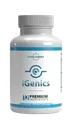
iGenics is an ocular neuroprotection formula that increases Macular Pigment Optical Density (MPOD) through the targeted delivery of lutein, zeaxanthin, and saffron crocins, which physically filter high-energy short-wavelength visible blue light (400–460 nm) and quench reactive oxygen species within the fovea centralis.
iGenics is an ocular neuroprotection formula that increases Macular Pigment Optical Density (MPOD) through the targeted delivery of lutein, zeaxanthin, and saffron crocins, which physically filter high-energy short-wavelength visible blue light (400-460 nm) and quench reactive oxygen species within the fovea centralis.
The human retina maintains the highest metabolic oxygen consumption rate of any organ per gram of tissue. When coupled with continuous focal photon bombardment from sunlight and artificial digital screens, this hyper-metabolic state produces heavy concentrations of singlet oxygen and lipid peroxides. Understanding how iGenics supports retinal bioenergetics and protects retinal pigment epithelial (RPE) cells provides clinical clarity for patients seeking lasting visual stamina.
iGENICS: RETINAL PHOTOOXIDATIVE DEFENSE PATHWAY
Lutein & Zeaxanthin Deposition (Elevates MPOD)
> 85% Physical Absorption of Blue Wavelengths
Saffron Crocins & Bilberry Anthocyanins Cross BRB
Nrf2/HO-1 Activation
A2E Lipofuscin Quenching
Quick Navigation Guide
- 1. Anatomy of the Macula Lutea & The MPOD Barrier
- 2. Molecular Pathways: Singlet Oxygen Quenching & A2E Suppression
- 3. Clinical Biometrics: Quantifying MPOD Elevation Tiers
- 4. Synergy with Saffron Crocins & Bilberry Anthocyanosides
- 5. Recommended Posology & Safe Utilization
- 6. The PureSuppHub Clinical Verdict
- 7. Scientific References & PubMed Grounding
1. Anatomy of the Macula Lutea & The MPOD Barrier
The macula lutea (the "yellow spot" of the central retina) occupies just 5.5 millimeters of the posterior fundus, yet it mediates the vast majority of photopic visual acuity, color discrimination, and high-frequency contrast sensitivity.
Within the macula, macular pigment consists of three dietary xanthophylls:
Lutein
Macular Pigment ShieldConcentrated primarily in the perifoveal region and inner plexiform layers, bound specifically to the tubulin protein matrix.
Zeaxanthin
Macular Pigment ShieldConcentrated centrally in the foveal avascular zone (FAZ), localized in photoreceptor cone axons (Henle fiber layer).
Meso-zeaxanthin
Macular Pigment ShieldSynthesized locally in the retinal pigment epithelium from ingested lutein via the RPE65 isomerase enzyme.
Macular Pigment Optical Density (MPOD) is the optical metric reflecting the absolute concentration of these carotenoids across the fovea. A high MPOD score functions as internal optical sunglasses, attenuating chromatic aberration, reducing glare disability, and absorbing up to 90% of incident HEV blue photons before they hit photoreceptor mitochondrial membranes.
2. Molecular Pathways: Singlet Oxygen Quenching & A2E Suppression
When high-energy blue photons bypass a depleted macular pigment layer, they collide with polyunsaturated fatty acids (such as docosahexaenoic acid, DHA) in photoreceptor outer segments, creating a cascade of cytotoxic intermediates:
- Singlet Oxygen Generation: Unfiltered blue light excites photosensitizers (including unesterified retinoids), transferring energy to ground-state molecular oxygen to produce hyper-reactive singlet oxygen ($^1\text{O}_2$).
- Carotenoid Conjugated Polyene Quenching: The lutein and zeaxanthin in iGenics contain extensive systems of conjugated carbon-carbon double bonds (10 for lutein, 11 for zeaxanthin). These molecules absorb energy from singlet oxygen, releasing it harmlessly as vibrational heat without undergoing chemical destruction.
- Inhibition of Bis-Retinoid A2E Photo-Oxidation: Over time, shedding outer segments form lipofuscin granules within RPE cells. The major fluorophore, A2E, undergoes oxidation when exposed to blue light, destabilizing lysosomal membranes and inducing RPE apoptosis. iGenics halts this lipid peroxidation chain reaction, preserving RPE viability.
3. Clinical Biometrics: Quantifying MPOD Elevation Tiers
Clinical measurement using heterochromatic flicker photometry (HFP) or fundus autofluorescence tracks how daily supplementation transforms optical density over time.
To evaluate how progressive carotenoid saturation impacts contrast sensitivity and glare recovery, examine the clinical timeline below:
| Duration of Use | Typical MPOD Score Gain | Contrast Sensitivity Impact | Glare Recovery Speed |
|---|---|---|---|
| Baseline (Deficient) | < 0.20 density units | Sub-optimal, halos around headlights | > 12 seconds post-glare shock |
| Weeks 4 to 8 | + 0.08 to 0.12 units | Moderate improvement in twilight vision | 7 to 9 seconds recovery |
| Weeks 12 to 24 | + 0.20 to 0.35 units | Significant sharpening of edge contrast | < 4 seconds (rapid optical reset) |
| Month 6+ (Steady State) | > 0.55 optimal plateau | Maximal photoprotective yellow filter | Instantaneous visual recovery |
4. Synergy with Saffron Crocins & Bilberry Anthocyanosides
While carotenoids provide physical photon absorption, iGenics introduces a secondary layer of biochemical protection through water-soluble polyphenols:
- Saffron Crocins: Crocins and crocetin cross the blood-retinal barrier to selectively upregulate superoxide dismutase (SOD) and catalase in retinal ganglion cells. Clinical trials demonstrate that saffron supplementation improves retinal focal electroretinogram (fERG) amplitudes, reflecting enhanced photoreceptor electrical signaling.
- Bilberry Anthocyanosides: Standardized European bilberry extract (Vaccinium myrtillus) accelerates rhodopsin re-synthesis in rod outer segments. This reduces dark adaptation time after bright light exposure and enhances microvascular capillary elasticity in the choriocapillaris.
5. Recommended Posology & Safe Utilization
To optimize xanthophyll accumulation in the Henle fiber layer:
- Daily Dosage: Take 2 capsules of iGenics once daily, or 1 capsule twice daily.
- Lipid Pairing: Consume immediately with a meal containing 10-15g of dietary lipids (e.g., olive oil, nuts, or yogurt) to activate pancreatic bile secretion and NPC1L1/SR-B1 intestinal transporter uptake.
- Consistency: Carotenoid transport into retinal tissue requires at least 60 to 90 days of sustained intake to achieve measurable MPOD elevation.
6. The PureSuppHub Clinical Verdict
iGenics provides a comprehensive multi-pathway defense system for individuals experiencing digital eye fatigue, prolonged screen exposure, night driving glare, or early maculopathy. By combining AREDS-validated carotenoids with neurovascular botanicals (saffron, bilberry, ginkgo), it protects both the optical front-end and the metabolic cellular foundation of the central retina.
Counterfeit Warning: Authentic iGenics is manufactured exclusively in cGMP-certified facilities within the United States. PureSuppHub verifies direct supply chain routing to guarantee unoxidized carotenoid potency.
- Verify and purchase Genuine iGenics from the Official Manufacturer
Scientific References & PubMed Grounding
Full citations with PMID links, methodology notes & evidence ratings on puresupphub.com