Collagen is the primary structural scaffold of the human body, accounting for approximately 30% of total whole-body protein mass and representing over 75% of the dry weight of human skin. It acts as the biological architecture that maintains tensile strength, elasticity, and dermal hydration across skin, ligaments, tendons, and articular joint cartilage.
Collagen is the primary structural scaffold of the human body, accounting for approximately 30% of total whole-body protein mass and representing over 75% of the dry weight of human skin. It acts as the biological architecture that maintains tensile strength, elasticity, and dermal hydration across skin, ligaments, tendons, and articular joint cartilage.
However, human connective tissue is subject to a relentless chronological decline. Beginning in our mid-20s, the body's natural synthesis of dermal collagen drops at a steady rate of 1.0% to 1.5% per year. For women, this degenerative trajectory accelerates precipitously during the hormonal shift of menopause, resulting in an estimated 30% loss of total dermal collagen within the first five years post-menopause. The visible consequence is dermal thinning, compromised barrier function, progressive fine lines, and deep periorbital wrinkles, alongside creaky, stiff joints.
While the intuitive solution might seem simple - consuming more collagen through dietary sources like bone broth or gelatin - the physical reality of human gastroenterology complicates this strategy. To cross the intestinal mucosal barrier and trigger de novo tissue regeneration, collagen must undergo specialized enzymatic cleavage: it must be hydrolyzed.
The Molecular Weight Problem: Why Native Collagen Fails to Absorb
In its native, unprocessed biological state (found in animal connective tissue, cartilage, and bone), collagen is a massive, rigid macromolecule. It consists of three elongated polypeptide chains coiled together in a tight, mechanical triple helix held together by interchain hydrogen bonds.
This native triple helix possesses a molecular weight of approximately 300,000 Daltons (300 kDa):
* The Intestinal Sieve: The human intestinal brush border epithelium is designed to absorb individual amino acids, dipeptides, and small oligopeptides, typically filtering out intact proteins larger than 5,000 Daltons (5 kDa).
* Gastric Inefficiency: When you consume native collagen or culinary gelatin, gastric hydrochloric acid and pancreatic pepsin struggle to untangle the tightly coiled 300 kDa triple helix. The overwhelming majority of the protein passes through the digestive tract unabsorbed or is broken down into generic amino acids, dispersing throughout the body without ever signaling tissue repair.
What Does "Hydrolyzed" Mean Biochemically?
Hydrolysis is an advanced biotechnological process that uses controlled temperature, purified water, and specific food-grade proteolytic enzymes to uncoil and cleave native 300 kDa collagen fibers into low-molecular-weight fragments known as Bioactive Collagen Peptides (BCPs).This enzymatic cleavage reduces the molecular weight from 300,000 Daltons down to a uniform therapeutic range of 2,000 to 5,000 Daltons (2 to 5 kDa):
* Instant Cold-Water Solubility: Cleaving the rigid triple helix transforms insoluble animal connective tissue into a micro-particulate powder that dissolves effortlessly in hot or cold liquids without gelling, clumping, or imparting any odor or flavor.
* Direct Intestinal Absorption: Peptides within the 2 to 5 kDa range do not require prolonged digestive processing. They cross the small intestine rapidly via specialized peptide transporters (PEPT1), entering portal circulation intact within 30 to 60 minutes of ingestion.
The Dual Action Mechanism: Raw Materials vs. Epigenetic Cellular Signaling
A common misconception among skeptics is that oral collagen is merely broken down into common amino acids like any dietary protein. However, isotopic tracing studies reveal that hydrolyzed collagen functions through a dual biological mechanism:
Hydrolyzed Collagen Peptides (2-5 kDa)
Physiological cascade sequence and bio-cellular signaling1. Delivery of Unique Structural Substrates
Collagen possesses an amino acid distribution completely unlike whey, egg, or plant proteins. Approximately one-third of its sequence consists of Glycine, punctuated by high concentrations of Proline and Hydroxyproline. Hydroxyproline is virtually absent from other dietary proteins, providing the exact hydroxylated scaffolding required to assemble stable human tropocollagen.
2. Receptor-Mediated Fibroblast Signaling
Even more consequential is the biological "signaling" effect. Specific peptide sequences - predominantly Prolyl-hydroxyproline (Pro-Hyp) and Hydroxyprolyl-glycine (Hyp-Gly) - resist intracellular degradation and bind directly to integrin α1β1 and α2β1 receptors on the surface of dermal fibroblasts and articular chondrocytes.
When fibroblasts detect high concentrations of these circulating dipeptides, the cells interpret it as a signal of active extracellular matrix injury. In response, fibroblasts dramatically upregulate COL1A1 and COL1A2 gene expression, ramping up native cellular production of Type I procollagen, elastin fibers, and Hyaluronic Acid Synthase-2 (HAS2) to restore dermal moisture.
Clinical Trial Evidence: Dermatological and Joint Outcomes
The therapeutic benefits of standardized low-molecular-weight collagen peptides are substantiated by gold-standard randomized, double-blind, placebo-controlled clinical trials:
1. The Periorbital Eye Wrinkle Reduction Trial (Proksch et al., 2014)
In a rigorous randomized, double-blind, placebo-controlled trial published in Skin Pharmacology and Physiology (PMID: 23949208 ↗), researchers evaluated 114 women aged 45 to 65 years.
- Protocol: The active cohort ingested 2.5 grams daily of bioactive hydrolyzed collagen peptides for 8 consecutive weeks, while the control group received a placebo.
- Wrinkle Volume Reduction: Objective 3D optical skin surface measurements demonstrated that the collagen peptide cohort experienced a statistically significant mean reduction in periorbital eye wrinkle volume of 20.1% at 4 weeks, with reductions reaching up to 49.9% at 8 weeks compared to placebo (p < 0.01).
- Matrix Synthesis: Skin biopsies revealed a 65% increase in dermal Type I procollagen content and an 18% increase in elastin fiber concentration in collagen-treated subjects. Four weeks after discontinuing supplementation, the anti-wrinkle improvements remained sustained.
2. Dermal Hydration and Collagen Fragmentation (Asserin et al., 2015)
In two multicenter clinical trials evaluating 106 women published in the Journal of Cosmetic Dermatology (PMID: 26362110 ↗), oral supplementation with 10 g/day of hydrolyzed collagen peptides produced an 8.8% increase in dermal hydration after 8 weeks and reduced collagen fragmentation in the deep reticular dermis by 31.2% after 12 weeks.
3. Joint Cartilage and Activity-Related Pain (Clark et al., 2008)
Beyond aesthetics, a 24-week clinical trial conducted at Penn State University published in Current Medical Research and Opinion (PMID: 18416885 ↗) evaluated 147 collegiate athletes with joint deterioration. Subjects receiving hydrolyzed collagen peptides demonstrated statistically significant improvements in joint pain visual analog scale (VAS) scores during walking, standing, and lifting compared to placebo (p < 0.05).
Comparative Evidence Matrix: Collagen Formats
| Attribute / Parameter | Culinary Gelatin / Bone Broth | Generic High-MW Collagen Powder | Standardized Hydrolyzed Bioactive Peptides (Advanced Collagen Plus) |
|---|---|---|---|
| Average Molecular Weight | ~100,000 to 300,000 Daltons | ~10,000 to 40,000 Daltons | 2,000 to 5,000 Daltons (Optimized 2-5 kDa) |
| PEPT1 Intestinal Uptake | Negligible (requires heavy digestion) | Poor to Moderate | Direct, rapid mucosal absorption (<60 min) |
| Fibroblast Signaling Capacity | None (cleaved into random amino acids) | Low | High (Verified Pro-Hyp & Hyp-Gly dipeptides) |
| Solubility in Liquids | Gels at room temperature | Often clumps / cloudy | 100% instant cold/hot dissolution (flavorless) |
| Quantified Clinical Outcome | Anecdotal / non-standardized | Variable | -20.1% to -49.9% eye wrinkle volume reduction; +65% procollagen |
Expected Clinical Response Timeline
Rebuilding deep extracellular protein matrices takes physiological time:
* Weeks 1 to 4 (Hydration & Barrier Stabilization): Initial accumulation of Pro-Hyp peptides stimulates epidermal ceramides and hyaluronic acid synthesis. Skin feeling smoother and less prone to xerosis (dryness); fingernails become noticeably stronger and less prone to splitting.
* Weeks 4 to 8 (Structural Dermal Remodeling): Peak procollagen type I synthesis documented in clinical trials. Measurable reduction in periorbital fine lines and improved skin elasticity rebound rate.
* Weeks 8 to 12+ (Cartilage & Tissue Density): Progressive accumulation of collagen peptides within articular cartilage and subchondral bone matrices, resulting in improved joint mobility and reduced morning stiffness during weight-bearing activities.
Clinical Takeaway
Hydrolyzed collagen is not a superficial beauty trend; it is a bio-engineered nutritional tool that overcomes the human body’s inability to absorb native connective tissue. By reducing 300 kDa macromolecular fibers into 2 to 5 kDa bioactive signaling peptides, hydrolyzed collagen provides both the specific building blocks (Glycine, Proline, Hydroxyproline) and the epigenetic trigger needed to awaken aging fibroblasts and chondrocytes.
Clinical Recommendation
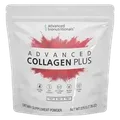
For individuals seeking to restore youthful skin elasticity, soften fine lines, and support joint cartilage integrity, the PuresuppHub Editorial Desk highlights Advanced Collagen Plus. Formulated with multi-source, enzymatic low-molecular-weight peptides that dissolve invisibly in coffee, tea, or water, it pairs synergistically with JointEternal for deep synovial lubrication and Advanced Amino Formula for complete musculoskeletal preservation.
Scientific References & Validation
Full citations with PMID links, methodology notes & evidence ratings on puresupphub.com