When most people think of probiotics, they immediately think of digestive health. However, clinical researchers are increasingly focusing on the upper digestive tract, specifically the oral cavity. Your mouth is home to a complex ecosystem containing billions of microbes—both beneficial and pathogenic. When this balance is disrupted, it leads to dental caries, periodontitis, and chronic halitosis.
When most people think of probiotics, they immediately think of digestive health. However, clinical researchers are increasingly focusing on the upper digestive tract, specifically the oral cavity. Your mouth is home to a complex ecosystem containing billions of microbes - both beneficial and pathogenic. When this balance is disrupted, it leads to dental caries, periodontitis, and chronic halitosis.
This is where Lactobacillus Reuteri plays a pivotal role. As one of the most thoroughly researched strains of lactic acid bacteria, this probiotic is highly valued for its ability to maintain oral microbiome equilibrium.
But what is Lactobacillus Reuteri for, how does it function inside your mouth, and how can it protect your teeth and gums? Let's dive deep into the science behind this oral health defender.
What is Lactobacillus Reuteri?
Lactobacillus Reuteri is a Gram-positive, rod-shaped bacterium that naturally colonizes the mucosal surfaces of humans and other mammals. While it was originally isolated from the gastrointestinal tract, science has shown that specific strains of L. Reuteri are highly effective when introduced to the oral cavity.
Unlike transient bacteria that simply pass through the mouth, L. Reuteri has a strong affinity for oral mucosa and saliva, allowing it to adhere to dental surfaces and gums. This colonization is crucial because it forms a protective cellular shield against harmful microorganisms.
What is Lactobacillus Reuteri For in Oral Health?
In dental and periodontal care, L. Reuteri is primarily used to restore bacterial balance and reduce tissue inflammation. Here are the key dental applications for this strain:
1. Inhibiting Cavity-Causing Pathogens
The primary driver of tooth decay is Streptococcus mutans, a bacterium that ferments dietary sugars and produces lactic acid. This acid erodes tooth enamel, forming cavities. L. Reuteri is used to suppress S. mutans colonies, thereby reducing the rate of enamel demineralization.
2. Reducing Gum Bleeding and Inflammation
Gingivitis is an inflammatory response to dental plaque accumulation. If left untreated, it can degrade the periodontal ligament and alveolar bone (periodontitis). L. Reuteri targets the inflammatory cascade in gum tissues, helping to reduce bleeding, swelling, and redness.
3. Neutralizing Bad Breath (Halitosis)
Chronic bad breath is often caused by anaerobic bacteria residing deep on the tongue and along the gumline. These bacteria release volatile sulfur compounds (VSCs). By displacing these anaerobic pathogens, L. Reuteri helps neutralize the source of mouth odors, providing long-lasting freshness.
How It Acts: The Cellular Mechanisms of Action
To understand why Lactobacillus Reuteri is so effective, we must look at the specific biochemical pathways it uses to alter the oral microbiome:
A. Competitive Exclusion
Pathogenic bacteria cannot damage your teeth and gums unless they first adhere to oral surfaces. L. Reuteri acts by outcompeting pathogens for binding sites on the oral mucosa and teeth. Once L. Reuteri occupies these mucosal sites, harmful bacteria like S. mutans and Porphyromonas gingivalis are washed away by saliva.
B. Production of Reuterin
One of L. Reuteri’s most powerful weapons is its ability to synthesize Reuterin (3-hydroxypropionaldehyde) during the metabolism of glycerol. Reuterin is a potent antimicrobial compound that inhibits the DNA synthesis and growth of a wide range of harmful Gram-negative and Gram-positive bacteria, while leaving beneficial lactic acid bacteria largely unharmed.
C. Downregulation of Inflammatory Pathways
L. Reuteri does not just fight bacteria; it directly modulates the host's immune response. Studies show it can inhibit the secretion of pro-inflammatory cytokines, such as Interleukin-8 (IL-8) and Tumor Necrosis Factor-alpha (TNF-α), in gingival epithelial cells. This reduces the local tissue destruction associated with periodontal disease.
Synergistic Oral Restoration
To achieve optimal results, dental probiotics must be delivered in a way that allows them to coat the entire oral cavity. Swallowing a standard pill does not give L. Reuteri enough time to adhere to the gums and teeth. Instead, slow-dissolving tablets or chewables are preferred because they maximize the contact time between the bacteria and oral mucosa.
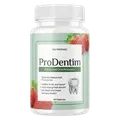
This strain is a key active ingredient in ProDentim, a premium dental probiotic designed to flood the oral cavity with billions of colony-forming units (CFUs) of beneficial bacteria. By chewing a chewable tablet daily, you distribute L. Reuteri along the gumline, helping to rebuild a healthy oral flora and defend against daily plaque accumulation.
Scientific References & Validation
Full citations with PMID links, methodology notes & evidence ratings on puresupphub.com