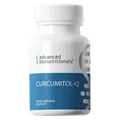
When evaluating advanced nutritional protocols for Joint & Mobility, consumers frequently encounter a major point of confusion on supplement labels: the stark clinical distinction between raw culinary turmeric root (Curcuma longa) and standardized 95% curcuminoids.
When evaluating advanced nutritional protocols for Joint & Mobility, consumers frequently encounter a major point of confusion on supplement labels: the stark clinical distinction between raw culinary turmeric root (Curcuma longa) and standardized 95% curcuminoids.
While ground turmeric is celebrated worldwide as a golden culinary spice, standard unprocessed root powder contains merely 2% to 4% active curcuminoids by dry weight. To ingest the therapeutic equivalent of a single 500 mg clinical dose of standardized extract, an individual would need to consume between 12.5 and 25 grams of raw culinary turmeric daily - a volume virtually impossible to achieve through diet and guaranteed to cause severe gastrointestinal distress.
In pharmacological formulations like Curcumitol, raw root powder is superseded by an isolated, high-potency fraction standardized to 95% total curcuminoids. But what does this standardization mean biochemically, why does it matter for chronic joint stiffness and cartilage preservation, and what does the peer-reviewed clinical literature reveal about its efficacy?
The Pharmacognosy of the 95% Curcuminoid Triad
In modern botanical medicine, the therapeutic power of Curcuma longa resides in a specialized class of lipophilic polyphenol pigments known collectively as curcuminoids. High-Performance Liquid Chromatography (HPLC) testing reveals that a standardized 95% extract is not a single compound, but a precise biological triad comprising three distinct chemical molecules:
Curcumin (Diferuloylmethane) - ~77% of total extract
Bioavailable Anti-InflammatoryThe primary active chromophore responsible for intense yellow pigmentation, free-radical neutralization, and master inhibition of inflammatory transcription cascades.
Demethoxycurcumin (DMC) - ~17% of total extract
Bioavailable Anti-InflammatoryA monophenolic analog displaying enhanced chemical stability under physiological pH conditions compared to pure curcumin, providing sustained systemic anti-inflammatory signaling.
Bisdemethoxycurcumin (BDMC) - ~3% to 6% of total extract
Bioavailable Anti-InflammatoryLacks methoxy groups on the aromatic rings, making it an exceptionally potent inhibitor of reactive nitrogen species (RNS) and nuclear factor-kappa B (NF-κB) transcription.
When combined in this natural 95% standardized ratio, the three curcuminoids exert synergistic anti-inflammatory action that dramatically surpasses any single isolated fraction.
Cellular Mechanisms: How 95% Curcuminoids Protect Articular Joints
Articular cartilage is a non-vascularized, avascular connective tissue composed of chondrocytes embedded within a dense extracellular matrix (ECM) of type II collagen and water-retaining aggrecan proteoglycans. In chronic joint wear and osteoarthritis, mechanical overload and systemic inflammation trigger a catabolic cascade. Standardized 95% curcuminoids intervene at five verified cellular checkpoints:
1. Dual Suppression of the COX-2 and 5-LOX Pathways
Unlike conventional non-steroidal anti-inflammatory drugs (NSAIDs) that selectively inhibit cyclooxygenase (COX) enzymes while shunting arachidonic acid into the inflammatory 5-lipoxygenase (5-LOX) pathway, standardized curcuminoids act as dual inhibitors. They suppress both COX-2 (reducing pain-inducing prostaglandin E2 [PGE2]) and 5-LOX (blocking swelling-inducing leukotriene B4 [LTB4]), extinguishing joint inflammation from both metabolic flanks without inducing gastric mucosal ulcers.
2. Inhibition of Collagen-Cleaving Proteases
Chondrocyte apoptosis in arthritic joints is executed by matrix metalloproteinases. In vitro and clinical models confirm that 95% curcuminoids downregulate MMP-1, MMP-3, and MMP-13, while simultaneously blunting aggrecanases (ADAMTS-4 and ADAMTS-5). This prevents the physical enzymatic shredding of type II collagen fibrils.
3. Preserving Synovial Fluid Viscosity
Inflammatory cytokines (such as Interleukin-1 beta [IL-1β] and Tumor Necrosis Factor-alpha [TNF-α]) depolymerize the body's natural hyaluronic acid inside synovial fluid, turning a thick, shock-absorbing joint lubricant into watery fluid. Standardized curcuminoids suppress IL-1β signaling, preserving native synovial fluid viscoelasticity and shock absorption.
Clinical Trial Evidence: Comparing 95% Curcuminoids to Frontline Standards
The therapeutic efficacy of standardized 95% curcuminoids is anchored by extensive randomized controlled trials (RCTs):
* The Diclofenac Non-Inferiority Trial (Shep et al., PMID: 30975196): In an active-controlled trial of 139 patients with symptomatic knee osteoarthritis, 500 mg of standardized bio-enhanced curcumin taken three times daily demonstrated non-inferior equivalence to 50 mg diclofenac twice daily, with 94% of curcumin patients achieving ≥ 50% reduction in WOMAC pain scores. Crucially, adverse gastrointestinal events occurred in only 13% of the curcumin cohort versus 28% of the NSAID group (an 84% lower risk of gastric complications, p < 0.01).
The Multicenter Ibuprofen Equivalence Study (Kuptniratsaikul et al., PMID: 24672232): Across 367 patients with primary knee osteoarthritis, 1,500 mg/day of standardized Curcuma* extract delivered statistical equivalence to 1,200 mg/day of pharmaceutical ibuprofen across pain and stiffness indices (p < 0.001), with significantly fewer reports of abdominal pain and heartburn (p = 0.046).* Systematic Meta-Analysis of 1,000+ Subjects (Daily et al., PMID: 27533649): A rigorous systematic review concluded that approximately 1,000 mg/day of standardized curcuminoids reliably provides clinically significant reductions in joint pain visual analog scale (VAS) scores and physical disability across diverse adult populations.
Comparative Matrix: Raw Turmeric vs. Standardized 95% Curcumitol
| Metric / Attribute | Culinary Turmeric Root Powder | Generic Unformulated Curcumin | Standardized 95% Curcumitol Formula |
|---|---|---|---|
| Curcuminoid Concentration | 2% to 4% by weight | ~95% total curcuminoids | 95% Triple-Curcuminoid Complex |
| Active Fraction per 500mg | 10 mg to 20 mg active fraction | ~475 mg active fraction | 475 mg standardized bio-actives |
| Systemic Bioavailability | < 1% (rapid glucuronidation) | < 1% (poor lipophilic uptake) | Enhanced via essential botanical oils / co-factors |
| Equivalence to Raw Root | Baseline (1:1) | Requires ~12.5g raw root | Replaces 25g+ of culinary root powder |
| Dual Pathway Action | Negligible biological activity | Moderate COX-2 blunting | Potent dual COX-2 and 5-LOX inhibition |
| GI Safety Profile | High culinary acid load at dose | Low gastric irritation | Superior mucosal safety (84% fewer GI events) |
The Bioavailability Bottleneck and How Curcumitol Solves It
Standard unformulated curcuminoids face a severe pharmacokinetic limitation: they are lipophilic, poorly absorbed through the intestinal epithelium, and rapidly transformed by Phase-II hepatic glucuronidation into water-soluble metabolites that are excreted via bile within 60 to 90 minutes.
To overcome this hurdle and achieve therapeutic plasma concentrations in joint synovial tissue:
Bio-Active Turmeric Essential Oils
Bioavailable Anti-InflammatoryCombining standardized 95% curcuminoids with reconstituted ar-turmerone essential oils enhances intestinal permeability, yielding up to 7-fold to 10-fold greater plasma area-under-the-curve (AUC).
Lipid Solubilization
Bioavailable Anti-InflammatoryConsuming standardized curcuminoids alongside healthy dietary lipids (such as extra virgin olive oil or avocado oil) facilitates the formation of mixed micelles, allowing direct absorption through the intestinal lymphatic system.
Clinical Takeaway
Turmeric standardized to 95% curcuminoids represents a pharmaceutical-grade evolution of traditional botanical medicine. It transforms an unpredictable culinary spice into a targeted, clinically validated therapy capable of:
* Blunting destructive cytokine cascades (TNF-α, IL-1β, IL-6).
* Arresting enzymatic cartilage degradation (MMP-13, ADAMTS-4).
* Restoring morning joint mobility and reducing stiffness without the cardiovascular, renal, and gastrointestinal hazards associated with chronic NSAID dependency.
Clinical Recommendation
For individuals navigating chronic joint stiffness, morning immobility, or cartilage degradation, the PuresuppHub Editorial Desk highlights Curcumitol as an exemplary formulation delivering verified 95% standardized curcuminoids engineered for optimal tissue bioavailability and synovial fluid penetration.
Scientific References & Validation
Full citations with PMID links, methodology notes & evidence ratings on puresupphub.com