The global skincare industry generates over $150 billion annually selling topical creams, serums, and treatments. Yet dermatologists and gastroenterologists are increasingly aligned on a simple, industry-disrupting truth: the most expensive topical treatment in the world cannot correct a skin condition that originates in the gut.
The $500 Serum That Cannot Fix a Gut Problem
The global skincare industry generates over $150 billion annually selling topical creams, serums, and treatments. Yet dermatologists and gastroenterologists are increasingly aligned on a simple, industry-disrupting truth: the most expensive topical treatment in the world cannot correct a skin condition that originates in the gut.
The skin and the gut are not separate systems - they are deeply interconnected organs that share embryological origin, immune coordination, and hormonal crosstalk. This biological relationship is called the gut-skin axis, and it is one of the most rapidly advancing areas in dermatological research.
The Gut-Skin Axis: A Two-Way Communication Highway
The skin is the body's largest organ, yet it does not operate autonomously. Its appearance, inflammation levels, sebum production, barrier integrity, and healing capacity are all regulated by systemic signals - and many of the most powerful systemic regulators originate in the gut.
The gut-skin axis operates through several interconnected pathways:
#### 1. The Gut Microbiome → Systemic Inflammation Pathway
The 38 trillion microorganisms in a healthy gut actively produce short-chain fatty acids (SCFAs) - particularly butyrate - that maintain the integrity of the intestinal barrier and powerfully suppress systemic inflammation.
When dysbiosis (microbial imbalance) disrupts SCFA production, intestinal permeability increases (leaky gut). Bacterial endotoxins and undigested food particles enter the bloodstream, triggering systemic inflammatory responses that manifest directly in the skin as redness, breakouts, sensitivity, and accelerated aging.
This is why patients with gut dysbiosis almost universally exhibit inflammatory skin conditions - acne, rosacea, eczema, and psoriasis - at rates dramatically higher than the healthy-gut population.
#### 2. The Gut → Hormone → Sebum Pathway
Gut bacteria directly regulate the production and metabolism of androgens - hormones that control sebaceous gland (oil gland) activity. A dysbiotic gut microbiome can increase circulating androgen levels, directly stimulating excess sebum production and triggering the comedogenic cascade that leads to acne.
Conversely, a healthy microbiome metabolizes excess androgens efficiently, maintaining hormonal balance and normalized oil production.
#### 3. The Gut → Nutrient Absorption → Collagen Synthesis Pathway
Collagen synthesis in the dermis requires specific amino acids (glycine, proline, hydroxyproline), Vitamin C, zinc, and copper. All of these must be absorbed through the intestinal lining.
A gut with compromised barrier function or reduced microbial diversity absorbs significantly fewer of these essential collagen precursors - even in individuals consuming an apparently adequate diet. The skin pays the price in reduced collagen density, elasticity, and healing capacity.
#### 4. The Gut-Brain-Skin Axis (Stress Component)
Stress activates the hypothalamic-pituitary-adrenal (HPA) axis, releasing cortisol. Cortisol disrupts the gut microbiome (reducing Lactobacillus populations), impairs gut barrier function, and simultaneously stimulates oil production in skin sebaceous glands. This creates a stress → gut dysbiosis → systemic inflammation → skin inflammation circuit that conventional skincare cannot interrupt.
Common Skin Conditions Driven by Gut Dysbiosis
Research has established clear gut-skin links in the following conditions:
| Skin Condition | Gut Connection |
|---|---|
| Acne | Elevated propionate-producing bacteria; androgen dysregulation |
| Rosacea | SIBO (Small Intestinal Bacterial Overgrowth); increased gut permeability |
| Psoriasis | Reduced gut microbiome diversity; elevated IL-17 from gut dysbiosis |
| Eczema (Atopic Dermatitis) | Low Lactobacillus/Bifidobacterium; impaired gut barrier |
| Premature Skin Aging | Reduced SCFA production; systemic oxidative load from dysbiosis |
The Inside-Out Skincare Protocol
Addressing skin health systemically requires rebuilding the gut microbiome and supporting the gut-skin axis from within:
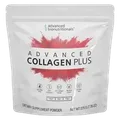
PrimeBiome directly targets the gut-skin connection. Its multi-strain probiotic complex restores Lactobacillus and Bifidobacterium populations that regulate gut inflammation and intestinal permeability. As the gut barrier heals and dysbiosis resolves, the systemic inflammatory signals that drive skin conditions diminish - often producing visible skin improvements that topical treatments could never achieve. Advanced Collagen Plus addresses the downstream consequence: once nutrient absorption is restored, the body needs the building blocks to rebuild dermal collagen. Supplementing with hydrolyzed collagen peptides alongside Hyaluronic Acid and Vitamin C ensures the skin reconstruction process has all necessary raw materials. DigestSync supports the enzymatic side of the gut-skin equation - proper enzyme activity ensures that ingested nutrients (amino acids, vitamins, minerals) are efficiently processed and absorbed before they can serve as collagen precursors.Why "Glow" Starts in the Gut
The skin phenomenon called "inner glow" - that luminous, even-toned radiance associated with health - is not primarily a surface phenomenon. It reflects:
- Low systemic inflammation (clear, even complexion)
- Efficient nutrient delivery to dermal cells (density and firmness)
- Balanced sebum production (neither too dry nor too oily)
- Healthy microcirculation (warmth and color)
All of these are regulated internally, through the gut. The most beautiful skin is the externally visible outcome of internal biological health.
Conclusion
The skin is a mirror of the gut. Every persistent skin challenge that fails to respond to topical treatment is the gut sending an urgent internal message. Rather than escalating the topical intervention, the scientifically indicated approach is to investigate and address the gut-skin axis - where the true root cause of most chronic skin conditions resides.
How the Dermal And Connective Tissue System Responds
Skin structure relies on a collagen and elastin matrix produced by fibroblast cells in the dermis. Vitamin C is a required cofactor for hydroxylase enzymes that stabilize the collagen triple helix. Without adequate antioxidant protection, UV-induced ROS cleave collagen chains and accelerate visible aging.
This mechanism explains why the biological factors discussed in this article are not merely lifestyle suggestions but represent the foundational drivers of long-term dermal health.
Scientific References & Validation
Full citations with PMID links, methodology notes & evidence ratings on puresupphub.com