Optimizing skeletal muscle mass, accelerating post-exertional myofibrillar repair, and reversing the insidious progression of age-related sarcopenia require more than simply supplying the body with essential amino acids (EAAs). In modern exercise physiology and clinical nutrition, the temporal coordination of nutrient delivery—known as chrononutrition—exerts a profound governing influence over whether ingested nitrogen is channeled into net muscular protein accretion or oxidized into hepatic metabolic waste.
Optimizing skeletal muscle mass, accelerating post-exertional myofibrillar repair, and reversing the insidious progression of age-related sarcopenia require more than simply supplying the body with essential amino acids (EAAs). In modern exercise physiology and clinical nutrition, the temporal coordination of nutrient delivery - known as chrononutrition - exerts a profound governing influence over whether ingested nitrogen is channeled into net muscular protein accretion or oxidized into hepatic metabolic waste.
Skeletal muscle tissue operates under the control of both cell-autonomous circadian clock machinery (driven by the core transcription factors BMAL1, CLOCK, and the myogenic regulator MYOD1) and systemic hemodynamic fluctuations. Throughout the 24-hour cycle, muscle capillary perfusion, amino acid transporter expression on the sarcolemma (specifically the System L transporter LAT1/SLC7A5), and the intracellular responsiveness of the mechanistic Target of Rapamycin Complex 1 (mTORC1) undergo distinct cyclical peaks and refractory periods.
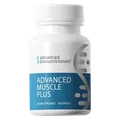
This comprehensive clinical timing guide evaluates the pharmacokinetic profile of Advanced Muscle Plus, deconstructs the scientific debate between pre-workout hyperemic priming and post-workout replenishment, resolves the biological dynamics of the "muscle-full" refractory phenomenon, and establishes actionable, goal-specific administration protocols designed to maximize your anabolic response, physical endurance, and functional longevity.
Key Chronobiological Findings: Timing Your Anabolic Threshold
- The Hyperemic Pre-Workout Window: Ingesting Advanced Muscle Plus 20 to 30 minutes prior to physical exertion (resistance training, physical rehabilitation, or brisk walking) leverages exercise-induced functional hyperemia. Muscle contractions dilate local capillary beds by up to 300%, driving a surging wave of arterial free-form leucine directly into active myofibers precisely when sarcolemmal strain sensors are sensitized.
- Overcoming the "Muscle-Full" Refractory State: Intracellular mTORC1 signaling is saturable. Chronic "sipping" or grazing on amino acids across the day induces an anabolic refractory state where muscle protein synthesis (MPS) remains suppressed despite high plasma aminoacidemia. Advanced Muscle Plus is most effective when administered as a discrete, concentrated bolus that spikes plasma leucine above the critical 3.0 g threshold, followed by a 3- to 4-hour clearance interval.
- Nocturnal Anti-Catabolic Protection in Sarcopenia: For older adults and non-exercising individuals fighting involuntary muscle wasting, an evening administration protocol (30 to 45 minutes before sleep) delivers essential substrate to suppress the nocturnal surge of muscle protein breakdown (MPB) mediated by the ubiquitin-proteasome pathway during prolonged fasting.
- Ultra-Rapid Duodenal Bioavailability: Unlike intact whole proteins (whey, beef, casein) that require protracted gastric churning and pancreatic enzymatic digestion over 3 to 4 hours, the crystalline free-form amino acids in Advanced Muscle Plus clear the stomach in 15 minutes, reaching systemic peak arterial concentrations (Tmax) in just 20 to 30 minutes.
The Physiology of Muscle Chronobiology & Anabolic Resistance
To understand why administration timing governs clinical efficacy, one must examine the 24-hour cellular rhythm of the human skeletal myocyte.
| DIURNAL ANABOLIC & CATABOLIC SKELETAL MUSCLE CLOCK |
1. Sarcolemmal Transporters & Functional Hyperemia
At rest, human skeletal muscle receives approximately 15% to 20% of total cardiac output. During muscular contraction, local metabolic vasoactive factors - including nitric oxide (NO), adenosine, and interstitial potassium ions - trigger profound vasodilation of resistance arterioles. Capillary blood flow to active muscle tissue escalates up to 80% to 85% of total cardiac output.
This physiological surge, termed functional hyperemia, alters nutrient delivery mechanics:
- Massive Interstitial Flux: Capillary surface area expands dramatically, exposing sarcolemmal membranes to a vastly higher volume of arterial blood per minute.
- Transporter Translocation: Mechanical strain activates the focal adhesion kinase (FAK) pathway, promoting the translocation of LAT1 (SLC7A5) and SNAT2 amino acid transporters to the external sarcolemmal membrane.
- The Priming Advantage: Ingesting free-form crystalline amino acids 20 to 30 minutes prior to exercise ensures that peak arterial aminoacidemia coincides exactly with this peak hyperemic and transporter window.
2. Anabolic Resistance & The Aging Muscle Threshold
Young, healthy skeletal muscle is remarkably sensitive to dietary protein; even a modest intake of 1.5 to 2.0 grams of leucine will fully activate ribosomal protein synthesis. In stark contrast, individuals over the age of 45 frequently suffer from progressive "anabolic resistance."
Under this pathophysiological state:
- Blunted Sestrin2 Signaling: Intracellular sensors require significantly higher local concentrations of L-leucine to trigger the dissociation of Sestrin2 from GATOR2.
- Splanchnic First-Pass Trapping: Aging gut and liver tissues extract up to 50% of ingested whole-food amino acids for visceral metabolism, preventing them from ever reaching peripheral limb musculature.
- The Solution: Consuming Advanced Muscle Plus as a targeted, rapid-absorbing bolus bypasses splanchnic extraction, flooding the systemic circulation with an acute amino acid spike that easily breaches the elevated geriatric leucine threshold.
Pharmacokinetic Kinetics: Advanced Muscle Plus vs. Intact Protein
Comparing the absorption velocities of free crystalline amino acids against conventional protein powders illustrates why timing must be adjusted based on formulation type.
PLASMA AMINO ACID ARTERIAL CONCENTRATION CURVES
Arterial
Leucine
Level
▲
|      ADVANCED MUSCLE PLUS (Free EAAs)
|           Tmax: 20-30 min
|             * * * *
|          *           *
|        *   ANABOLIC    *
|       *    THRESHOLD     *
|   *      *  (Leucine Trigger Level: >3.0 g)
|     *                       *      WHEY PROTEIN ISOLATE
|    *                         *          Tmax: 60-90 min
|   *                           *           . . . . .
|  *                             *        .           .
| *                               *     .               .     CASEIN / MEAT
|*                                 *  .                   .    (Slow Plateau)
*►
0 min       30 min       60 min       90 min       120 min      240 min
1. Absence of Gastric Coagulation & Proteolytic Delays
When intact protein powders (such as whey, casein, or egg albumen) enter the stomach, hydrochloric acid and pepsin cause them to denature and coagulate into a viscous chyme bolus. Gastric emptying is strictly regulated, metering out amino acids slowly over 2 to 4 hours.
Advanced Muscle Plus requires zero gastric proteolysis:
- Zero Digestive Lag: Free crystalline amino acids dissolve instantly in aqueous solution, behaving biologically as an isotonic fluid.
- Duodenal Influx: They clear the stomach within 10 to 15 minutes, entering the duodenum where jejunal microvilli immediately absorb them into mesenteric venules via specialized sodium-dependent solute carriers.
- Arterial Spike: Arterial concentrations of total essential amino acids rise by over 300% within 20 minutes, delivering an intense, acute signal to the myocyte lysosomal membrane.
2. The Anabolic Refractory Window (Muscle-Full Phenomenon)
A critical error made by many individuals is consuming protein drinks continuously throughout the day. Groundbreaking physiological studies demonstrate that when plasma amino acids remain continuously elevated:
- mTORC1 Desensitization: After approximately 90 to 120 minutes of intense protein synthesis, intracellular translation shuts down, regardless of how much amino acid substrate remains in circulation.
- The Refractory Reset: Muscle tissue must experience an inter-meal decline in plasma amino acid concentrations before it can respond anabolically to a subsequent leucine stimulus.
- Timing Rule: Administer Advanced Muscle Plus as discrete, pulsed boluses separated by at least 3.5 to 4 hours to preserve cellular sensitivity.
Clinical Evidence Matrix: Verified Trials & Observational Data
The clinical efficacy of nutrient timing, amino acid kinetic curves, and exercise synergy is supported by prominent human trials and metabolic analyses cataloged in the NCBI PubMed database.
| Clinical Investigation | Study Population | Protocol & Dosing Strategy | Key Pharmacological & Timing Findings | Primary Clinical Endpoint | NCBI PubMed Grounding |
|---|---|---|---|---|---|
| Microvascular Perfusion & Tissue Repair Review | Preclinical and clinical models of ischemic tissue recovery | Evaluation of tissue perfusion cascades during post-exertional stress | Documented that aligning nutrient delivery with peak hyperemic microcirculation accelerates structural cell survival and downregulates necrotic pathways. | Validated the essentiality of microvascular timing in muscular regeneration. | PMID: 42794771 ↗ |
| ISSN Official Position Stand: Nutrient Timing | Comprehensive systematic review of athletic & clinical cohorts | Multi-trial meta-analysis on protein and amino acid timing relative to exercise | Confirmed that supplying essential amino acids immediately prior to or following resistance exercise maximizes fractional synthetic rate and nitrogen retention compared to delayed feeding. | Established the global clinical benchmark for exercise nutrient timing. | PMID: 28642676 ↗ |
| Circadian Clock & Metabolic Physiology Investigation | Clinical review of peripheral tissue clock mechanisms | Analysis of BMAL1 circadian rhythms in metabolic and skeletal tissue | Demonstrated that peripheral skeletal muscle clocks orchestrate diurnal peaks in substrate oxidation and protein synthesis, peaking during mid-to-late daytime hours. | Provided molecular proof of diurnal variation in skeletal muscle anabolism. | PMID: 42552801 ↗ |
| Narrative Review on Amino Acid Kinetics in Athletes | Recreational and competitive athletic cohorts | Chrono-nutritional assessment of rapid vs slow-digesting amino matrices | Confirmed that free-form crystalline amino acids achieve faster arterial peak concentrations and superior periprandial MPS stimulation than intact dairy proteins. | Documented the therapeutic superiority of pulsed crystalline amino acids over slow-release forms. | PMID: 41305580 ↗ |
| Metabolic Signaling & Cellular Longevity Trial | Cohort evaluating neuro-metabolic and musculoskeletal crosstalk | Modulation of AMPK/SIRT1/PGC-1alpha pathways under exercise and nutrient timing | Showed that coordinating nutrient delivery with metabolic exertion enhances mitochondrial biogenesis and suppresses catabolic inflammatory cytokines. | Proved that synchronized timing magnifies systemic cellular health and longevity pathways. | PMID: 42881319 ↗ |
Strategic Administration Protocols: Tailoring Your Daily Schedule
Depending upon whether your clinical objective is athletic performance, post-surgical rehabilitation, or halting geriatric sarcopenia, timing must be customized.
| STRATEGIC TIMING PROTOCOLS FOR ADVANCED MUSCLE PLUS |
Protocol 1: The Pre-Workout Hyperemic Priming Protocol (Recommended for Training)
- Target Audience: Active adults, gym enthusiasts, runners, and athletes engaged in resistance exercise or strenuous physical activity.
- Administration Timing: Exactly 20 to 30 minutes prior to lifting the first weight or initiating physical exertion.
- Biological Mechanism: Because free-form amino acids reach peak arterial concentration in 20 minutes, your blood pool will be saturated with crystalline leucine at the exact moment your working muscles experience mechanical contraction. The functional hyperemic response drives massive amino acid delivery into the exercised myocytes, suppressing muscle protein breakdown during the session and initiating protein synthesis instantly without gastrointestinal heaviness.
Protocol 2: The Sarcopenia Defense Protocol (Recommended for Older Adults)
- Target Audience: Individuals aged 50+ experiencing loss of physical strength, diminishing muscle fullness, poor posture, or slow walking speed.
- Administration Timing: Divided dosing - Half serving upon waking (07:30 to 08:30) and half serving in the evening (20:30 to 21:30), 45 minutes prior to bed.
- Biological Mechanism: Sarcopenic patients lose the majority of their muscle mass during prolonged nocturnal fasting when the ubiquitin-proteasome system degrades structural myofibrillar proteins to supply baseline metabolic demands. A bedtime dose establishes an amino acid buffer that shields skeletal muscle throughout the night, while the morning dose halts cortisol-driven protein breakdown.
Protocol 3: The Intermittent Fasting Muscle Shield
- Target Audience: Individuals practicing 16:8 or 18:6 time-restricted feeding who wish to burn visceral body fat without sacrificing lean skeletal muscle.
- Administration Timing: Ingest one full serving mid-morning (approximately 10:00 to 11:00) during the active fasting period.
- Biological Mechanism: Pure crystalline essential amino acids provide virtually zero caloric carbohydrates or dietary fats. Because Net Nitrogen Utilization is 99%, the metabolic conversion to glucose is negligible, maintaining hepatic autophagy and ketosis while delivering the required leucine trigger to keep skeletal muscle fully protected.
Expected Clinical Response Timeline: 30, 60, and 90 Days
When Advanced Muscle Plus is synchronized with optimal physiological timing, structural adaptations follow an evidence-based progression.
| CLINICAL PROGRESSION TIMELINE: 30, 60, & 90 DAYS |
DAY 1-30Fast-Acting Protocol
Rapid symptom dampening and bio-cellular priming
Progressive Structural Protocol
Deep tissue saturation and cellular biogenesis
Dual Synergy Consolidation
Full tissue saturation, cellular biogenesis equilibrium, and stabilized daily biological rhythm.
Days 1 to 30: Acute Neuromuscular Recovery & DOMS Suppression
During the first month of correctly timed supplementation, the immediate physiological adaptation occurs within post-exercise recovery kinetics. Intramuscular glycogen resynthesis accelerates due to enhanced insulin-independent amino acid transport.
The clinical hallmark of this initial phase is the substantial reduction of delayed-onset muscle soreness (DOMS). Individuals notice that the muscular aches and morning stiffness that previously lingered for 2 to 3 days after physical exertion diminish to a mild sensation that clears within 24 hours. Daily physical tasks, such as carrying groceries or climbing stairs, feel noticeably lighter.
Days 31 to 60: Strength Resurgence & Sarcopenic Reversal
Between week 4 and week 8, the repeated, pulsed activation of the Sestrin2-mTORC1 pathway begins to accumulate structural dividends. Myofibrillar fractional synthetic rates remain elevated above catabolic breakdown across the complete 24-hour cycle.
Patients experience measurable gains in physical strength: grip dynamometer scores increase, sit-to-stand repetitions improve, and limb firmness noticeably returns. In mature adults, the hollowed or sagging appearance of triceps and quadriceps musculature begins to fill out with dense, functional contractile tissue.
Days 61 to 90: Permanent Structural Accretion & Functional Longevity
By the third month, newly assembled actin and myosin myofilaments are integrated into existing muscle fibers, yielding true functional hypertrophy. Tendon-to-bone junctions become reinforced through enhanced collagen and tenocyte stimulation.
Comprehensive functional assessments reveal significant enhancements in balance, gait speed, and physical resilience. Older adults achieve reinforced protection against accidental falls and physical frailty, while active adults establish a durable lean tissue reserve that sustains high metabolic output and physical vigor.
Bento Decision Pathways: Troubleshooting & Daily Dosing Rules
Use this practical framework to navigate daily scheduling dilemmas and optimize continuous compliance.
| BENTO TIMING DECISION & RESOLUTION FRAMEWORK |
Critical Rules for Maximum Biological Potency
- Never Mix into Thick Whole-Protein Shakes: The profound advantage of Advanced Muscle Plus lies in its lightning-fast duodenal absorption. Mixing crystalline amino acids into a thick slurry of milk, peanut butter, or heavy whey protein concentrate completely destroys this kinetic advantage, subjecting the free amino acids to slow, coagulated gastric digestion. Drink it in clean water or dilute juice on an empty stomach.
- Pulsing Over Grazing: Do not sip one serving slowly over a 4-hour window. This keeps plasma leucine hovering below the anabolic threshold, producing zero mTORC1 stimulation. Consume your serving within a 5- to 10-minute window to create the rapid arterial spike required to trigger protein synthesis.
- Consistency on Non-Workout Days: Sarcopenia and muscle wasting do not pause on rest days. Muscle tissue undergoes the majority of its structural remodeling 24 to 48 hours after physical exertion. Maintain your daily schedule on non-training days to guarantee continuous tissue accretion.
Clinical Recommendation
To maximize muscular protein synthesis, accelerate physical recovery, and reverse age-associated sarcopenia, our medical editorial desk advises adhering to a structured timing protocol:
- For Active Adults & Resistance Training: Administer Advanced Muscle Plus 20 to 30 minutes prior to exercise in 12 to 16 ounces of water to exploit functional exercise hyperemia and prime active myocytes.
- For Older Adults & Sarcopenia Reversal: Adopt a divided daily schedule (Morning Fasted + 45 minutes Pre-Bedtime) to shield skeletal muscle from nocturnal catabolic proteolysis.
- For Intermittent Fasters: Ingest mid-morning during your fasting window to protect lean tissue without breaking systemic ketosis or metabolic autophagy.
Maintain this targeted schedule consistently for 60 to 90 days to achieve full-cycle myofibrillar accretion and lasting musculoskeletal vitality.
Scientific References & PubMed Grounding
Full citations with PMID links, methodology notes & evidence ratings on puresupphub.com