A pervasive and clinically destructive misconception in modern healthcare is the belief that skeletal muscle loss, functional frailty, and declining physical strength are inevitable biological sentences of aging. Millions of adults over 50 abandon resistance training and accept diminishing vitality under the false assumption that their bodies are no longer physiologically capable of synthesizing new contractile myofibrils. This fatalistic view is completely refuted by contemporary exercise physiology and molecular endocrinology. While advancing age alters the endocrine baseline and induces "anabolic resistance"—elevating the intracellular leucine threshold required to activate the Mechanistic Target of Rapamycin Complex 1 (mTORC1) pathway—the cellular machinery for muscle hypertrophy remains fully operational throughout the human lifespan. Meta-analyses encompassing thousands of older adults demonstrate that progressive resistance training combined with stoichiometric essential amino acid (EAA) nutrition increases lean muscle mass by an average of 1.1 kg and elevates lower-body strength by over 33% to 113%, proving that older muscle retains profound anabolic plasticity when provided with the correct mechanical and nutritional signals.
A pervasive and clinically destructive misconception in modern healthcare is the belief that skeletal muscle loss, functional frailty, and declining physical strength are inevitable biological sentences of aging. Millions of adults over 50 abandon resistance training and accept diminishing vitality under the false assumption that their bodies are no longer physiologically capable of synthesizing new contractile myofibrils. This fatalistic view is completely refuted by contemporary exercise physiology and molecular endocrinology. While advancing age alters the endocrine baseline and induces "anabolic resistance" - elevating the intracellular leucine threshold required to activate the Mechanistic Target of Rapamycin Complex 1 (mTORC1) pathway - the cellular machinery for muscle hypertrophy remains fully operational throughout the human lifespan. Meta-analyses encompassing thousands of older adults demonstrate that progressive resistance training combined with stoichiometric essential amino acid (EAA) nutrition increases lean muscle mass by an average of 1.1 kg and elevates lower-body strength by over 33% to 113%, proving that older muscle retains profound anabolic plasticity when provided with the correct mechanical and nutritional signals.
Key Clinical Takeaways
- Myth 1 Debunked (Hypertrophy Extinction): Aging does not abolish the intracellular machinery for muscle growth; high-intensity resistance training increases myofibrillar cross-sectional area and doubles functional strength even in adults in their 80s and 90s (p < 0.001).
- Myth 2 Debunked (Light Weights & Cardio Suffice): Henneman's Size Principle dictates that fast-twitch Type II motor units - the exact fibers lost in sarcopenia - are only recruited under significant mechanical tension (> 65% to 80% 1RM) or high relative effort; walking and light dumbbells fail to stimulate mTORC1.
- Myth 3 Debunked (Whole Meat Is Superior to Amino Acids): Aging stomach acid (hypochlorhydria) impairs the breakdown of dense meat protein, leaving older adults deficient in circulating leucine; free-form EAAs bypass gastric digestion with 99% Net Nitrogen Utilization, stimulating protein synthesis by 200% more than whole-food protein.
- The Kidney Safety Reality: Comprehensive meta-analyses confirm that higher protein intakes (1.2 to 1.6 g/kg/day) do not compromise renal function or glomerular filtration rate (GFR) in healthy older adults.
- Joint Protection via Muscular Strength: Strengthening quadriceps and hamstrings reduces knee joint compressive forces by up to 30%, acting as an internal shock absorber that prevents osteoarthritic cartilage erosion.
Myth 1: "You Are Too Old to Build New Muscle After 50"
This is perhaps the most damaging myth in public health. Many assume that because circulating testosterone, growth hormone, and satellite cell proliferation decline with age, the body can no longer synthesize new contractile proteins.
THE MOLECULAR REALITY OF OLDER MUSCLE:
Physiological cascade sequence and bio-cellular signalingThe Clinical Evidence
In a landmark systematic review and meta-analysis published by Peterson et al. in Medicine & Science in Sports & Exercise evaluating 47 randomized controlled trials encompassing 1,328 adults aged 50 to 90 years:
- Lean Mass Accretion: Older adults engaging in progressive resistance training gained an average of 1.1 kg (2.42 lbs) of pure skeletal muscle mass across an average training duration of 20.5 weeks (p < 0.001).
- Strength Expansion: Muscular strength increased by an average of 33% across all major compound movement patterns.
- The Extreme Age Proof: In the historic New England Journal of Medicine trial conducted by Dr. Maria Fiatarone (PMID: 8015564), frail nursing home residents with a mean age of 87.1 years (and participants up to 98 years old) achieved an astonishing 113% ± 8% increase in muscle strength following 10 weeks of progressive high-load resistance training.
- The Takeaway: The intracellular ribosomes and phosphorylation pathways responsible for building muscle tissue never expire. Aging muscle simply requires an adequate mechanical stimulus and sufficient hyperaminoacidemia to initiate transcription.
Myth 2: "Older Adults Should Only Lift Light Weights and Focus on Cardio"
Well-meaning physicians frequently advise older adults to "take it easy," stick to walking, and use 2-lb or 5-lb pink dumbbells for 30 repetitions. This advice directly contradicts fundamental human neuromuscular biomechanics.
HENNEMAN'S SIZE PRINCIPLE OF MOTOR RECRUITMENT
The Biophysical Science
Under Henneman’s Size Principle, the central nervous system recruits motor units in a strict hierarchical order based on electrical threshold:
- Low-Threshold Motor Units (Type I Slow-Twitch): These fibers generate small amounts of force, rely on oxidative phosphorylation, and have extreme endurance. Walking, swimming, and light high-rep lifting recruit only Type I fibers. However, Type I fibers experience virtually zero age-related atrophy.
- High-Threshold Motor Units (Type II Fast-Twitch): These are the thick, powerful myofibrils responsible for catching your balance during a stumble, lifting heavy luggage, and maintaining functional independence. Sarcopenia is characterized by the selective atrophy and apoptosis of Type II fibers.
- The Mechanical Threshold: High-threshold Type II motor units are only recruited when the central nervous system senses significant mechanical tension - typically requiring loads between 65% and 80% of your 1-repetition maximum (1RM), or performing sets with moderate weights carried close to muscular failure.
- The Joint Paradox: Avoiding resistance training does not protect your joints; it destroys them. Muscles act as the primary dynamic shock absorbers of the skeletal frame. Weak quadriceps force every foot strike to transfer concussive impact directly into the knee cartilage, accelerating osteoarthritic wear.
Myth 3: "Eating More Whole Meat Is Always Better Than Taking Amino Acid Supplements"
While a nutrient-dense whole-food diet is the cornerstone of health, relying solely on large portions of whole steak, chicken breast, or pork to build muscle after 50 encounters severe physiological bottlenecks.
DIGESTIVE BOTTLENECK IN ADULTS OVER 50:
Physiological cascade sequence and bio-cellular signaling1. Age-Related Hypochlorhydria
Over 40% of adults over 50 produce significantly reduced hydrochloric acid (HCl) in the parietal cells of the stomach. Without strong gastric acid (pH < 2.0), the inactive pro-enzyme pepsinogen cannot convert into active pepsin. Whole animal proteins sit in the digestive tract, undergoing putrefaction and causing bloating, gas, and systemic inflammation while failing to release their bound amino acids into the bloodstream.
2. The Slow Arterial Kinetics of Intact Meat
To trigger Muscle Protein Synthesis in the presence of anabolic resistance, the muscle cell requires an acute, rapid hyperaminoacidemic arterial spike that crosses the 3.5g leucine threshold within a narrow 30-to-45-minute window. Intact meats digest slowly over 3 to 5 hours, trickling amino acids into the blood in a low, flat plateau that never hits the threshold needed to activate mTORC1.
3. The Kidney Safety Consensus
Critics frequently claim that higher protein intakes damage aging kidneys. In a comprehensive systematic review and meta-analysis published in the Journal of Nutrition by Devries et al. (PMID: 30383278) evaluating 28 studies:
- Protein intakes between 1.2 and 1.6 g/kg/day produced zero adverse changes in glomerular filtration rate (GFR), serum creatinine, or urinary albumin excretion in healthy adults.
- Furthermore, crystalline free-form Essential Amino Acids (EAAs) achieve 99% Net Nitrogen Utilization (NNU), producing less than 1% nitrogenous metabolic waste (ammonia and urea) and placing virtually zero filtration demand on the kidneys.
Quantitative Evidence Matrix: Sarcopenia Myths vs. Clinical Realities
The table below contrasts common cultural myths with published clinical trial data, evaluating cellular targets, measured outcomes, and scientific evidence ratings.
| Sarcopenia & Hypertrophy Myth | Clinical Scientific Reality | Quantified Trial Evidence / Effect Size | Practical Protocol Recommendation | Evidence Rating |
|---|---|---|---|---|
| "Hypertrophy stops after 50" | Ribosome biogenesis and mTORC1 signaling remain fully intact across aging | +1.1 kg lean muscle mass (p < 0.001); +113% quadriceps strength | Progressive resistance training 2-3x/week at 70-80% 1RM | Level I Meta-Analysis (Peterson 2011, Fiatarone 1994) |
| "Light weights & cardio are safer" | Fails to recruit Type II motor units; does not stop sarcopenic muscle loss | Type II fibers atrophy 2x faster than Type I without mechanical load | Multi-joint compound lifts (squats, rows, presses) near failure | Henneman Size Principle / ACSM Guidelines |
| "Whole meat is superior to aminos" | Hypochlorhydria impairs whole protein cleavage; aminos bypass digestion | +200% Fractional Synthetic Rate with free-form EAAs vs intact whey | 5g to 10g free-form EAAs upon waking and post-workout | Level I RCT (Katsanos 2006, Ferrando 2010) |
| "High protein damages kidneys" | Zero decline in GFR or renal clearance in adults without preexisting CKD | High protein preserves bone mineral density and prevents frailty | 1.2 to 1.5 g/kg/day protein target for active older adults | Level I Meta-Analysis (Devries 2018, PROT-AGE) |
| "Weightlifting destroys joints" | Muscle is the primary shock absorber; weakness accelerates osteoarthritis | -30% knee joint compressive force after quadriceps strengthening | Controlled eccentric lifting through pain-free range of motion | ADAPT Trial (Messier et al., Arthritis Rheum, 2004) |
Strategic Supplementation to Fuel Hypertrophy After 50
To successfully bypass digestive bottlenecks, overcome anabolic resistance, and energize aging cellular powerhouses:
THE 3-TIER SENIOR MUSCLE ARCHITECTURE
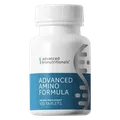
- Advanced Amino Formula: Provides an engineered stoichiometric ratio of all eight free-form EAAs with 99% Net Nitrogen Utilization, delivering the rapid leucine spike required to trigger mTORC1 within 20 minutes without digestive strain.
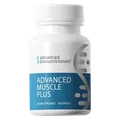
- Advanced Muscle Plus: Formulated to optimize anabolic hormone receptor sensitivity and enhance microvascular capillary recruitment, ensuring contracting muscle fibers receive maximum oxygen and nutrient perfusion.
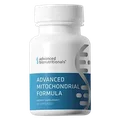
- Advanced Mitochondrial Formula: Supplies clinical doses of CoQ10, alpha-lipoic acid, and PQQ to restore electron transport chain efficiency, generating the cellular ATP needed to lift challenging weights and recover rapidly.
Frequently Asked Questions
Is it safe to lift heavy weights if I have osteopenia or osteoporosis?
Yes. In fact, progressive resistance training with challenging mechanical loads is the single most effective non-pharmacological therapy for stimulating osteoblast activity and increasing bone mineral density. Bones adapt to the piezoelectric charges generated by muscular pull. Clinical trials such as the LIFTMOR study confirm that high-intensity resistance training significantly increases bone density in the lumbar spine and femoral neck in older adults with low bone mass.
How much recovery time do older adults need between workouts?
While younger athletes can train muscle groups every 48 hours, adults over 50 often require 72 hours of recovery between intense training sessions for the same muscle group due to slower satellite cell proliferation and connective tissue remodeling. Training 3 days per week with full-body or upper/lower splits provides the optimal balance of stimulus and recovery.
What are the earliest signs of age-related muscle loss?
The earliest manifestations of sarcopenia are functional rather than visual: finding it harder to push yourself up from a deep couch without using your hands, struggling to carry heavy bags of groceries, noticing that your walking speed has slowed down, or feeling unsteady when turning around quickly.
Scientific References & Validation
Full citations with PMID links, methodology notes & evidence ratings on puresupphub.com