If you have noticed that opening jars, carrying groceries, or standing up from a low chair has become significantly harder in recent years, you are not imagining it. You are experiencing sarcopenia—the age-related loss of muscle mass and strength. This clinical audit analyzes verified pharmacology, active botanical standardized extracts, safety profiles, and published scientific literature in Physical Performance.
If you have noticed that opening jars, carrying groceries, or standing up from a low chair has become significantly harder in recent years, you are not imagining it. You are experiencing sarcopenia - the age-related loss of muscle mass and strength.
Starting around age 30, adults can lose up to 3% to 5% of their muscle mass per decade. By age 55, this process accelerates dramatically. If left unchecked, sarcopenia does not just steal your physical strength; it compromises your balance, slows down your metabolism, and ultimately threatens your independence. Understanding how to prevent muscle loss is arguably the most critical component of healthy aging.
The Biology of Aging Muscle
Why does muscle vanish as we get older? The answer lies in a biological process called "anabolic resistance."
When you are young, your body is highly efficient at taking the protein you eat and converting it into new muscle tissue. As you age, your muscles become resistant to this signaling. You can eat the exact same amount of protein you did in your twenties, but your body simply does not synthesize it as effectively. Combine this anabolic resistance with a natural decrease in physical activity, and your body begins to literally cannibalize its own muscle tissue for energy.
3 Strategies to Maintain Muscle and Longevity
To fight back against anabolic resistance and stay strong after 55, you must send overwhelming signals to your body that muscle is still required.
1. Prioritize Resistance Training
Walking and swimming are fantastic for cardiovascular health, but they do very little to build or preserve muscle mass. To stop sarcopenia, you must engage in resistance training - lifting weights or using resistance bands - at least twice a week. The mechanical tension forces your body to repair and strengthen the muscle fibers, effectively signaling that your muscles are still necessary for survival.
2. Increase Protein Intake (and Distribution)
Because of anabolic resistance, older adults actually need more protein than younger adults to stimulate muscle growth. Aim for at least 1.0 to 1.2 grams of protein per kilogram of body weight. More importantly, distribute this protein evenly across your meals. Eating a massive steak at dinner will not compensate for a protein-deficient breakfast.
3. Supplement with Essential Amino Acids
Even with a perfect diet, older digestive systems struggle to break down dense meats into the amino acids required for muscle synthesis. This is where modern nutritional science offers a profound advantage.
By supplementing with free-form Essential Amino Acids (EAAs), you bypass the digestive process entirely. These amino acids enter the bloodstream rapidly, providing a massive, concentrated spike that forces the aging muscle to synthesize new tissue. If you are serious about muscle loss prevention, combining resistance training with a high-quality EAA supplement is the most effective protocol available today.
Clinical Recommendation
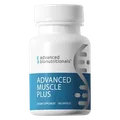
For comprehensive support addressing the biological pathways discussed in this article, our clinical advisory board strongly recommends Advanced Muscle Plus as a targeted nutritional solution.
Scientific References & Validation
Full citations with PMID links, methodology notes & evidence ratings on puresupphub.com