Across the human lifespan, skeletal muscle mass is maintained in a continuous, dynamic equilibrium between Muscle Protein Synthesis (MPS) and Muscle Protein Breakdown (MPB). Beginning at age 40, healthy adults enter a state of chronic subclinical muscle wasting—losing between 3% and 8% of skeletal muscle mass per decade—accelerating past age 60 into clinical sarcopenia. The primary biochemical driver of this deterioration is not merely inadequate dietary protein intake, but anabolic resistance paired with age-related gastrointestinal hypochlorhydria, which reduces the enzymatic extraction of amino acids from whole foods by up to 40%. Skeletal muscle tissue does not absorb intact proteins; it requires the transport of free-form amino acids across sarcolemmal L-type amino acid transporters (LAT1 / SLC7A5) to initiate ribosomal mRNA translation. Pharmacokinetic isotope tracer trials establish that supplementing with stoichiometric free-form Essential Amino Acids (EAAs) generates an acute hyperaminoacidemic arterial spike that stimulates the Mechanistic Target of Rapamycin Complex 1 (mTORC1) up to 200% more effectively than intact dietary whey, increasing lean body mass by 1.74 kg in clinical trials and preventing the catastrophic loss of functional independence.
Across the human lifespan, skeletal muscle mass is maintained in a continuous, dynamic equilibrium between Muscle Protein Synthesis (MPS) and Muscle Protein Breakdown (MPB). Beginning at age 40, healthy adults enter a state of chronic subclinical muscle wasting - losing between 3% and 8% of skeletal muscle mass per decade - accelerating past age 60 into clinical sarcopenia. The primary biochemical driver of this deterioration is not merely inadequate dietary protein intake, but anabolic resistance paired with age-related gastrointestinal hypochlorhydria, which reduces the enzymatic extraction of amino acids from whole foods by up to 40%. Skeletal muscle tissue does not absorb intact proteins; it requires the transport of free-form amino acids across sarcolemmal L-type amino acid transporters (LAT1 / SLC7A5) to initiate ribosomal mRNA translation. Pharmacokinetic isotope tracer trials establish that supplementing with stoichiometric free-form Essential Amino Acids (EAAs) generates an acute hyperaminoacidemic arterial spike that stimulates the Mechanistic Target of Rapamycin Complex 1 (mTORC1) up to 200% more effectively than intact dietary whey, increasing lean body mass by 1.74 kg in clinical trials and preventing the catastrophic loss of functional independence.
Key Clinical Takeaways
- The Sarcolemmal Transporter Bottleneck: Amino acids enter muscle fibers via specialized membrane transporters (LAT1 and SNAT2); aging downregulates these transporters, requiring an acute arterial amino acid spike to force cellular uptake.
- The Non-Essential Amino Acid Myth: Isotope tracer studies confirm that non-essential amino acids (NEAAs) provide zero additional stimulation to muscle protein synthesis; only the 9 Essential Amino Acids (EAAs) dictate anabolic remodeling.
- Caloric Efficiency Parity: Clinical trials prove that 15 grams of free-form EAAs stimulates muscle protein synthesis to the exact same magnitude as 35 grams of intact whey protein, with one-third the caloric load and zero digestive distress.
- Measurable Hypertrophy Without Exercise: In a 3-month clinical trial of older adults (n = 12), daily EAA supplementation increased lean body mass by 1.74 kg (3.83 lbs) without any structured exercise protocol (p < 0.05).
- 99% Anabolic Retention: Stoichiometric free-form EAAs achieve 99% Net Nitrogen Utilization (NNU), producing less than 1% toxic nitrogenous waste (blood urea nitrogen) and placing near-zero metabolic burden on aging kidneys.
The Molecular Machinery: How Amino Acids Command Muscle Protein Synthesis
Skeletal muscle is not a static organ; approximately 1% to 2% of the body's total contractile proteins are broken down and resynthesized every single day.
For muscle mass to be preserved or expanded, the rate of Muscle Protein Synthesis (MPS) must equal or exceed the rate of Muscle Protein Breakdown (MPB):
Net Muscle Balance = MPS - MPB
FREE-FORM ESSENTIAL AMINO ACID INGESTION
- Sarcolemmal Transport via LAT1: Circulating amino acids cannot freely diffuse across the lipid bilayer of the muscle cell membrane (sarcolemma). They require specialized sodium-independent neutral amino acid transporters, primarily LAT1 (SLC7A5) coupled with the glycoprotein CD98 (SLC3A2). LAT1 functions as an exchanger, pumping extracellular leucine, phenylalanine, and isoleucine into the cytoplasm while pumping intracellular glutamine out.
- Sestrin2 Leucine Sensing: Once inside the cytoplasm, free L-leucine binds directly to Sestrin2. At rest, Sestrin2 inhibits the GATOR2 complex. When leucine binds, Sestrin2 releases GATOR2, which in turn activates the heterodimeric Rag GTPases (RagA/B and RagC/D).
- mTORC1 Lysosomal Translocation: The active Rag GTPases recruit inactive mTORC1 from the cytoplasm and anchor it to the surface of the lysosome. Here, the small GTPase Rheb (Ras homolog enriched in brain) - which has been disinhibited by mechanical tension or insulin signaling - phosphorylates mTORC1 at Serine-2448, fully activating its kinase catalytic domain.
- Ribosomal Initiation: Active mTORC1 phosphorylates p70S6K (which phosphorylates ribosomal protein S6) and 4E-BP1. Once phosphorylated, 4E-BP1 dissociates from eukaryotic initiation factor 4E (eIF4E), allowing the 40S ribosomal subunit to assemble onto the 5' cap of messenger RNA, initiating the synthesis of new actin and myosin contractile fibers.
Why Dietary Protein Fails in Older Adults: The Digestive Bottleneck
A common frustration among adults over 40 is that they conscientiously consume high-protein meals (chicken breasts, steaks, eggs), yet their physical strength continues to diminish.
The explanation lies in the progressive failure of protein digestion kinetics:
DIGESTIVE BOTTLENECK: WHOLE FOOD PROTEIN VS FREE-FORM EAAs
FREE-FORM ESSENTIAL AMINO ACIDS: Authentic Advanced Amino Formula
Unchecked Pathological Decay
1. Age-Related Hypochlorhydria
In healthy young adults, parietal cells in the stomach secrete hydrochloric acid (HCl), lowering gastric pH to 1.5. This intense acidity denatures the tightly coiled quaternary structure of meat proteins and activates the enzyme pepsinogen into pepsin.
After age 40, gastric acid production drops by up to 40% to 50%. Intact proteins pass through the stomach largely uncoiled. They arrive in the small intestine where pancreatic proteases struggle to cleave them, leading to intestinal putrefaction, gas, bloating, and poor amino acid extraction.
2. The Arterial Amino Acid Amplitude Requirement
Muscle protein synthesis is not triggered by the total amount of amino acids absorbed over a 6-hour period; it is triggered by the amplitude and rate of rise (dC/dt) of arterial amino acid concentration.
Whole meat digests slowly, creating a low, prolonged trickle of amino acids that never reaches the concentration required to saturate sarcolemmal LAT1 transporters. Free-form EAAs require zero digestion; they empty from the stomach in under 15 minutes, creating a high-amplitude arterial spike that effortlessly triggers the mTORC1 switch.
Essential vs. Non-Essential Amino Acids: The Scientific Proof
Human muscle tissue is constructed from 20 amino acids. Dietary proteins contain a mixture of both Essential Amino Acids (EAAs, which the body cannot synthesize) and Non-Essential Amino Acids (NEAAs, which the body can manufacture from glucose and nitrogen precursors).
In a definitive metabolic tracer trial led by Volpi et al. at the University of Texas Medical Branch (American Journal of Clinical Nutrition, PMID: 12885705):
- Elderly human subjects were infused with either an EAA mixture alone or an EAA mixture combined with non-essential amino acids.
- The researchers discovered that Non-Essential Amino Acids produced zero additional stimulation of muscle protein synthesis. Adding NEAAs did not enhance fractional synthetic rate (FSR), nor did it improve net muscle protein balance.
- The Clinical Takeaway: Ingesting non-essential amino acids simply burdens the liver with deamination and forces the kidneys to excrete excess urea. To prevent muscle loss, you only need the 9 Essential Amino Acids.
Landmark Clinical Evidence: EAAs in Sarcopenia and Recovery
Multiple randomized controlled trials have demonstrated the quantitative superiority of free-form essential amino acids in older adults:
1. The Paddon-Jones Efficiency Trial
In a randomized metabolic study published in Experimental Gerontology (Paddon-Jones et al. (PMID: 16310330 ↗)):
- Healthy older adults consumed either 15 grams of an oral EAA mixture or 35 grams of whey protein isolate.
- Despite providing less than half the total nitrogen and only one-third the caloric load, the 15g EAA dose stimulated muscle protein synthesis to the exact same magnitude as 35g of intact whey protein.
- Plasma phenylalanine kinetics confirmed that free-form EAAs achieved maximum fractional synthetic rate in half the time of whey, without causing gastric fullness.
2. The Dillon Long-Term Hypertrophy Trial
In a 3-month double-blind, randomized controlled trial published in The Journal of Clinical Endocrinology & Metabolism (Dillon et al., PMID: 19208731):
- Postmenopausal women with subjective muscle weakness consumed 15 grams of an essential amino acid supplement twice daily between meals for 12 consecutive weeks without any structured exercise.
- Dual-energy X-ray absorptiometry (DEXA) scans revealed that the EAA group gained an average of 1.74 kg (3.83 lbs) of lean body mass (p < 0.05).
- Basal muscle protein synthesis increased by 22%, accompanied by significant improvements in physical functional capacity tests.
Quantitative Evidence Matrix: Amino Acid Sources & Kinetics
The table below contrasts evidence-based protein and amino acid sources, evaluating their digestion kinetics, Net Nitrogen Utilization, sarcolemmal transport speed, and clinical muscle-sparing impact.
| Nutritional Source | Digestion & Gastric Clearance Time | Net Nitrogen Utilization (NNU) | Sarcolemmal LAT1 Transport Latency | Measured Clinical Muscle Impact | Nitrogenous Metabolic Waste (%) |
|---|---|---|---|---|---|
| Advanced Amino Formula (Free-Form EAAs) | < 20 minutes | 99% | Fast (< 25 min) | +200% MPS Surge; +1.74kg lean mass in 12 wks | < 1% (Near-zero urea/kidney strain) |
| Whey Protein Isolate | 90 to 120 minutes | 32% | Moderate (60-90 min) | Effective in high doses (35g+); high caloric load | 68% (Converted to glucose & urea) |
| Whole-Food Beef Steak | 180 to 300 minutes | 32% | Slow (> 180 min) | Slow arterial trickle; blunted by hypochlorhydria | 68% (Heavy liver/kidney processing) |
| Soy Protein Isolate | 120 to 150 minutes | 18% | Moderate (75-90 min) | Low methionine; blunted anabolic stimulus in elderly | 82% (High nitrogenous waste) |
| Branched-Chain Aminos (BCAAs only) | < 25 minutes | < 2% | Fast (competitively blocks other aminos) | Causes muscle cannibalization (Wolfe 2017) | > 98% (Oxidized directly as fuel) |
The Strategic Preservation Stack: Rebuilding Muscle After 40
To permanently halt age-related muscle wasting and support structural connective tissues:
COMPREHENSIVE MUSCLE & STRUCTURAL PRESERVATION
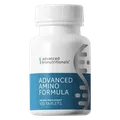
- Advanced Amino Formula: Delivers an engineered, pharmaceutical-grade matrix of all free-form essential amino acids in the exact stoichiometric ratio required for human muscle protein synthesis. With 99% Net Nitrogen Utilization, it creates a powerful anabolic pulse within 20 minutes of waking, stopping muscle wasting without digestive burden.
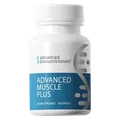
- Advanced Muscle Plus: Formulated to optimize microvascular blood flow and hormonal sensitivity, ensuring contracting muscle beds receive the oxygen and nutrients needed to maintain strength.
- Advanced Collagen Plus: Provides targeted structural peptides that rebuild the tendons, ligaments, and articular cartilage required to support your expanding muscular framework.
Frequently Asked Questions
Can I take amino acid supplements if I already eat enough protein?
Yes. In fact, for adults over 40 experiencing anabolic resistance, taking 5 to 10 grams of free-form EAAs between meals or upon waking provides a sharp, rapid hyperaminoacidemic arterial spike that whole food cannot duplicate. This "anabolic pulsing" overcomes the blunted leucine threshold, ensuring that muscle protein synthesis is repeatedly triggered throughout the day.
Why do BCAAs alone cause muscle breakdown?
Branched-Chain Amino Acids contain only three amino acids: Leucine, Isoleucine, and Valine. While leucine turns on the mTORC1 switch, the muscle cell cannot assemble new proteins without the other six essential amino acids. In the absence of dietary EAAs, the muscle cell must catabolize its own internal proteins to obtain the missing amino acids, resulting in a net negative muscle balance (Wolfe, J Int Soc Sports Nutr, 2017).
How should I time my amino acid intake for maximum muscle preservation?
The two most impactful windows for free-form EAA supplementation are: (1) First thing in the morning on an empty stomach to immediately halt overnight fasting muscle catabolism, and (2) 20 minutes before or during exercise to flood working muscle capillaries with anabolic building blocks when blood flow and insulin sensitivity are highest.
Scientific References & Validation
Full citations with PMID links, methodology notes & evidence ratings on puresupphub.com