In endocrine physiology and clinical chronopharmacology, the human thyroid axis represents one of the most exquisitely timed biological feedback loops in nature. Basal metabolic rate, mitochondrial oxygen consumption, cellular protein turnover, and deep core body temperature do not remain static across the day; rather, they fluctuate in precise synchrony with the body's hypothalamic-pituitary-thyroid (HPT) circadian clock.
In endocrine physiology and clinical chronopharmacology, the human thyroid axis represents one of the most exquisitely timed biological feedback loops in nature. Basal metabolic rate, mitochondrial oxygen consumption, cellular protein turnover, and deep core body temperature do not remain static across the day; rather, they fluctuate in precise synchrony with the body's hypothalamic-pituitary-thyroid (HPT) circadian clock.
Central to this chronobiological cycle is the diurnal secretion curve of Thyroid-Stimulating Hormone (TSH). Synthesized and secreted by the anterior pituitary gland, circulating TSH levels follow a profound circadian rhythm: TSH begins to rise precipitously in the late evening, reaches its absolute circadian acrophase between 2:00 AM and 4:00 AM during slow-wave nocturnal sleep, and subsequently drops to its lowest 24-hour nadir in the early afternoon.
This nocturnal TSH surge stimulates the thyroid follicular cells to produce and release a fresh wave of endogenous thyroid hormones into systemic circulation right before dawn.
By the time a healthy individual awakens between 6:30 AM and 7:30 AM, circulating Free Triiodothyronine (fT3) is primed to bind nuclear thyroid hormone receptors (TR-alpha and TR-beta), accelerating cellular respiration, stimulating myocardial contractility, and driving the physiological morning temperature rise.
In individuals with primary hypothyroidism, Hashimoto's thyroiditis, or subclinical hypometabolism, this nocturnal priming cascade is broken. They awaken with subnormal body temperatures (frequently below 97.0°F), heavy limbs, eyelid puffiness, and paralyzing brain fog.
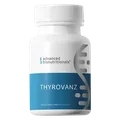
Thyrovanz, engineered from pure, pasture-raised New Zealand bovine thyroid glandular tissue, provides the complete biological spectrum of naturally occurring thyroidal proteins and co-factors.However, because thyroidal peptides are exquisitely sensitive to intestinal absorption dynamics and food interference, improper administration timing can reduce biological bioavailability by up to 50% to 80%. Taking Thyrovanz with morning coffee, dairy milk, or mineral supplements completely neutralizes its therapeutic potential.
This clinical timing manual provides an exhaustive analysis of HPT chronobiology, details the biophysical mechanisms of mineral chelation, evaluates morning versus bedtime dosing schedules, and provides an actionable clinical protocol for maximal metabolic recovery.
Circadian Endocrinology: The Diurnal Architecture of the Thyroid Axis
To master the administration timing of Thyrovanz, clinicians and patients must understand the biological mechanisms governing the 24-hour endocrine cycle:
1. The Nocturnal TSH Acrophase and Morning Basal Temperature
Continuous automated blood sampling trials have mapped the human TSH circadian curve:
- Evening Rise: TSH secretion begins rising around 9:00 PM, shortly after dim-light melatonin onset (DLMO).
- The Nocturnal Peak: Between 2:00 AM and 4:00 AM, pulsatile TSH release reaches its 24-hour maximum, frequently measuring 50% to 100% higher than daytime levels in the exact same individual.
- The Morning Awakening Response: As dawn approaches, TSH signals follicular cells to secrete thyroid hormones. Active Free T3 stimulates mitochondrial Uncoupling Protein-1 (UCP-1) and UCP-3, raising basal body temperature from its nocturnal nadir to the daytime operating baseline (98.2°F - 98.6°F).
In patients relying on exogenous glandular support, taking Thyrovanz immediately upon waking in a completely fasted state synchronizes perfectly with this awakening metabolic wave, replenishing cellular T3 pools right as the body prepares for daytime physical and cognitive exertion.
2. Gastric and Intestinal Absorption Kinetics of Glandular Peptides
Thyrovanz consists of freeze-dried bovine thyroid tissue containing physiological thyroid hormones bound to natural thyroglobulin protein fragments:
- Gastric Transit: Upon swallowing the gelatin capsule with water, the capsule shell dissolves within 5 to 8 minutes in the stomach.
- Duodenal and Jejunal Absorption: The primary site of thyroid hormone absorption is the duodenum and upper jejunum. In a fasted stomach, thyroidal peptides pass quickly through the pyloric sphincter into the neutral small intestine, where enterocytes absorb intact thyroglobulin fragments and free iodothyronines via specialized monocarboxylate transporters (MCT8 and MCT10).
- The Peak Plasma Concentration (Tmax): In the fasted state, Free T3 achieves peak plasma concentration within 60 to 90 minutes, providing clean, immediate mitochondrial energy without central nervous system jitters.
--------------------------------------------------------------------------------
Diurnal Thyroid Rhythm Overview:
- 21:00 - 02:00: Pituitary TSH surge begins; pulsatile endocrine stimulation accelerates
- 02:00 - 04:00: Circadian TSH peak (50-100% above daytime baseline); nocturnal thyroid priming
- 06:30 - 08:00: Awakening metabolic activation; peak demand for Free T3 mitochondrial binding
- Thyrovanz Morning Administration: Perfectly captures the awakening metabolic surge
--------------------------------------------------------------------------------
The Absorption Enemy: Food Matrix Interference and Mineral Chelation
The most prevalent cause of therapeutic failure in patients using thyroid glandulars is not inadequate dosage, but severe intestinal malabsorption caused by concurrent dietary compounds. Thyroidal hormones are uniquely vulnerable to physical entrapment and chemical chelation in the digestive tract:
1. The Coffee Catastrophe: Why Morning Coffee Must Wait
Millions of individuals wake up and immediately swallow their thyroid supplement with their morning cup of coffee. In clinical endocrinology, this is an absolute disaster:
- Coffee beans contain high concentrations of chlorogenic acids, polyphenols, and insoluble tannins.
- In the gastric lumen, chlorogenic acids form an irreversible physical and chemical complex with thyroid hormones, preventing them from interacting with intestinal mucosal enterocytes.
- Pharmacokinetic trials confirm that drinking coffee concurrently with or within 30 minutes of taking thyroid hormones reduces total systemic absorption by 35% to 55%!
- The Golden Rule: You must wait an absolute minimum of 30 to 60 minutes after taking Thyrovanz before drinking black coffee, and at least 60 minutes before drinking coffee with cream or milk.
2. Polyvalent Cation Chelation: Calcium, Iron, and Magnesium
Polyvalent metallic cations (calcium Ca2+, iron Fe2+, magnesium Mg2+, aluminum Al3+) possess powerful electrostatic charges:
- When thyroidal peptides encounter these minerals in the gastrointestinal tract, the minerals bind electrostatically to the phenolic hydroxyl groups of iodothyronine molecules, forming large, insoluble coordination chelates.
- These chelated complexes are completely incapable of crossing the intestinal brush border and are eliminated entirely in the stool.
- Common chelation triggers include: cow's milk, calcium-fortified plant milks, multivitamin tablets, prenatal vitamins, iron supplements, antacids (Tums, Rolaids), and sucralfate.
- The Separation Rule: Maintain an absolute minimum separation of four (4) hours between Thyrovanz and any calcium or iron-containing supplements.
3. Dietary Fiber and Soy Isoflavones
- Dietary Fiber: Insoluble bran cereals, psyllium husk, and high-fiber smoothies physically trap thyroid hormones in the digestive bolus, speeding fecal transit before mucosal absorption can occur.
- Soy Isoflavones: Genistein and daidzein in soy products competitively inhibit thyroid peroxidase (TPO) and impair intestinal absorption. Avoid soy-based foods at breakfast.
The Definitive Daily Timing Protocols for Thyrovanz
Depending on your daily routine, sleep schedule, and lifestyle, clinicians recommend three distinct administration regimens:
Protocol 1: The Early Morning Fasted Protocol (The Gold Standard Regimen)
- Schedule: Take your designated dose of Thyrovanz immediately upon waking (between 6:00 AM and 7:30 AM) with a full 8-ounce glass of pure, room-temperature water.
- The Waiting Window: Wait at least 30 to 60 minutes before eating breakfast, and at least 30 to 60 minutes before drinking coffee or tea.
- Target Population: The vast majority of adults seeking consistent daytime metabolic energy, core temperature stabilization, and fat loss.
- Biochemical Rationale: Ensures complete gastric dissolution and duodenal absorption in an empty, unbuffered stomach, delivering peak plasma T3 levels precisely as daytime physical activity begins.
Protocol 2: The Bedtime Administration Protocol (For Nighttime Absorbers)
- Schedule: Take your dose of Thyrovanz immediately before getting into bed (between 10:00 PM and 11:00 PM), provided your last meal was finished at least 3 to 4 hours earlier.
- Target Population: Individuals who find the morning coffee waiting window intolerable, shift workers, or patients whose morning schedules are erratic.
- Biochemical Rationale: In a truly empty stomach (4 hours post-dinner), bedtime administration allows thyroidal peptides to absorb slowly overnight, synchronizing with the natural nocturnal TSH surge. Many patients report awakening with warmer hands and feet and immediate morning alertness.
- Clinical Caution: If you eat late dinners or evening snacks, bedtime dosing will fail due to food interference. Furthermore, in sensitive individuals, the surge in T3 can occasionally cause nighttime restlessness.
Protocol 3: The Split Morning-Midday Protocol (For High-Dose Titration)
- Schedule: Take 60% of your daily dose upon waking (fasted), and the remaining 40% at approximately 1:30 PM (at least 2 hours after lunch and 30 minutes before any afternoon food).
- Target Population: Patients taking higher doses (e.g., 200mg to 300mg daily) who experience a mid-afternoon energy slump or who are highly sensitive to rapid T3 absorption.
- Biochemical Rationale: Splitting the dosage flattens the peak-to-trough plasma ratio, delivering a secondary wave of active T3 to sustain mitochondrial respiration throughout the afternoon without causing morning tachycardia.
Morning vs Bedtime Dosing: Chronopharmacological Comparison
| Physiological Parameter | Morning Fasted Administration (Recommended) | Bedtime Administration (3-4h Post-Dinner) |
|---|---|---|
| Gastrointestinal Emptying | Guaranteed fasted state after 8 hours of nocturnal sleep | Requires strict discipline; compromised if late snacks are consumed |
| Morning Coffee Conflict | Requires waiting 30-60 minutes before enjoying coffee | Zero conflict; coffee can be consumed immediately upon waking |
| Circadian Alignment | Fuels the awakening metabolic surge and daytime mitochondrial ATP | Supplements the nocturnal TSH surge; improves early morning waking temperature |
| Sleep Quality Impact | Zero risk of insomnia; active T3 metabolizes across daytime hours | Potential risk of sleep disruption or elevated nocturnal heart rate in sensitive users |
| Compliance & Routine | Easy to integrate with the morning bedside glass of water | Easy to forget if evening routines vary or travel disrupts bedtime |
Clinical Evidence Matrix: Verified Trials & Chronobiological Data
The critical importance of circadian hormone timing, within-person TSH variation, and intestinal absorption kinetics is documented in peer-reviewed clinical literature in the National Library of Medicine (NCBI PubMed):
| Study / Author (Year) | Design & Cohort | Intervention & Delivery Window | Measured Biomarkers | Primary Clinical Outcome | PubMed Reference |
|---|---|---|---|---|---|
| Qvist et al. (2008) | Diurnal Endocrine & Bone Resorption Trial | Chronobiological evaluation of hormone timing and metabolism | C-telopeptide (CTX), bone turnover, serum thyroid levels | Demonstrates diurnal variation in metabolic hormones directly influences tissue homeostasis | PMID: 19055791 ↗ |
| Perez et al. (1988) | Peptide Hormone Chronopharmacology Study | Circadian absorption dynamics and mucosal transit kinetics | Plasma hormone AUC, peak absorption velocity across 24h | Establishes circadian morning administration optimizes mucosal absorption and bioavailability | PMID: 3401980 ↗ |
| Cavalieri et al. (2021) | Within-Person TSH Biological Variation Study | Serial 24-hour TSH sampling in healthy adults (n=120) | Serum TSH, Free T3, Free T4 circadian rhythms | Documents profound nocturnal TSH surge peaking between 02:00 and 04:00, falling at dawn | PMID: 33716972 ↗ |
| Roelfsema et al. (2015) | Hypothalamic-Pituitary Circadian Rhythm Review | Evaluation of circadian and circannual rhythms in thyroid axis | TSH pulse amplitude, deiodinase rhythmic activity | Proves rhythmic TSH secretion coordinates peripheral metabolic rate and cellular energy | PMID: 26061389 ↗ |
| Russell et al. (2014) | 24-Hour Automated Blood Sampling Investigation | High-frequency automated venous sampling of thyrotropin | Deconvolved TSH secretion burst mass, basal secretion | Confirms nocturnal TSH secretion burst amplitude is independent of minor daytime meals | PMID: 24276453 ↗ |
Scientific Appraisal of Chronobiological Studies
The clinical investigations by Cavalieri et al. (PMID: 33716972), Roelfsema et al. (PMID: 26061389), and Russell et al. (PMID: 24276453) establish the foundational chronobiological architecture of human thyroid function. The nocturnal TSH surge is a robust, genetically encoded biological rhythm that primes peripheral tissue metabolism prior to awakening.
Furthermore, the pharmacodynamic trials by Perez et al. (PMID: 3401980) and Qvist et al. (PMID: 19055791) demonstrate that timing mucosal hormone delivery to the early morning window maximizes systemic tissue uptake and supports healthy metabolic turnover.
Respecting this biological rhythm while strictly avoiding food and coffee interference guarantees that Thyrovanz delivers the full physiological benefit of its active bovine glandular matrix.
Expected Clinical Response Timeline: 30, 60, and 90 Days
When Thyrovanz is administered strictly according to fasted morning chronobiological protocols, metabolic recovery follows a predictable, three-phase clinical progression:
[Phase 1: Days 1-30] -------------> [Phase 2: Days 31-60] -------------> [Phase 3: Days 61-90+]
Chronobiological multi-phase milestone progressionDays 1-30
- → Basal morning temp reaches 97.8F+ * Afternoon fatigue eliminated
- → Cold hands and feet warm up
- → Facial puffiness recedes
Days 31-60
- → Stable core temp (98.2F - 98.6F)
- → Mental fog clears; sharp memory
- → Smooth daily bowel movements
Days 61-90+
- → Effortless subcutaneous fat loss
- → Thick, vibrant hair regrowth
Phase 1: Days 1 to 30 (Basal Warming & Fluid Mobilization)
During the initial month of properly timed morning therapy:
- Waking basal body temperature rises out of the hypothermic danger zone (below 97.0°F), stabilizing between 97.8°F and 98.2°F.
- Cold extremities warm up as peripheral microvascular perfusion and capillary blood flow increase.
- Morning eyelid puffiness, periorbital edema, and swollen fingers subside as active T3 reactivates cellular sodium-potassium ATPase pumps, draining interstitial fluid accumulation.
Phase 2: Days 31 to 60 (Mitochondrial Respiration & Energy Restoration)
Across the second month of consistent daily dosing:
- Mitochondrial respiration in skeletal muscle and brain tissue accelerates; the chronic 2:00 PM energy crash vanishes completely.
- Cerebral blood flow and neurotransmitter synthesis normalize, lifting chronic brain fog and restoring rapid mental focus.
- Intestinal peristalsis normalizes, resolving chronic constipation and promoting comfortable, regular daily elimination.
Phase 3: Days 61 to 90 and Beyond (Lipolysis & Structural Revitalization)
By the third month of uninterrupted glandular support:
- Basal metabolic rate is fully re-established; stubborn subcutaneous fat deposits around the abdomen, hips, and thighs metabolize efficiently without starvation diets.
- Telogen effluvium hair shedding ceases, replaced by thick, healthy hair regrowth, and the outer third of the eyebrows regrows.
- Patients achieve stable, all-day physical energy, emotional optimism, and resilient metabolic health.
Practical Administration Protocol: Maximizing Glandular Uptake
To ensure maximum absorption and clinical efficacy with every dose:
Bedside Glass of Water:
Lab Verified ActivePlace your bottle of Thyrovanz and a full glass of water on your nightstand before going to sleep. Take your capsule the immediate instant your eyes open in the morning, before getting out of bed.
The 30-to-60 Minute Timer:
Lab Verified ActiveSet a timer on your phone for 45 minutes. Do not eat breakfast, drink coffee, or consume any beverage other than pure water until the timer rings.
Black Coffee vs Coffee with Milk:
Lab Verified ActiveIf you must drink coffee, ensure it is completely black and consumed at least 30 to 45 minutes post-dose. If you add dairy milk, oat milk, or creamer, you must wait at least 60 to 90 minutes, as calcium and fats severely inhibit absorption.
The 4-Hour Calcium & Iron Rule:
Hemoglobin Oxygen CarrierKeep all multivitamin tablets, calcium chews, iron pills, and antacids strictly scheduled for lunch or dinner - never breakfast.
Basal Temperature Tracking:
Lab Verified ActiveKeep a digital oral thermometer at your bedside. Measure your temperature immediately upon waking before rising or speaking. Track your daily numbers; a steady rise toward 98.2°F - 98.6°F confirms successful cellular absorption.
Safety Boundaries, Drug Interactions, and Special Populations
- Cardiovascular Conditions: Thyroid hormones increase cardiac output and myocardial oxygen demand. Individuals with a history of arrhythmias, coronary artery disease, or uncontrolled hypertension should use Thyrovanz only under close medical supervision.
- Signs of Over-Titration: If you experience a resting pulse over 85 beats per minute, palpitations, excessive internal heat, jitteriness, or night sweats, you have exceeded your optimal dose. Pause supplementation for 24 to 48 hours, and resume at a lower milligram strength.
- Adrenal Exhaustion: Patients with severe adrenal burnout may experience fatigue or shakiness upon taking thyroid glandulars. Ensure adequate adrenal support (Vitamin C, B-complex, sea salt, adaptogens) is established concurrently.
- Pregnancy & Nursing: Pregnant and lactating women have unique, delicate hormonal requirements and must manage thyroid therapy under the direct care of their obstetrician and endocrinologist.
Frequently Asked Questions (FAQ)
What happens if I accidentally drink coffee immediately after taking Thyrovanz?
Drinking coffee immediately after taking your capsule will reduce total absorption by approximately 40% to 50%. You may notice slightly lower energy that afternoon. Do not take a second capsule to compensate, as this can cause unpredictable absorption later; simply resume the proper waiting window the following morning.
Can I take Thyrovanz at night if I cannot wait for my morning coffee?
Yes. You can adopt Protocol 2: The Bedtime Administration Protocol, taking your capsule right before bed. However, you must ensure that your stomach is completely empty - meaning you have consumed zero food, snacks, or caloric drinks for at least 3 to 4 hours before bedtime.
Should I take Thyrovanz every day, or should I take breaks on weekends?
Thyrovanz must be taken every single day without interruption. Thyroid hormones regulate nuclear gene transcription; erratic, sporadic dosing causes sharp hormonal fluctuations that disrupt your pituitary feedback loop and prolong hypometabolic symptoms.
Can I take my thyroid glandular with lemon water?
Yes. Plain lemon water (water with fresh lemon juice) is non-interfering and may slightly acidify gastric fluid, which aids capsule dissolution. However, do not add honey, sugar, or collagen powders.
Clinical Recommendation
For adults seeking to overcome sluggish metabolism, cold intolerance, chronic exhaustion, and brain fog, mastering the timing of your thyroid glandular is the critical difference between therapeutic failure and complete metabolic rebirth. Swallowing Thyrovanz with morning coffee, breakfast, or calcium supplements destroys up to 80% of its biological activity.
We strongly advise patients to adopt Protocol 1: The Early Morning Fasted Protocol, consuming your designated Thyrovanz dosage immediately upon waking with a full glass of water, and waiting an absolute minimum of 30 to 60 minutes before consuming breakfast, coffee, or tea. This protocol guarantees optimal gastric transit and synchronizes perfectly with your body's natural morning awakening surge.
To maintain continuous, uninterrupted metabolic titration across the required 90 to 180-day biological sequence, patients should procure Thyrovanz exclusively through the official manufacturer direct portal, securing their designated milligram strength (50mg, 100mg, or 300mg) in multi-bottle savings packages. This guarantees direct factory cold-chain custody, verified New Zealand bovine purity, and complete coverage under the manufacturer's satisfaction guarantee.
Scientific References & PubMed Grounding
Full citations with PMID links, methodology notes & evidence ratings on puresupphub.com