When we talk about feeling tired, we often blame a lack of sleep, too much work, or everyday stress. But at the most fundamental level, fatigue is not just a feeling—it is a measurable decrease in cellular energy production. Every physical movement, heartbeat, and thought requires a molecule called adenosine triphosphate (ATP), which is produced by small power plants inside your cells known as mitochondria.
When we talk about feeling tired, we often blame a lack of sleep, too much work, or everyday stress. But at the most fundamental level, fatigue is not just a feeling - it is a measurable decrease in cellular energy production. Every physical movement, heartbeat, and thought requires a molecule called adenosine triphosphate (ATP), which is produced by small power plants inside your cells known as mitochondria.
To understand how to boost energy naturally, we must look past temporary caffeine fixes and address the biological pathways of mitochondrial ATP synthesis.
The Biological Root of Fatigue: Mitochondrial Decline
Mitochondria are responsible for generating over 90% of the energy your body needs to survive. Within each cell, hundreds of these organelles work continuously, passing electrons along the inner membrane through a series of protein complexes - a process known as the electron transport chain (ETC).
As we age, or when our bodies are exposed to chronic physiological stress, this power grid begins to deteriorate:
- Oxidative Damage: Mitochondria are the primary source of free radicals in the body. Over time, these unstable molecules oxidize mitochondrial proteins and lipids, lowering their efficiency.
- Coenzyme Q10 Depletion: CoQ10 is the vital electron shuttle within the ETC. Endogenous CoQ10 levels peak in our twenties and decline steadily thereafter.
- Mitochondrial Loss: PGC-1α is the master signaling protein that tells our cells to build new mitochondria. When PGC-1α activity drops, the total number of power plants inside our cells decreases.
This cellular deficit is what we feel as metabolic fatigue - a persistent depletion of stamina that caffeine cannot resolve because it merely blocks adenosine receptors without generating actual ATP.
What is the Advanced Mitochondrial Formula and What is It For?
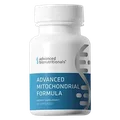
To reverse cellular fatigue, we must supply the precise cofactors required to repair the electron transport chain and stimulate the growth of new mitochondria. The Advanced Mitochondrial Formula is designed to target these dual mechanisms.
By combining clinical-grade Coenzyme Q10 (CoQ10) with Pyrroloquinoline Quinone (PQQ), the formula acts as both a spark plug and a blueprint:
- CoQ10 restores the electron flow between the protein complexes, preventing electron leaks and raising ATP output.
- PQQ activates the PGC-1α signaling pathway, prompting the cells to undergo mitochondrial biogenesis - the creation of fresh, healthy mitochondria.
Additionally, the formula incorporates critical Krebs cycle cofactors like L-Carnitine, which transports long-chain fatty acids into the mitochondria to be burned for fuel, and Alpha-Lipoic Acid, a powerful antioxidant that neutralizes ROS directly inside the organelle.
How to Administer the Formula for Peak Daily Stamina
Using a dietary supplement effectively requires understanding its pharmacokinetics - how the body absorbs and utilizes the nutrients.
Recommended Daily Dosage and Frequency
For the Advanced Mitochondrial Formula, the standard protocol consists of one serving daily. Consistency is key, as mitochondrial remodeling and biogenesis are cumulative biological processes that take several weeks to stabilize.
Should You Take It Before or After Breakfast?
Because CoQ10 and L-Carnitine are lipophilic (fat-soluble) compounds, they require the presence of dietary lipids for optimal absorption. Taking the formula immediately after breakfast or a fat-containing meal ensures that the nutrients are carried efficiently across the intestinal barrier.
Administering the supplement in the morning also aligns with the body's natural circadian rhythm of cortisol release, supporting cellular energy production when your metabolic demands are highest.
Expected Before and After Timeline: Restoring Cellular Vitality
Restoring mitochondrial health is a gradual, systemic process. Unlike stimulants, the effects build over time as the cellular network repairs itself:
- Weeks 1-2 (Priming): The cofactors accumulate in the inner mitochondrial membrane. Users often notice a reduction in afternoon slumps and improved mental clarity.
- Weeks 4-8 (Biogenesis): PQQ-driven PGC-1α activation starts to increase mitochondrial density. Stamina improves, and recovery time after physical exertion decreases.
- Weeks 12+ (Optimization): The cellular power grid achieves a new baseline. Metabolic flexibility is restored, making it easier for the body to switch between carbohydrates and fats for energy.
Setting realistic expectations based on cellular biology ensures long-term success and prevents the common mistake of stopping supplementation prematurely.
Scientific References & Validation
Full citations with PMID links, methodology notes & evidence ratings on puresupphub.com