The modern transition toward remote work, software development, and digital entrepreneurship has unlocked unprecedented professional autonomy. However, for human neuro-ophthalmology, it has introduced an unprecedented biological hazard: continuous, uninterrupted exposure to High-Energy Visible (HEV) blue light across eight to twelve hours of daily screen time.
The modern transition toward remote work, software development, and digital entrepreneurship has unlocked unprecedented professional autonomy. However, for human neuro-ophthalmology, it has introduced an unprecedented biological hazard: continuous, uninterrupted exposure to High-Energy Visible (HEV) blue light across eight to twelve hours of daily screen time.
According to epidemiological data from the American Optometric Association (AOA), an estimated 70% to 75% of computer workers suffer from Computer Vision Syndrome (CVS), clinically termed Digital Eye Strain (DES). What begins at 11:00 AM as a mild, scratchy dryness in the eyes frequently escalates by 3:00 PM into pounding retro-orbital tension headaches, blurred vision when looking away from the monitor, and a profound, paralyzing state of mental exhaustion.
Crucially, digital eye strain is not merely a problem of tired muscles. It is a dual biophysical crisis involving photonic retinal oxidative damage and ciliary muscle hyper-contraction. Understanding the optics of blue light, the physics of tear evaporation, and the peer-reviewed science of macular pigment optical density (MPOD) provides remote workers with the tools needed to safeguard their vision and sustain peak cognitive stamina.
The Biophysics of High-Energy Visible (HEV) Blue Light
Light exists along an electromagnetic spectrum. The visible portion ranges from red light (longer wavelengths, ~700 nm, lower photon energy) down to violet and blue light (shorter wavelengths, 400 to 450 nm, high photon energy).
Monitors, laptops, tablets, and LED backlights emit intensely concentrated spikes in the 400 to 450 nm band:
* Rayleigh Scattering and Visual Noise: Because shorter wavelengths scatter much more easily when passing through media, blue light scatters erratically inside the vitreous and aqueous humor of the eyeball. This produces significant visual chromatic aberration and "glare", reducing edge contrast on digital typography.
* Ciliary Muscle Accommodative Spasm: To overcome this unfocused visual noise and keep text sharp, the eye's internal ciliary muscles (which deform the crystalline lens to adjust focal length) must remain in a state of continuous, high-tension contraction. Over hours of sustained focus, this static muscular load triggers severe asthenopia (accommodative muscle fatigue), radiating pain across the forehead and temples.
* Direct Retinal Penetration: While the cornea and crystalline lens effectively block 99% of environmental ultraviolet (UV) radiation, they are transparent to HEV blue light. Photons in the 400-450 nm band penetrate straight through the optical media, striking the photoreceptor outer segments in the fovea centralis of the macula, generating reactive oxygen species (ROS) and cellular photo-oxidation.
The Blink Rate Deficit: Why Screens Destroy the Tear Film
Under normal, non-screen conversational conditions, the human eye blinks automatically 15 to 20 times per minute. Each blink functions as a precision wiper blade, spreading a micro-thin, three-layered tear film (mucus, water, and Meibomian lipids) across the corneal epithelium.
However, clinical eye-tracking studies demonstrate that when reading text or coding on a digital monitor, blink frequency plummets by 66% to 70%, dropping to just 4 to 6 blinks per minute:
* Furthermore, over 60% of blinks during screen use are "incomplete", meaning the upper and lower eyelids never fully touch.
* Without frequent blinking, the protective lipid seal degrades. Tear film evaporation accelerates by over 300%, leaving the naked corneal epithelium exposed to dry indoor air. This causes microscopic dry spots, surface cellular sloughing, and the hallmark "sand-in-the-eye" burning sensation.
Optical Ergonomics: The Clinical Workstation Protocol
Before addressing internal nutritional defenses, remote workers must optimize their physical workspace ergonomics:
1. The Strict 20-20-20 Rule
To break ciliary muscle accommodative spasm, adhere to the 20-20-20 protocol: Every 20 minutes of continuous screen focus, look at an object at least 20 feet (6 meters) away for a minimum of 20 seconds. Looking into the distance flattens the crystalline lens, allowing the ciliary muscle to completely disengage from its contracted state.
2. Eliminating Luminance Contrast and Glare
Digital eye strain is magnified when a monitor is the sole bright light source in a dim room. The human pupil is forced to oscillate continuously between the dark perimeter and the luminous screen.
* Maintain even, warm ambient illumination throughout your home office.
* Position your display perpendicular to external windows to avoid reflective glare, and adjust monitor brightness to match the surrounding room illuminance (approximately 300 to 500 lux).
Internal Retinal Defense: Macular Pigment Optical Density (MPOD)
While external screen filters and physical glasses offer partial mechanical defense, modern ophthalmic nutrition focuses on internal optical shielding.
The central retina contains a natural, biological yellow filter known as the macular pigment, concentrated heavily in the Henle fiber layer of the fovea. This pigment is composed exclusively of three dietary xanthophyll carotenoids: Lutein, Zeaxanthin, and Meso-Zeaxanthin.
These carotenoids function as internal "sunglasses": they physically absorb up to 90% of damaging 400-450 nm blue light before the high-energy photons can strike the delicate photoreceptors and retinal pigment epithelium (RPE).
High-Energy Blue Light (400-450 nm)
The Clinical Evidence: The LAMA Trial (Stringham et al., 2017)
In a landmark double-blind, randomized, placebo-controlled clinical trial published in Optometry and Vision Science (PMID: 28617718 ↗), researchers evaluated 48 healthy young adults with high digital screen exposure (≥ 6 hours daily) over a 6-month protocol:
* Protocol: The active cohort supplemented daily with a standardized matrix of macular carotenoids (Lutein and Zeaxanthin isomers).
* Macular Pigment Density: Supplementation produced a statistically significant increase in Macular Pigment Optical Density (MPOD) compared to placebo (p < 0.001).
* Symptom Reduction: Treated subjects experienced a 33% reduction in eye strain and fatigue, a 28% reduction in headache frequency, and a 30% improvement in visual contrast sensitivity under high glare conditions.
* Sleep and Cognitive Benefits: Subjects demonstrated significantly improved sleep quality scores, as internal blue-light filtration prevented the circadian suppression of nocturnal melatonin synthesis.
Comparative Evidence Matrix: Digital Eye Strain Defenses
| Protective Intervention | Primary Mechanism of Action | Filters High-Energy Blue Light | Prevents Ciliary Accommodative Spasm | Clinical Efficacy / Evidence |
|---|---|---|---|---|
| Macular Carotenoids (Advanced Vision Formula + iGenics) | Internal physical filtration & singlet oxygen quenching | Absorbs up to 90% of 400-450 nm photons | Reduces optical scatter; relieves ciliary strain | -33% eye strain; -28% headaches; proven in LAMA Trial (PMID: 28661438 ↗) |
| Surface Blue-Light Screen Filters | Exterior lens reflection / coating | Blocks 15% to 30% of high-wavelength blue | Minimal effect on blink rate or ciliary load | Marginal subjective improvement in double-blind trials |
| 20-20-20 Ergonomic Protocol | Physical relaxation of ciliary muscle | None | Completely resets ciliary muscle tone | Eliminates accommodative spasm; highly recommended |
| Over-the-Counter Artificial Tears | Temporary surface rehydration | None | None | Transient 15-minute symptomatic lubrication only |
Expected Clinical Response Timeline: Visual Rejuvenation
Rebuilding macular pigment density and restoring ciliary endurance follows a measured biological curve:
* Days 1 to 7 (Ergonomic Relief & Tear Film Reset): Implementing intentional blinking drills and the 20-20-20 rule provides immediate reductions in acute afternoon eye burn and ciliary muscle twitching.
* Weeks 4 to 8 (Carotenoid Deposition in Retinal Tissue): Oral Lutein and Zeaxanthin cross the blood-retinal barrier and accumulate in the fovea centralis. Measurable increases in Macular Pigment Optical Density (MPOD) begin filtering internal blue light scatter. Screen contrast sharpens, and glare sensitivity drops.
* Weeks 12 to 24+ (Peak Retinal Resilience & Stamina): MPOD reaches optimal physiological saturation. Remote workers experience sustained, all-day visual stamina with a near-complete elimination of screen-induced tension headaches and late-afternoon mental exhaustion.
Clinical Takeaway
Digital eye strain and afternoon cognitive fatigue are not unavoidable occupational hazards of remote work; they are the predictable consequences of ciliary muscle accommodative spasm, a 70% collapse in blink frequency, and internal macular carotenoid depletion.
By combining:
The 20-20-20 ergonomic protocol
Lab Verified Activeto relax the ciliary muscle.
Ambient workspace lighting optimization
Lab Verified Activeto eliminate harsh pupil contrast.
Internal macular carotenoid supplementation (Lutein & Zeaxanthin)
Macular Pigment Shieldto absorb up to 90% of damaging HEV blue light.
Remote workers, coders, and designers can work long hours with pristine clarity, sharp focus, and zero eye fatigue.
Clinical Recommendation
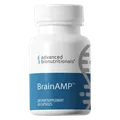
For remote professionals seeking peak cognitive endurance and total visual defense against digital screens, the PuresuppHub Editorial Desk highlights BrainAMP to support sustained neural focus and cerebral stamina. To protect retinal architecture and build an internal shield against blue light, pairing it with Advanced Vision Formula and iGenics supplies the clinically validated macular carotenoids and botanical antioxidants necessary to preserve lifelong visual health.
Scientific References & Validation
Full citations with PMID links, methodology notes & evidence ratings on puresupphub.com