When most people think about immune support, they reach for vitamin C. This is not entirely wrong—ascorbic acid is a legitimate and important player in immune function. But the view that immune resilience can be reduced to a single vitamin is a profound oversimplification of one of the most complex and multicomponent biological defense systems in the human body.
When most people think about immune support, they reach for vitamin C. This is not entirely wrong - ascorbic acid is a legitimate and important player in immune function. But the view that immune resilience can be reduced to a single vitamin is a profound oversimplification of one of the most complex and multicomponent biological defense systems in the human body.
The immune system operates across multiple redundant layers, each depending on different micronutrients, antioxidant cofactors, and signaling molecules. A chronic gap in any one of these layers creates a vulnerability that vitamin C cannot compensate for - no matter how high the dose. Understanding the full nutritional architecture of immune competence is the foundation for meaningful immune health strategy.
The Multi-Layer Architecture of Immune Competence
Layer 1: Physical Barrier Integrity (Mucosal and Epithelial Immunity)
The first line of immune defense is not a cell or a protein - it is a physical barrier. The mucous membranes lining the respiratory tract, gastrointestinal system, and urogenital epithelium form a continuous physical shield that prevents pathogens from penetrating to the internal environment where they can replicate.
This mucosal barrier depends on:
- Vitamin A (retinol) for epithelial cell differentiation and mucin glycoprotein synthesis - the sticky matrix that traps and neutralizes airborne pathogens before they reach cellular surfaces
- Zinc for the maintenance of tight junctions between epithelial cells - the molecular seals that prevent bacterial translocation across the gut and respiratory walls
- Omega-3 fatty acids for the resolution of mucosal inflammation and the production of specialized pro-resolving mediators (SPMs) that terminate acute immune responses without causing chronic inflammatory damage
Layer 2: Innate Immunity (Non-Specific Rapid Response)
The innate immune system activates within minutes of detecting a pathogen through pattern recognition receptors (PRRs). Natural killer (NK) cells, macrophages, neutrophils, and dendritic cells operate at this level. Their performance depends on:
- Selenium as the essential cofactor for glutathione peroxidase - the antioxidant enzyme that prevents oxidative damage to immune cells during the oxidative burst against pathogens
- Vitamin D3 as the master regulator of innate immune gene expression. Vitamin D receptor (VDR) signaling directly upregulates the production of cathelicidin and defensins - endogenous antimicrobial peptides that rupture bacterial cell membranes
- Quercetin as a NLRP3 inflammasome inhibitor - preventing the uncontrolled inflammatory cascade that causes tissue damage when the innate immune response goes beyond its intended scope
Layer 3: Adaptive Immunity (Specific Learned Response)
The adaptive immune system generates targeted antibodies and memory T-cells against specific pathogens, creating immunological memory. This sophisticated response requires:
- Vitamin B6 (pyridoxine) as a cofactor for lymphocyte proliferation and antibody production. B6 deficiency consistently produces impaired lymphocyte responsiveness, reduced antibody titers, and shortened memory T-cell lifespans
- Iron (in precise, regulated quantities) for T-cell proliferation and NK cell cytotoxic activity
- Prebiotic fibers to nourish the gut microbiome, which communicates directly with gut-associated lymphoid tissue (GALT) - the largest repository of immune cells in the body, containing approximately 70% of the body's total immune cell population
Layer 4: Antioxidant Defense (Protecting Immune Cells Themselves)
During active immune responses, immune cells generate massive quantities of reactive oxygen species (ROS) as weapons against pathogens. This oxidative arsenal is effective but also self-destructive if the immune cell's own antioxidant defenses fail. Key antioxidant nutrients that protect immune cells during active defense include:
- Resveratrol (from grape skin) for SIRT1 activation, which upregulates mitochondrial antioxidant capacity in lymphocytes
- EGCG (from green tea) for direct ROS scavenging within immune cell mitochondria
- Lutein and zeaxanthin for protecting the antigen-presenting dendritic cells concentrated in mucosal surfaces from UV-induced oxidative damage
Why Vitamin C Alone Is Not Enough
Vitamin C (ascorbic acid) contributes meaningfully to:
- Stimulating interferon production in virus-exposed cells
- Supporting neutrophil chemotaxis and phagocytic function
- Regenerating vitamin E from its oxidized form (tocopheryl radical)
- Collagen synthesis for barrier tissue maintenance
But vitamin C does not regulate VDR-mediated antimicrobial peptide expression (Vitamin D does). It does not control NLRP3 inflammasome activity (quercetin does). It does not replenish selenium-dependent glutathione peroxidase. It does not feed the gut microbiome that drives GALT. It does not extend lymphocyte lifespan through B6 metabolism.
Taking only vitamin C for immune health is equivalent to installing a high-performance lock on the front door while leaving all windows open. Each layer of the immune system requires its own specific nutritional support - and gaps in any layer create exploitable vulnerabilities.
What is TonicGreens and What is It For?
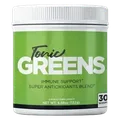
TonicGreens is a comprehensive 6-in-1 antioxidant and immune support greens powder designed to address the full spectrum of nutritional requirements for robust immune competence in a single, convenient daily serving. Rather than requiring multiple separate supplements for each immune layer, the formula consolidates clinically relevant doses of polyphenols, adaptogens, vitamins, and minerals into a whole-food-matrix green powder that also supports energy, digestion, and cellular antioxidant defense. Resveratrol (from Grape Skin) for Adaptive Immune SIRT1 ActivationTrans-resveratrol activates SIRT1 - a longevity-associated protein that promotes mitochondrial biogenesis in lymphocytes and extends T-cell functional lifespan. It also demonstrates direct antiviral activity through the inhibition of viral RNA polymerase replication in several studied viral families.
Quercetin (from Sophora japonica) for Innate Immune Anti-Inflammatory RegulationQuercetin inhibits histamine release from mast cells, blocks NLRP3 inflammasome activation, and suppresses NF-κB - preventing both excessive inflammatory responses and the "cytokine storm" phenomenon that causes collateral tissue damage during intense immune activation. It also acts as a zinc ionophore - facilitating the transport of zinc into cells where it can inhibit viral RNA-dependent RNA polymerase enzymes.
Spirulina and Chlorella for Micronutrient Matrix and Heavy Metal ChelationThe blue-green algae spirulina (Arthrospira platensis) provides a dense matrix of immune-relevant micronutrients including iron, B vitamins, beta-carotene (provitamin A), and gamma-linolenic acid. Chlorella adds a unique cell wall component (Chlorella Growth Factor, CGF) that has demonstrated immunostimulant effects on NK cell activity and macrophage activation in clinical research. Chlorella also provides natural chelation support for accumulated heavy metals that suppress immune cell function.
Camu Camu Berry for High-Potency Whole-Food Vitamin CCamu camu (Myrciaria dubia) provides the highest natural concentration of vitamin C of any known food source - up to 60 times more vitamin C per gram than oranges. Beyond ascorbic acid content, the whole-food matrix of camu camu provides natural bioflavonoids that enhance vitamin C's bioavailability and extend its activity in aqueous cellular compartments compared to synthetic ascorbate.
Reishi Mushroom (Ganoderma lucidum) for Immuno-ModulationReishi polysaccharides - particularly beta-glucans - are among the most extensively researched immunomodulators in natural medicine. They activate macrophages and dendritic cells via toll-like receptor (TLR4) signaling, prime the adaptive immune system for more rapid and robust antigen response, and support NK cell cytotoxic activity. Reishi's triterpenes also demonstrate hepatoprotective and anti-inflammatory properties that support the liver's role in immune surveillance.
Turmeric (Curcuma longa) Curcuminoids for System-Wide Inflammatory ResolutionCurcumin - the primary bioactive in turmeric - inhibits both COX-2 and NF-κB pathways and supports the resolution of immune-mediated inflammation, preventing low-grade chronic inflammation from chronically priming the immune system in a state of alert that depletes immune resources without producing effective protection.
How to Take TonicGreens: The Official Protocol
Recommended Daily Dosage and Frequency
The standard protocol is one scoop per day, mixed with 8-12 ounces of cold water, juice, or a smoothie. Because the formula includes whole-food matrices and probiotic-supporting prebiotic fibers, daily consistency is more important than timing - the gut microbiome-supporting components work best with regular, predictable delivery.
Should TonicGreens Be Taken in the Morning or Evening?
The formula is most effective taken in the morning, before or with breakfast. The spirulina and chlorella components provide a gentle natural energy support through B vitamin and iron availability that is better utilized during active daytime hours than in the evening. Morning consumption also allows the anti-inflammatory quercetin and curcumin components to modulate the cortisol-driven morning inflammatory activation window - reducing the daily inflammatory burden before it compounds.
Can TonicGreens Be Mixed Into Smoothies?
Yes - and the whole-food powder format is specifically designed for this use case. Blending with fruits, almond milk, or Greek yogurt adds additional micronutrients and fats that enhance the bioavailability of the fat-soluble components (resveratrol, lutein, beta-carotene, curcumin). Avoid mixing with hot liquids - heat above 60°C (140°F) degrades quercetin and vitamin C content significantly.
What to Expect: The 30-Day Immune Recalibration Timeline
- Days 1-7: The prebiotic components begin shifting gut microbiome composition toward greater Lactobacillus and Bifidobacterium populations. Some users notice improved digestion and reduced bloating as GALT immune signaling improves.
- Days 7-21: Quercetin and reishi beta-glucan priming of innate immune cells begins producing measurable improvements in immune response speed - many users report that seasonal immune challenges that would previously have persisted 7-10 days are shorter and less severe.
- Days 21-30+: Resveratrol and curcumin's chronic anti-inflammatory effects consolidate. Systemic inflammatory markers (if measured) show measurable reduction. Energy levels improve as immune-driven inflammatory fatigue decreases.
Who Should Consult a Physician Before Use?
- Individuals taking immunosuppressant medications (organ transplant recipients, autoimmune disease patients) should discuss immunomodulating formulas with their physician.
- Those taking warfarin or anticoagulants should be aware that vitamin K is present in spirulina and chlorella (though in modest amounts).
- Individuals with shellfish allergies should verify the spirulina source's manufacturing environment, as cross-contamination is possible in some facilities.
Scientific References & Validation
Full citations with PMID links, methodology notes & evidence ratings on puresupphub.com