There is no alarm that sounds when collagen loss begins. No pain signal, no sudden change. Just a slow, invisible process that starts — for most people — in their mid-twenties, and accelerates with every passing decade. This clinical audit analyzes verified pharmacology, active botanical standardized extracts, safety profiles, and published scientific literature in Skin & Beauty.
The 1% Annual Collagen Loss You Cannot Feel
There is no alarm that sounds when collagen loss begins. No pain signal, no sudden change. Just a slow, invisible process that starts - for most people - in their mid-twenties, and accelerates with every passing decade.
By the time visible aging becomes apparent (wrinkles, sagging, thinning skin), decades of collagen degradation have already taken place. Understanding this process is the first step toward reversing it.
What Is Collagen and Why Is It So Critical?
Collagen is the most abundant protein in the human body, accounting for approximately 30% of all the body's protein. It is not one single protein but a family of 28 different types, all sharing a defining triple-helix molecular structure that gives them extraordinary tensile strength.
In the skin specifically:
- Type I Collagen: The dominant structural collagen, forming the dense fibrous matrix in the dermis that gives skin its firmness and resistance to stretching.
- Type III Collagen: Thinner, more pliable fibers that work alongside Type I. Higher in young skin; ratio shifts with age.
Together, Types I and III create the scaffolding that keeps the skin plump, elastic, and wrinkle-resistant.
The Molecular Mechanism of Collagen Loss
Collagen in the skin is produced by specialized cells called fibroblasts in the dermis. The synthesis and degradation of collagen is a dynamic, lifelong process - but the balance between the two shifts dramatically with age.
#### Why Fibroblast Activity Declines
Fibroblasts have a finite replication capacity (the Hayflick limit). As they divide and age, their metabolic efficiency declines. They produce less collagen per cell, and the collagen they produce has more structural irregularities. The response time to damage signals also slows, meaning repair processes become increasingly sluggish.
#### The Role of Matrix Metalloproteinases (MMPs)
MMPs are enzymes that break down collagen and other extracellular matrix proteins. They serve a critical function in tissue remodeling - but their activity is precisely calibrated in young tissue by natural inhibitors (TIMPs). With age, this balance tips: MMP activity increases while TIMP inhibition decreases, resulting in net collagen degradation.
UV radiation from sunlight dramatically amplifies this imbalance, directly stimulating MMP production in skin cells - which is why sun-damaged skin ages dramatically faster than protected skin.
Accelerators of Collagen Breakdown
Beyond inevitable biological aging, several lifestyle factors dramatically accelerate collagen loss:
- UV Radiation: Photodegrades collagen fibers directly and massively stimulates MMP production.
- Glycation: Sugar molecules bond to collagen proteins in a non-enzymatic process called glycation, creating advanced glycation end-products (AGEs). Glycated collagen loses its flexibility and becomes stiff and yellow - a direct cause of skin yellowing and wrinkle deepening.
- Smoking: Nicotine constricts blood vessels in the skin, depriving dermal cells of oxygen and nutrients. Smoking also generates enormous oxidative stress that directly damages collagen fibers.
- Chronic Sleep Deprivation: Growth hormone, which peaks during deep sleep, is the primary anabolic signal for fibroblast collagen synthesis. Poor sleep = low GH = less new collagen.
- Gut Dysbiosis: An imbalanced gut microbiome impairs the absorption of amino acid building blocks required for collagen synthesis. Restoring gut health with PrimeBiome directly supports the nutritional substrate availability for dermal collagen production.
The Bioavailability Problem With Collagen Supplementation
Early collagen supplements were poorly absorbed because they consisted of large, intact collagen molecules too big to pass through the intestinal wall intact. The breakthrough came with the development of hydrolyzed collagen peptides - collagen that has been enzymatically pre-digested into smaller, low-molecular-weight di- and tri-peptides.
Research has confirmed that these small peptides are absorbed intact into the bloodstream and specifically deposited in the dermis, where they act as biological signals that stimulate fibroblasts to increase their own collagen synthesis. This is not just a simple amino acid supplement - the specific peptide sequences from hydrolyzed collagen carry direct signaling information to dermal cells.
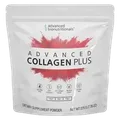
Advanced Collagen Plus utilizes this exact technology: low-molecular-weight Type I and Type III hydrolyzed peptides combined with Vitamin C (the essential cofactor for hydroxylation in the collagen synthesis chain) and Hyaluronic Acid (the structural glycosaminoglycan that holds water within the collagen matrix). This combination addresses collagen regeneration at every level of the biological process.What Improved Collagen Density Actually Looks Like
Clinical studies using hydrolyzed collagen peptides for 8-12 weeks consistently show:
- Measurable improvement in skin elasticity (corneometer testing)
- Reduced transepidermal water loss (TEWL) - the key measure of skin barrier integrity
- Visible reduction in fine line depth
- Improved skin hydration throughout all skin layers
Conclusion
Collagen loss is one of the most well-documented and consequential biological processes of human aging. But unlike many aspects of aging, it is directly addressable through evidence-based nutritional intervention. Understanding that this process begins in your mid-twenties - not in your 50s - is the critical shift in perspective that empowers proactive action rather than reactive treatment.
Scientific References & Validation
Full citations with PMID links, methodology notes & evidence ratings on puresupphub.com