Each human scalp contains approximately 100,000 hair follicles. Each follicle is a complex, highly specialized mini-organ capable of cycling through growth phases for decades. The loss of these follicles is not a random event — it is a precise biological cascade that, once understood, reveals multiple intervention points.
The Biology of Hair Loss Nobody Explains
Each human scalp contains approximately 100,000 hair follicles. Each follicle is a complex, highly specialized mini-organ capable of cycling through growth phases for decades. The loss of these follicles is not a random event - it is a precise biological cascade that, once understood, reveals multiple intervention points.
The Hair Follicle Life Cycle
Every individual hair follicle independently cycles through four phases:
- Anagen (Growth Phase): Active growth period lasting 2-7 years. The follicle is highly metabolically active, producing 1-2 cm of hair per month. At any given time, 85-90% of follicles are in anagen.
- Catagen (Regression Phase): A brief 2-3 week transition where the follicle rapidly shrinks. The dermal papilla (the follicle's "command center") detaches from the hair bulb.
- Telogen (Resting Phase): A 3-month resting period where the old hair remains in place while the follicle prepares for the next anagen cycle.
- Exogen (Shedding Phase): The old hair is physically released. Normal daily hair loss of 50-100 hairs represents this natural exogen phase.
The Four Primary Mechanisms of Follicle Death
#### 1. DHT-Mediated Miniaturization (Androgenetic Alopecia)
Dihydrotestosterone (DHT) - a potent metabolite of testosterone - binds to androgen receptors within genetically susceptible follicles. This activates a cascade that progressively shortens the anagen phase with each cycle. Follicles shrink (miniaturize) over years, producing finer and finer hairs until they eventually produce no hair at all.
This is the mechanism behind pattern baldness in both men and women, accounting for approximately 95% of all hair loss.
#### 2. Follicular Hypoxia (Poor Scalp Circulation)
Hair follicles are among the most metabolically demanding structures in the body. During the anagen phase, they require continuous oxygen and nutrient delivery from the dense capillary network surrounding the dermal papilla. When scalp microcirculation is compromised - by stress-induced vasoconstriction, nutritional deficiencies, or aging - follicles enter a state of hypoxia and prematurely shift to catagen.
#### 3. Oxidative Stress at the Follicle Bulge
The follicle bulge region contains hair follicle stem cells - the critical reservoir from which new anagen cycles are initiated. These stem cells are highly sensitive to oxidative stress. Accumulated reactive oxygen species (ROS) damage stem cell DNA and reduce their capacity for self-renewal, effectively depleting the regenerative pool of the follicle.
#### 4. Chronic Inflammation of the Dermal Papilla
The dermal papilla is the command center that regulates follicle cycling through signaling molecules. Chronic perifollicular inflammation, driven by DHT, scalp dysbiosis, and systemic inflammation, disrupts dermal papilla signaling and promotes premature catagen. In severe cases, inflammatory infiltration can permanently destroy the follicle.
Nutritional Architecture of Hair Growth
The following deficiencies are clinically demonstrated to cause or worsen hair loss:
| Nutrient | Role in Hair Biology | Deficiency Effect |
|---|---|---|
| Biotin | Keratin synthesis cofactor | Brittle hair, diffuse thinning |
| Iron (Ferritin) | Oxygen delivery to follicle | Telogen effluvium |
| Zinc | 5-alpha reductase inhibitor, cell division | Hair shedding, poor density |
| Saw Palmetto | DHT pathway inhibitor | Follicle miniaturization prevention |
| Collagen Peptides | Dermal structure, follicle anchoring | Weak anchoring, brittle shafts |
| Vitamin D | Anagen phase initiation signal | Shortened growth cycles |
Why Topical Solutions Are Insufficient
Topical hair products - serums, shampoos, and conditioners - interact only with the hair shaft and the outermost layer of the scalp. The biological mechanisms driving hair loss occur deep within the dermis at the level of the dermal papilla and follicle bulge, well below the reach of topical application.
Meaningful intervention requires systemic support via nutrients that are absorbed into the bloodstream and delivered directly to the follicle's internal microenvironment.
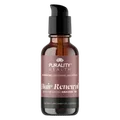
Liposomal Hair Renewal directly addresses this systemic requirement. By encapsulating Biotin, Saw Palmetto, and essential hair-growth cofactors within lipid spheres (liposomes), the formula bypasses the gastric degradation that reduces the bioavailability of conventional oral supplements. These lipid-encapsulated nutrients pass through the intestinal wall intact, are delivered via the bloodstream, and concentrate in highly metabolic tissues - including hair follicles in the active anagen phase. Advanced Collagen Plus provides the essential structural peptides that maintain the dermal matrix surrounding follicle anchoring points, preventing premature detachment and supporting the physical integrity of the follicle's environment.The Optimal Intervention Window
Hair follicles exist on a continuum from fully active to permanently atrophied. Intervention is most effective when follicles are miniaturized but still living - the biological point of no return is when the follicle is completely replaced by scar tissue (fibrosis).
The practical implication: addressing hair thinning at the first sign of change (increased shedding, reduced density, finer texture) is dramatically more effective than waiting until advanced baldness is visible.
Conclusion
Hair follicle loss is not fate - it is biology. And biology responds to the right inputs. Understanding the precise mechanisms by which follicles miniaturize and die enables a targeted, evidence-based approach that works at the root of the problem rather than cosmetically masking it. The window for effective intervention is open longer than most people realize - but it does not stay open indefinitely.
Scientific References & Validation
Full citations with PMID links, methodology notes & evidence ratings on puresupphub.com