The involuntary, progressive loss of skeletal muscle mass, tensile fiber quality, and physical strength is among the most clinically devastating hallmarks of human biological aging. This condition, medically classified as Sarcopenia, is not an aesthetic concern; it is a primary determinant of human frailty, metabolic disease, loss of physical independence, and all-cause mortality.
The involuntary, progressive loss of skeletal muscle mass, tensile fiber quality, and physical strength is among the most clinically devastating hallmarks of human biological aging. This condition, medically classified as Sarcopenia, is not an aesthetic concern; it is a primary determinant of human frailty, metabolic disease, loss of physical independence, and all-cause mortality.
According to consensus criteria established by the European Working Group on Sarcopenia in Older People (EWGSOP) and epidemiological surveys published in The Lancet, sarcopenia affects between 10% and 27% of community-dwelling adults aged 60 and older, escalating dramatically to over 50% of individuals past age 80.
Starting as early as age 30, the human body naturally loses approximately 3% to 8% of its skeletal muscle mass per decade, a degenerative decline that accelerates to 1.0% to 2.0% per year after age 60.
For decades, the standard nutritional guidance offered to older adults was simply: "Eat more dietary protein." However, clinical geriatric trials demonstrate that for millions of seniors, merely eating more chicken, beef, or dairy fails to prevent muscle wasting.
To halt and reverse sarcopenic muscle loss, clinicians must address a deep cellular phenomenon known as Anabolic Resistance - and leverage the precise molecular pharmacokinetics of free-form Essential Amino Acids (EAAs).
The Biology of Anabolic Resistance: Why Aging Muscle Ignores Food
In a healthy 25-year-old adult, consuming a moderate 20-gram bolus of dietary protein readily stimulates the intracellular signaling pathways that govern Muscle Protein Synthesis (MPS). Skeletal muscle easily uptakes circulating amino acids, repairs microscopic exercise micro-tears, and maintains nitrogen equilibrium.
In the aging muscle of adults past 50, this biological responsiveness breaks down:
* The Blunted Anabolic Response: Aging skeletal muscle exhibits Anabolic Resistance - a state in which identical blood concentrations of amino acids and insulin generate a severely blunted, sub-therapeutic synthesis response inside muscle cells.
* Microvascular Perfusion Deficits: Endothelial aging, low nitric oxide production, and sub-clinical capillary stiffening reduce nutrient-rich microvascular blood delivery to skeletal muscle beds following a meal.
* The Elevated Leucine Threshold: The primary intracellular signaling hub that turns on muscle building is the enzyme complex mechanistic Target of Rapamycin Complex 1 (mTORC1). In young muscle, a low concentration of the branched-chain amino acid Leucine activates the sensor protein Sestrin2, which recruits mTORC1 to the lysosomal surface to initiate protein translation. In older adults, the intracellular sensitivity of Sestrin2 is degraded: older muscle requires nearly double the intracellular concentration of Leucine (≥ 2.5 to 3.0 grams per bolus) to reach the "Leucine Trigger" required to activate mTORC1.
The Digestive Bottleneck and the Net Nitrogen Utilization (NNU) Crisis
Why can't older adults simply eat a large 16-ounce steak to reach this elevated Leucine threshold? The answer lies in gastrointestinal aging and metabolic waste:
- Hypochlorhydria and Protease Decline: Digesting complex dietary protein requires strong gastric hydrochloric acid (HCl) to denature quaternary protein folds, followed by robust pancreatic proteases (pepsin, trypsin, chymotrypsin) to cleave peptide bonds. Gastric acid secretion and pancreatic enzyme output decline by 30% to 50% in older adults, meaning whole foods pass through the gut partially undigested, fermenting in the colon rather than nourishing muscle fibers.
- The Caloric and Metabolic Tax: Whole food dietary proteins have exceptionally low Net Nitrogen Utilization (NNU) - the percentage of nitrogen from consumed protein that is actually incorporated into the body's structural proteins rather than burned as waste:
- Whey Protein: Only ~16% to 48% NNU (meaning 52% to 84% is converted into glucose or nitrogenous waste).
- Soy / Plant Proteins: Only ~16% to 28% NNU (meaning 72% to 84% is discarded as metabolic waste).
- Whole Eggs: Approximately ~48% NNU.
When 52% to 84% of consumed protein cannot be incorporated into muscle, the liver must deaminate the excess amino acids, stripping their nitrogen groups and synthesizing toxic ammonia and urea, which places continuous filtration strain on aging kidneys.
Free-Form Crystalline EAAs: 99% Net Nitrogen Utilization
To completely bypass the limitations of digestive hypochlorhydria and anabolic resistance, modern metabolic science utilizes free-form crystalline Essential Amino Acids (EAAs):
Crystalline Essential Amino Acids (8 EAAs in Precise Ratio)
Unlike dietary proteins, crystalline EAAs are pure, unbound amino acids:
* Zero Enzymatic Digestion Required: They require no breakdown by stomach acid or pancreatic enzymes. They enter the bloodstream within 15 to 20 minutes of ingestion, creating a sharp, rapid spike in circulating arterial amino acid concentrations (hyperaminoacidemia).
* 99% Net Nitrogen Utilization (NNU): Engineered with the exact stoichiometric proportion of all eight essential amino acids required by human genetics, crystalline EAAs achieve an astonishing 99% NNU. Virtually the entire dose is synthesized directly into human structural protein (muscle fibers, bone collagen, immunoglobulins), generating only 1% nitrogenous waste and negligible caloric load.
Clinical Trial Evidence: Preserving Muscle and Strength in Sarcopenia
The therapeutic efficacy of targeted crystalline EAAs is documented across landmark clinical investigations:
1. Overcoming Anabolic Resistance (Katsanos et al., 2006)
In a seminal clinical investigation published in the American Journal of Physiology: Endocrinology and Metabolism (PMID: 16507602 ↗), researchers evaluated the muscle protein synthesis response in elderly subjects versus young controls:
* Outcome: Ingesting a standardized mixture of non-essential amino acids failed to activate mTOR in elderly subjects. However, administering an EAA formula enriched with a high-leucine ratio completely restored the fractional synthetic rate (FSR) of muscle protein synthesis in older adults, matching the anabolic velocity of healthy 20-year-olds.
2. Muscle Preservation During Inactivity and Bed Rest (Ferrando et al., 2010)
In a clinical trial published in Clinical Nutrition (PMID: 19419806 ↗), researchers placed 22 elderly subjects on 10 days of continuous physical bed rest - a condition that typically causes devastating muscle atrophy:
* Results: Subjects receiving crystalline EAA supplementation daily completely preserved their lean skeletal muscle mass, maintained whole-body nitrogen balance, and preserved knee extensor muscle strength, while the un-supplemented control group suffered severe muscle wasting and functional mobility decline.
3. Long-Term Lean Mass Accrual in Older Adults (Dillon et al., 2009)
In a 3-month randomized controlled trial published in the Journal of Clinical Endocrinology & Metabolism (PMID: 19208731 ↗), elderly women supplementing with targeted free-form essential amino acids experienced a statistically significant increase in lean body mass of 1.7 kg (3.74 lbs) and significant improvements in functional leg power, with zero adverse impact on renal or hepatic markers.
Comparative Evidence Matrix: Protein Sources for Aging Muscle
| Protein / Amino Source | Net Nitrogen Utilization (NNU) | Digestion / Enzyme Requirement | Time to Peak Plasma Absorption | Nitrogenous Kidney Waste |
|---|---|---|---|---|
| Crystalline EAAs (Advanced Amino Formula) | 99% (Master Class) | Zero (Predigested free-form) | 15 to 20 minutes | Only 1% (Virtually zero renal strain) |
| Whey Protein Isolate / Concentrate | ~16% to 48% | High (Requires gastric HCl & proteases) | 60 to 90 minutes | 52% to 84% converted to urea/ammonia |
| Whole Dietary Meat / Poultry | ~32% | Heavy (Demands high stomach acid) | 3 to 5 hours | ~68% converted to waste / glucose |
| Plant Proteins (Soy, Pea, Rice) | ~16% to 28% | High (High phytate/antinutrient burden) | 2 to 4 hours | 72% to 84% discarded as waste |
Expected Clinical Response Timeline: Reversing Sarcopenia
Rebuilding functional skeletal muscle and restoring nitrogen equilibrium follows three distinct phases:
* Days 1 to 7 (Accelerated Post-Exertion Recovery): Rapid cellular uptake of free-form EAAs immediately halts delayed-onset muscle soreness (DOMS). Individuals notice an absence of prolonged muscle heaviness and fatigue after climbing stairs, walking, or carrying groceries.
* Weeks 2 to 4 (mTOR Signaling & Nitrogen Retention): Daily activation of the Leucine trigger downregulates muscular catabolism. Whole-body nitrogen balance shifts into positive territory, stabilizing physical stamina and eliminating mid-day musculoskeletal weakness.
* Weeks 6 to 12+ (Functional Hypertrophy & Bone Scaffold Reinforcement): Lean skeletal muscle mass accumulates measurably. Handgrip strength increases, physical balance and gait speed improve, and systemic bone collagen density receives continuous amino acid support.
Clinical Takeaway
Sarcopenia is not an inevitable decline that older adults must accept; it is the direct cellular consequence of anabolic resistance, declining digestive enzyme output, and low dietary Net Nitrogen Utilization.
Attempting to treat muscle wasting by simply consuming massive servings of whole food protein taxes aging digestive organs and creates excessive nitrogenous waste without surpassing the intracellular Leucine trigger.
The clinical solution is the strategic deployment of free-form crystalline Essential Amino Acids: delivering 99% Net Nitrogen Utilization, zero digestive burden, and the exact molecular ignition switch needed to turn on muscle protein synthesis at any age.
Clinical Recommendation
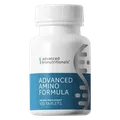
For individuals navigating age-related muscle loss, lingering exercise soreness, or physical frailty, the PuresuppHub Editorial Desk highlights Advanced Amino Formula. Formulated with the precise, patented stoichiometric ratio of all eight essential amino acids in their pure, crystalline free form, it delivers 99% Net Nitrogen Utilization to preserve lean muscle, protect bone density, and power lifelong mobility.
Scientific References & Validation
Full citations with PMID links, methodology notes & evidence ratings on puresupphub.com